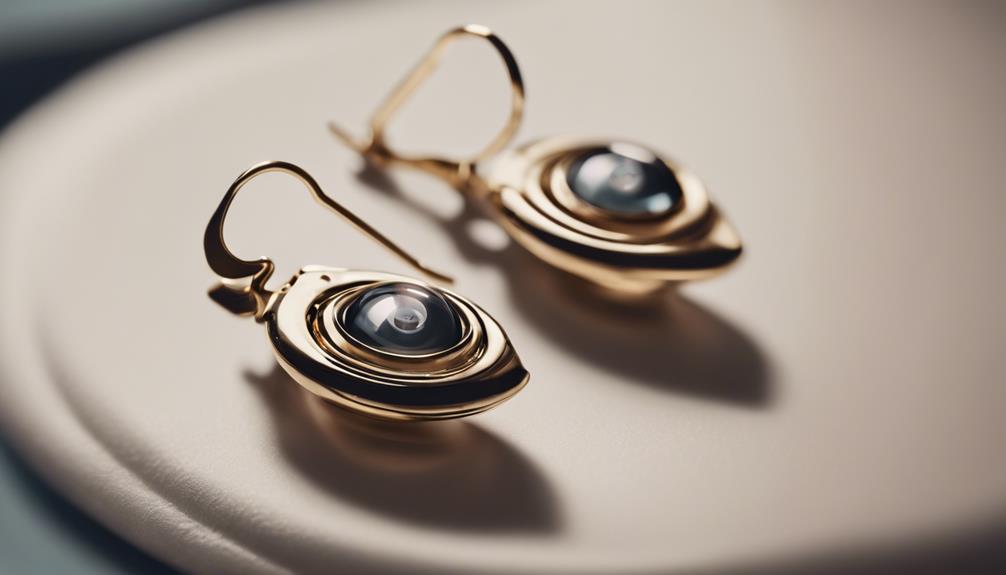

Spy camera earrings combine wearable design with miniature recording hardware. Their appeal is straightforward: the camera is built into an accessory, making it less conspicuous than a conventional handheld device. However, discreet appearance does not remove the legal or ethical responsibilities that apply to recording people, conversations, or private spaces.
If you are evaluating spy-camera earrings for a legitimate purpose, focus on practical performance, ease of use, and privacy safeguards rather than appearance alone. Features can vary considerably between models, so product descriptions should be checked carefully before purchase.
Features commonly associated with spy camera earrings
Discreet, wearable design
The camera is generally integrated into an earring or earring-style accessory. A compact design may make the device easier to wear during an interview, personal safety exercise, performance, or other situation where holding a camera would be inconvenient. Look for a design that is comfortable, secure, and appropriate for the setting. A fashionable appearance should not be treated as permission to record without notice.
Video recording
Some devices are promoted as offering high-resolution video, but the actual results depend on the camera sensor, lens position, lighting, storage system, and compression settings. A small camera may capture useful footage in good light while producing less detail in dim conditions or when the wearer is moving.
Before relying on a device, check how recording starts and stops, where files are stored, whether the date and time can be configured, and how footage is transferred. A short test recording can reveal problems with framing, focus, sound, or battery capacity.
Audio capture
Built-in microphones may record sound along with video, although audio quality can be affected by wind, clothing, distance, and surrounding noise. Audio recording is often subject to stricter consent rules than video. Do not assume that a small microphone can legally be used simply because it is part of a wearable accessory.
Battery and charging
Battery life is one of the most important limitations of miniature recording devices. Continuous video, wireless connections, and low-light features can reduce operating time. Consider how long the device needs to function, how it charges, and whether it can be used while charging. USB charging may be convenient, but the included cable, connector, and charging instructions should be verified for the particular model.
Low-light performance
Some spy camera earrings may include a low-light or infrared mode. This can improve visibility when illumination is limited, but it does not guarantee clear footage in complete darkness. Night footage may also show reduced detail, motion blur, or uneven exposure. Test the device in the conditions where it will actually be used rather than relying only on promotional language.
Motion detection
Motion detection can start recording when movement is detected instead of capturing hours of uneventful footage. This may conserve storage and battery power, but it can also miss activity, trigger unnecessarily, or produce incomplete clips. Treat motion detection as a convenience feature, not as a substitute for direct monitoring or a guaranteed security system.
Wireless access and device compatibility
Some models may connect to a phone, tablet, or computer for file transfer, setup, or live viewing. Wireless monitoring can be useful in an authorised setting, but it depends on connection quality, software support, and network security. Confirm which operating systems and devices are supported, and protect any account or application used to access recordings.
Privacy and legal responsibilities
Covert recording can create serious privacy concerns, particularly in homes, workplaces, changing areas, medical settings, meetings, and other places where people reasonably expect privacy. Laws governing video, audio, consent, workplace monitoring, and hidden cameras differ by location. In some situations, recording a conversation or sharing footage may require permission from everyone involved.
- Check applicable local laws before recording.
- Obtain clear consent whenever people may be identifiable or conversations may be captured.
- Never use a hidden camera to intimidate, harass, exploit, or invade someone’s private space.
- Store recordings securely and delete material that is no longer needed.
- Do not upload or share footage without considering consent and potential harm.
What to check before choosing a model
- Comfort, fit, weight, and whether the accessory stays pointed in the intended direction.
- Actual recording controls and whether operation is easy to confirm.
- Battery duration under the recording mode you plan to use.
- Storage capacity, file-transfer method, and supported devices.
- Performance in normal indoor lighting and low-light conditions.
- Security of any wireless connection or companion application.
- Return, support, and warranty information supplied by the seller.
Spy camera earrings may be useful as a wearable recording option in lawful, consent-based situations, but their small size also brings limitations. Evaluate the camera’s real performance, plan for battery and storage constraints, and treat privacy as a central requirement—not an afterthought.