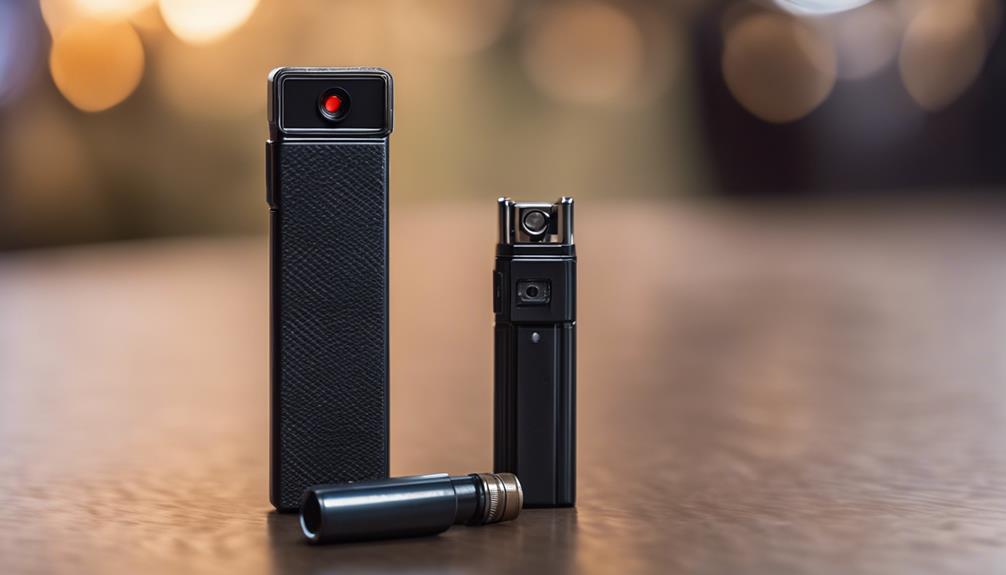

Lighter-shaped spy cameras are designed to resemble an ordinary pocket lighter while housing a small camera inside the casing. Their familiar appearance can make them less visually prominent than a conventional camera, but that does not make every use lawful or appropriate. Anyone considering one should treat it as a compact recording device, follow applicable privacy rules, and use it only for a legitimate purpose.
What Is a Lighter Spy Camera?
A lighter spy camera combines a miniature lens with a rechargeable battery and internal storage. Some models may also include a microphone, while others can transfer or display footage through a connected device. The camera is typically operated with a button or switch built into the lighter-style body.
Despite their small size, these devices have practical limitations. Image quality can suffer in dim lighting, the lens may capture a narrow field of view, and the battery may run down quickly during continuous recording. A discreet exterior also does not guarantee discreet operation: indicator lights, sounds, heat, or frequent charging can reveal that the object is not an ordinary lighter.
Features Worth Comparing
If you are evaluating a lighter-shaped camera for a lawful, consent-based use, focus on function and reliability rather than concealment alone.
- Video quality: Check the actual recording resolution and whether the image remains usable in the lighting conditions where it will be used.
- Audio capabilities: Determine whether audio recording is included and whether it can be disabled. Recording conversations often carries additional legal restrictions.
- Battery capacity: Longer battery life is useful for short documentation tasks, but published figures may vary depending on recording settings and other functions.
- Storage: Confirm how footage is saved, how much space is available, and whether files can be transferred without special software.
- Ease of operation: Straightforward controls, clear status indicators, and dependable file handling are more valuable than a long list of promotional features.
- Physical durability: A compact device should withstand normal carrying and handling without the lens becoming obstructed or the controls being triggered accidentally.
Potential Lawful Applications
The most responsible applications are transparent or consent-based. For example, a small camera might help document a craft demonstration, record a personal storytelling project, capture a family event when everyone involved understands the recording, or provide a compact camera for creative photography. In a business setting, recording a meeting should be discussed with participants and handled according to the organisation’s policies.
For security at home or work, a clearly disclosed camera is usually a better choice than a concealed one. Visible equipment makes expectations clear, supports trust, and can reduce confusion about where recording occurs. A lighter-style camera may be suitable for a controlled creative project, but it should not be used to secretly monitor another person.
Privacy and Legal Responsibilities
Privacy laws vary by location, and rules may differ for video, audio, workplaces, homes, public areas, and private conversations. Before recording, identify the relevant requirements in your jurisdiction. In many situations, people may have a reasonable expectation of privacy even when they are not in a fully enclosed room.
- Obtain informed consent when recording identifiable people, especially when audio is involved.
- Do not place recording devices in bathrooms, bedrooms, changing areas, or other sensitive spaces.
- Do not use recordings to intimidate, harass, impersonate, or expose someone’s private information.
- Limit access to stored footage and delete material that is no longer needed.
- Explain the purpose, duration, and handling of a recording where disclosure is required or ethically appropriate.
If a recording may be used in a dispute, workplace matter, or legal proceeding, obtain advice from a qualified local professional rather than assuming that a recording is admissible or lawful.
Practical Recording Tips
For an authorised project, test the device before relying on it. Check framing, focus, sound, battery performance, and storage space. Keep the lens unobstructed and review a short sample in the same lighting and environment expected during the final recording. Secure the files promptly after use and avoid automatically sharing them through unsecured services.
It is also helpful to keep a simple record of when and why the footage was created, who consented, and where the files are stored. This supports responsible handling and makes it easier to remove recordings when they are no longer necessary.
Final Considerations
A lighter spy camera is best understood as a small camera in an unusual casing—not as a licence to record people without their knowledge. Its value depends on dependable video, practical battery and storage performance, and careful handling of privacy. Used openly or with proper consent, it can support creative documentation and other legitimate recording tasks. Used secretly against people in private situations, it can cause serious ethical and legal harm.