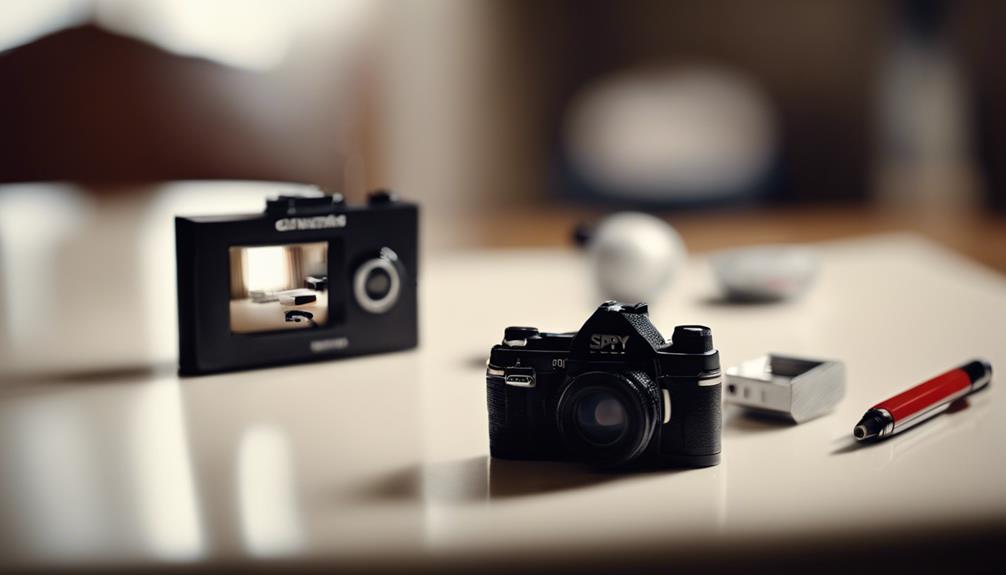

Spy cameras are small recording devices designed for situations where a conventional camera may be impractical or too noticeable. The term can describe several different designs rather than one specific product category. Three common types are hidden cameras, body-worn cameras, and mini cameras.
Although these devices can support security, documentation, and personal safety, they also create important privacy responsibilities. The right choice depends on where the camera will be used, how it will be carried or installed, how long it must record, and whether recording is permitted in that situation.
1. Hidden Cameras
Hidden cameras are designed to blend into their surroundings or remain out of obvious view. They may be used for discreet monitoring in homes, workplaces, or other environments where a visible camera would not be suitable.
The main advantage of a hidden camera is its unobtrusive design. It can record activity without drawing the same attention as a standard security camera. However, this feature also makes privacy and consent especially important. People may not realise they are being recorded, and the consequences can be serious if footage is captured in a private or sensitive setting.
Before installing or using a hidden camera, consider:
- Whether the people in the area have been informed or have given consent where required.
- Whether recording audio creates additional privacy concerns.
- Whether the camera could capture bedrooms, bathrooms, changing areas, or other private spaces.
- How recordings will be stored, accessed, and deleted.
- Whether local rules permit the planned recording.
A hidden camera should be used for a clear, legitimate purpose rather than simply because it is difficult to detect. Discreet placement does not remove the responsibility to respect privacy.
2. Body-Worn Cameras
Body-worn cameras attach to clothing, equipment, or another part of the wearer’s gear. They record from approximately the wearer’s perspective, making them useful for hands-free documentation, personal safety, security work, or recording events while moving.
Their wearable format is the key difference from a fixed hidden camera. A body camera can move with the user and may be easier to operate while both hands are occupied. Depending on the design, it may include features such as a built-in microphone, a rechargeable battery, and internal or removable storage.
Body-worn cameras still raise several practical and legal questions. Recording people in public does not automatically make every use acceptable, and private conversations or sensitive situations may require particular care. Rules about consent, audio recording, workplace monitoring, and the use of footage as evidence can vary by location and circumstance.
For responsible use, decide in advance:
- When recording should begin and stop.
- How people will be notified, if notification is required.
- Who can view the footage.
- How long recordings should be retained.
- How the camera will be secured to prevent accidental loss or damage.
3. Mini Cameras
Mini cameras are compact devices built for portability and discreet placement. Their small size can make them convenient for temporary monitoring, travel, or situations where a full-size camera would be difficult to install.
Mini cameras and hidden cameras are not completely separate categories. A mini camera may be used as a hidden camera, but “mini” primarily describes its physical size, while “hidden” describes how it is positioned or used. This distinction is useful when comparing products: a small camera is not necessarily suitable for covert recording, and a hidden camera is not always especially small.
Two specifications deserve close attention:
Battery life
Battery capacity determines how long the camera can operate before it needs recharging. A camera with short battery life may be unsuitable for extended recording, while a longer-lasting model can reduce interruptions. Consider whether the device will be near a power source and whether it needs to record continuously or only at selected times.
Video and audio quality
Recording quality affects how clearly important details can be seen or heard. Look beyond headline resolution and consider lighting conditions, lens coverage, storage capacity, and audio requirements. A small camera may be convenient, but its compact design can involve trade-offs in battery capacity, controls, or image quality.
How to Choose the Right Type
Start with the intended use rather than the camera’s appearance. A body-worn model may be most appropriate for hands-free recording, a hidden camera may suit a permitted fixed monitoring purpose, and a mini camera may be preferable when portability and limited space matter most.
Also compare battery life, recording quality, storage, ease of setup, visibility, and durability. Most importantly, confirm that the planned use complies with applicable privacy and recording requirements. Responsible camera use means protecting people’s privacy as carefully as you protect the footage itself.