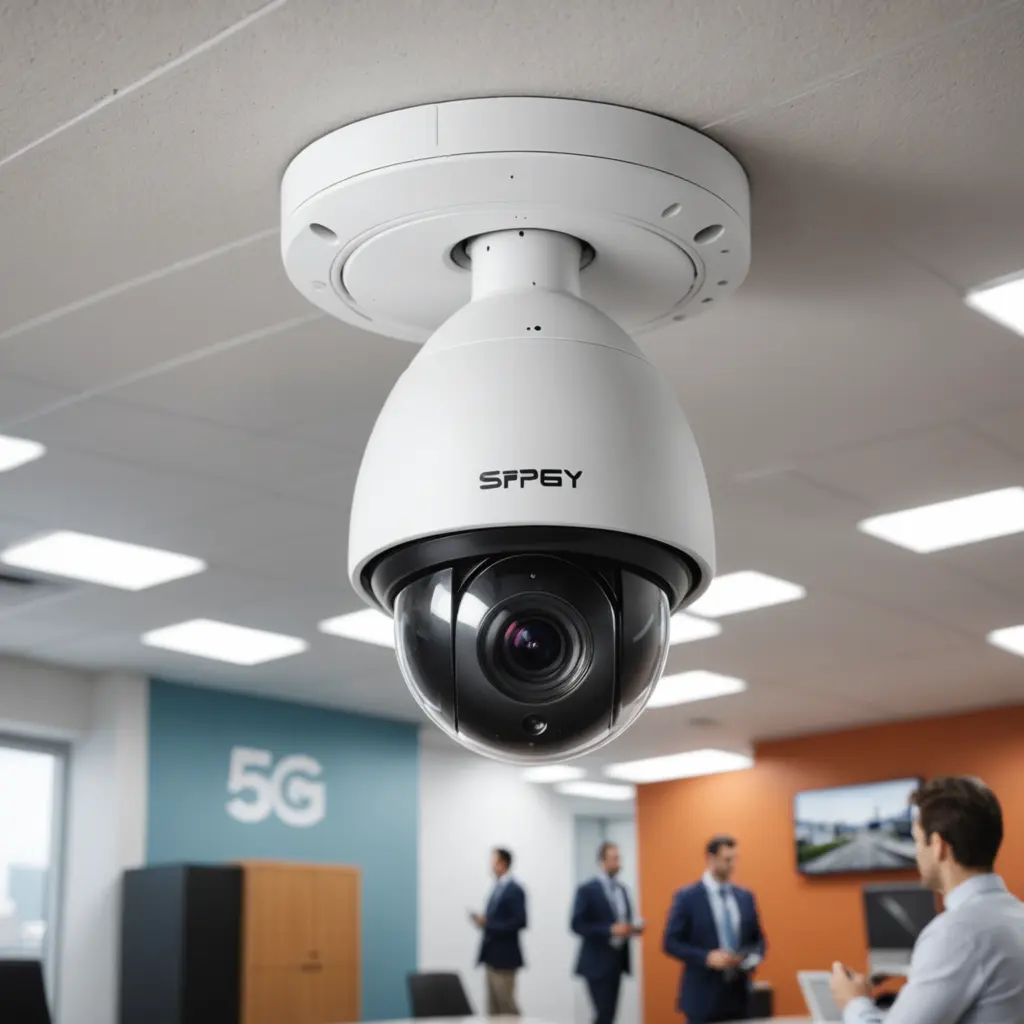

Demand for faster, more reliable surveillance has put the 5G wireless security camera squarely in the spotlight for homeowners, businesses, and covert monitoring applications. Whether you are evaluating 5G compatible security cameras that use cellular networks or looking for an outdoor 5ghz wifi security camera, understanding the differences between cellular 5G and 5GHz Wi‑Fi and how they affect spy camera features and technology is essential before you buy. 5G security cameras unlock wireless surveillance features that enable discreet recording, AI detection, and remote viewing.
Understanding the difference: 5G cellular versus 5GHz Wi‑Fi
Many people use the term 5G loosely, but in the context of security cameras it can mean two different things. A 5G security camera often refers to a device that connects over cellular networks using 5G bands, providing wide-area coverage without relying on local internet. By contrast, a 5ghz camera or 5ghz security camera refers to a device that connects to Wi‑Fi on the 5GHz frequency band, which offers higher throughput and less interference than 2.4GHz but shorter range. Choosing between cellular and Wi‑Fi affects cost, latency, installation complexity, and the range of spy camera features you can use.
How 5G and 5GHz improve spy camera features and technology
Both 5G cellular and 5GHz Wi‑Fi bring performance improvements that expand what spy cameras can do. Higher bandwidth supports multiple simultaneous HD or 4K video streams, enabling clearer evidence capture and more reliable remote live view. Lower latency lets operators control pan-tilt-zoom cameras in near real time and reduces delay for two‑way audio. With faster uplink speeds, devices can offload footage to cloud storage quickly, enabling near-instant alerts and uploads after motion events. These capabilities combine with edge computing to allow on‑device AI, such as people detection and object classification, without saturating the network.
Practical use cases for 5G wireless security cameras
For remote job sites, rural properties, or temporary surveillance, a 5G security camera that uses cellular connectivity eliminates the need to run wired internet or rely on spotty local Wi‑Fi. In urban or residential settings, outdoor security cameras that work with 5ghz wifi are ideal when you need higher video quality and reduced interference from crowded 2.4GHz networks. For covert monitoring and spy camera applications, the low-latency, high-throughput channels of 5GHz or 5G cellular enable continuous high-resolution recording, live streaming to a secure client, and timely cloud backups—useful for short-term stakeouts, fleet monitoring, or multi-camera deployments where quick evidence retrieval is critical.
What to look for when choosing a wifi 5g camera or 5G compatible security camera
When evaluating models, start with connectivity: confirm whether the device is a cellular 5G compatible security camera or designed specifically for 5GHz Wi‑Fi. For cellular units, check supported bands and carrier compatibility, plus whether the camera requires a dedicated SIM or supports eSIM plans. For 5GHz Wi‑Fi cameras, review dual‑band capability and whether the camera supports the ac or ax standards for better throughput and future-proofing. Video resolution, frame rate, compression standards such as H.265, and local storage options determine footage quality and data usage. For outdoor deployments, weatherproof ratings, night vision performance, and power options (battery, solar, or wired) are crucial. Security features like end-to-end encryption, user authentication, and tamper detection should be prioritized, especially when the device will be used for sensitive spy camera features and remote monitoring. For discreet surveillance complementing a 5G wireless security camera, consider a compact HD recorder for portability.
Balancing data costs and performance
Cellular 5G offers convenience but can incur ongoing data charges depending on video upload frequency. Look for models with event-based recording and smart compression to limit data usage. Conversely, a 5ghz security camera on a home or business Wi‑Fi network avoids cellular fees but may require network upgrades—such as a router that supports multiple high-throughput clients—to handle multiple cameras streaming simultaneously.
Installation and network considerations for the best outdoor 5ghz wifi security camera
Installing cameras that rely on 5GHz Wi‑Fi requires careful placement because the higher frequency attenuates more quickly through walls and over longer distances. Position routers or access points closer to camera locations or use dedicated mesh or outdoor access points to maintain strong signals. For outdoor security cameras that work with 5ghz wifi, line-of-sight and elevation often improve reliability. For cellular cameras, consider antenna placement and cellular signal boosters where coverage is weak. Power remains a practical constraint—battery-powered or solar-assisted models provide flexibility but demand attention to runtime and charging behavior.
Advanced spy camera capabilities unlocked by fast networks
High-speed networks enable advanced spy camera features and technology that were previously limited by bandwidth. On-device analytics can flag suspicious behavior and send short video clips instead of continuous streams, conserving bandwidth while preserving critical evidence. Multi-camera synchronization for panoramic or multi-angle reconstruction is possible with adequate uplink capacity. Features such as encrypted peer-to-peer streaming, remote firmware updates, and cloud-based AI analytics become practical with 5G or robust 5GHz Wi‑Fi, enhancing both stealth and operational effectiveness for surveillance professionals and security-conscious homeowners alike.
Choosing between a 5G wireless security camera that uses cellular networks and a 5ghz camera on Wi‑Fi depends on your deployment needs: coverage area, data costs, installation constraints, and desired spy camera features. Both connectivity options bring substantial benefits for modern surveillance, from faster live streams and better video quality to improved AI-driven detections. Assess your network environment, power options, and privacy requirements, and select a camera that balances performance with practical considerations for reliable, secure monitoring.