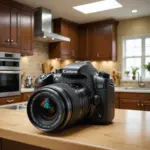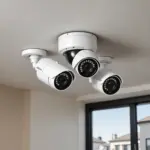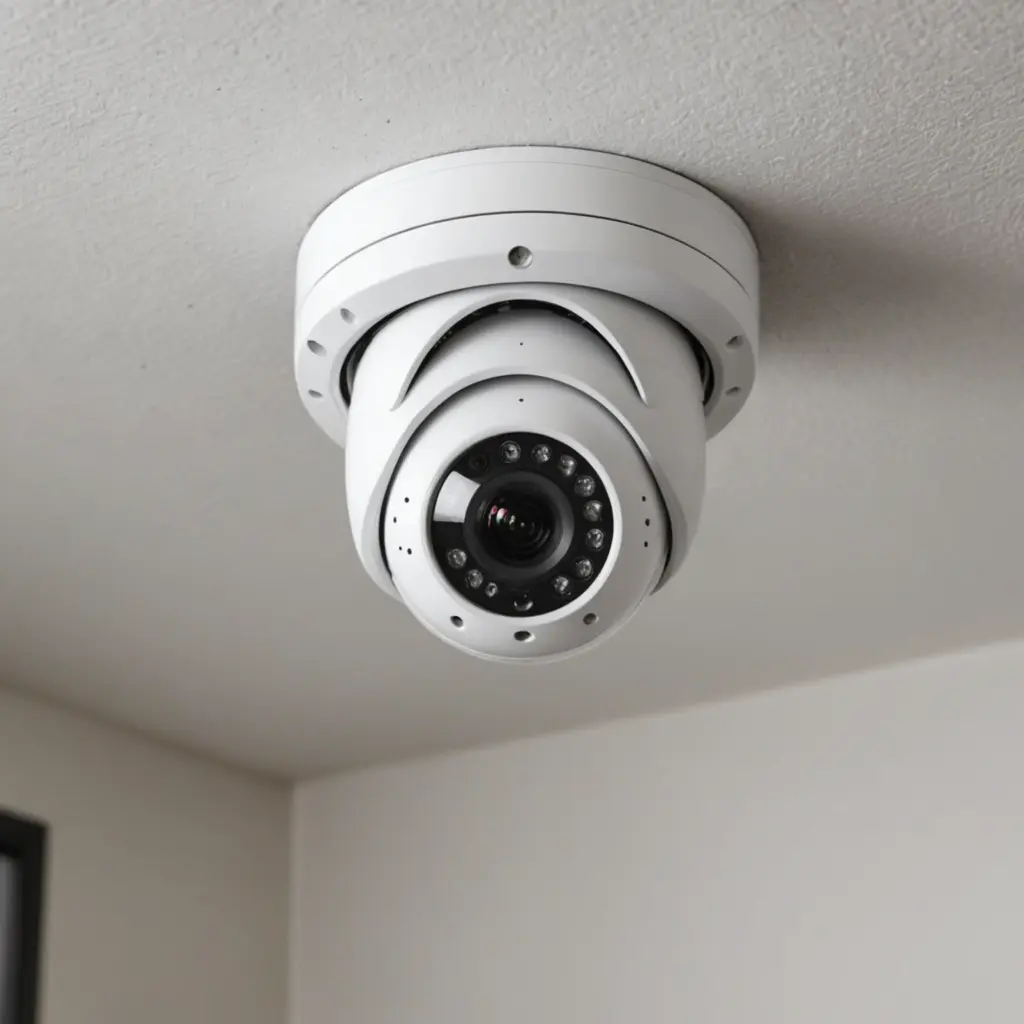

A 180-degree security camera provides a wide, directional view across half of a full circle. Unlike a conventional camera with a narrower lens, it can cover a broad area from a single mounting position, helping reduce blind spots and the need for several overlapping devices. A 180-degree security camera can enable wide-angle covert monitoring for discreet observation of large interior spaces.
This format is particularly useful for entrances, hallways, reception areas, small storefronts, open-plan rooms, and other spaces where activity takes place across a wide horizontal area. Its value depends on more than the advertised viewing angle, however. Placement, image quality, lighting, storage, network security, and privacy safeguards all affect whether the camera is suitable for the job.
What a 180-degree camera is designed to cover
A 180-degree model is directional rather than all-around. It records a broad frontal scene, while a 360-degree camera is designed to view in every direction. This makes a 180-degree camera a good choice when the important area is in front of a wall, ceiling, doorway, or other fixed mounting point.
Compared with using multiple narrow-angle cameras, one wide-angle unit may simplify installation and monitoring. It can provide a continuous view of a small sales floor, an entry area, a lobby, or an open room. The trade-off is that objects near the edges of the image may appear smaller or more distorted, so the camera should be positioned with identification and viewing distance in mind.
Common applications
At home, a 180-degree camera may help monitor an entryway, living area, nursery, or space used by pets. In a small business, it can provide visibility across a customer area, reception desk, or point-of-sale zone. Property managers may use wide coverage in building entrances and other shared areas to document activity and support property protection.
Discreet placement may be appropriate in some situations, but concealment should never be treated as a way to bypass privacy expectations or consent requirements. In many settings, a visible camera and clear notice provide a more responsible deterrent while still delivering useful coverage.
Placement and installation
Begin by identifying the area that needs protection and the paths people are most likely to use. Aim the camera toward entrances, corridors, or other high-traffic points instead of relying solely on the widest possible view. A broad image is less useful if faces are too distant or important activity is blocked by furniture and fixtures.
- Keep the lens clear of walls, shelves, decorations, and other obstructions.
- Check the view during both daytime and nighttime conditions.
- Avoid pointing directly at bright windows unless the camera has effective wide dynamic range.
- Mount the unit securely and protect cables or power connections from tampering.
- Test the image at the edges as well as the centre, where distortion may be more noticeable.
If a camera is placed out of sight, it should still be installed only in an area where surveillance is lawful and ethically justified. Bathrooms, changing areas, bedrooms used by guests, and other places where people reasonably expect privacy should not be monitored with hidden cameras.
Features worth comparing
Image quality and low-light performance
Resolution matters because a wide field of view spreads available detail across a large scene. Look for image quality that remains usable at the distances involved, especially if the camera may need to show faces, packages, or transactions. Low-light performance and infrared capability are important when the area must be monitored after dark. A 180-degree model can complement wider home coverage when positioning two surveillance cameras around key entry points.
Dynamic range and motion handling
Wide dynamic range can help balance a bright doorway with a darker interior. Motion detection should also be tested in the intended location, since excessive sensitivity may create unwanted alerts while insufficient sensitivity can miss relevant activity.
Power, connectivity, and storage
Wired cameras are suited to locations requiring continuous operation, while battery-powered models can be easier to position but require regular charging. Depending on the model, recordings may be stored on a local memory card, in cloud storage, or through another connected recording system. Review retention settings, remote-access controls, and notification options before installation.
For network-connected cameras, change default credentials, use strong unique passwords, enable available security protections, and keep firmware updated. These steps help reduce the risk of unauthorized access to live video or stored footage.
Privacy, consent, and responsible use
Surveillance rules differ by location, and audio recording may be subject to separate consent requirements. Before installing a camera, check the laws and workplace rules that apply to the property. Employers, landlords, and short-term rental operators may have additional notice or disclosure obligations.
Limit monitoring to a defined security purpose, collect only the footage needed, and restrict access to authorized people. Establish a reasonable retention period and delete recordings when they are no longer necessary. Clear policies and notice can help protect both privacy and trust.
Making the right choice
Choose a 180-degree security camera by matching its viewing angle and technical capabilities to the physical space. A compact wireless model may suit a small interior area, while a business installation may benefit from a durable wired network camera and more controlled power and storage. In every case, prioritize reliable coverage, secure access, lawful placement, and a clear reason for recording.
Used thoughtfully, a 180-degree camera can provide broad coverage with relatively simple installation. Its effectiveness comes not from the viewing angle alone, but from careful positioning, suitable image quality, secure management, and respect for the people who may appear in the footage.