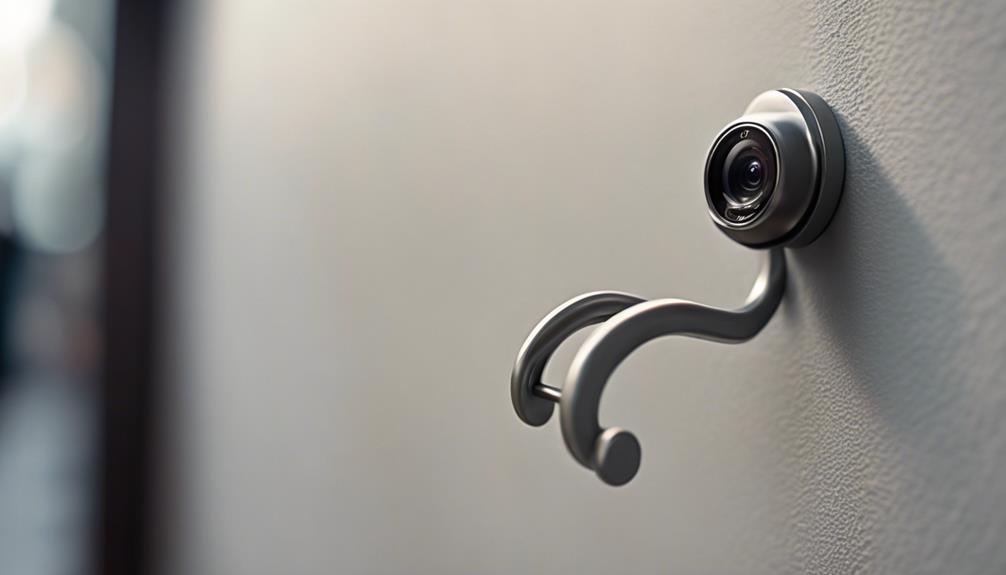

A coat hook spy camera is a small surveillance device designed to resemble an ordinary wall-mounted coat hook. Its purpose is to record video while remaining visually unobtrusive, making it suitable for security monitoring in locations where a conventional camera may be distracting or impractical.
Because these devices can record people without drawing attention, they should be used only for lawful, clearly justified purposes. A discreet appearance does not remove the need to respect privacy, obtain consent where required, and follow applicable surveillance rules.
What Is a Coat Hook Spy Camera?
Coat hook cameras combine a functional-looking housing with a miniature camera and recording system. The camera is generally positioned so that it can view part of a room while the object blends into its surroundings.
Models differ considerably, so features should be checked before purchase or installation. Common capabilities described for this type of device include:
- Video recording in a compact housing
- Motion-activated recording to reduce unnecessary footage
- Loop recording, which can replace older files when storage is full
- High-definition video on some models
- Local storage and, on some variants, wireless connectivity for remote access or alerts
Battery life, storage capacity, image quality, and recording duration can vary. Motion detection may also respond differently depending on room layout, lighting, and the movement of people or objects.
How the Recording Process Works
A coat hook camera typically uses a lens concealed within the hook or its mounting plate. When recording is enabled, the device captures video and saves it to its available storage. In motion-detection mode, recording begins when the sensor identifies movement within its detection area.
This approach can help conserve battery power and storage compared with continuous recording, but it is not infallible. A person moving outside the sensor’s range may not trigger recording, while changing light or other movement may produce unwanted clips. Review the device’s instructions and test its detection range before relying on it for security purposes.
Planning Placement and Installation
Placement affects both the usefulness of the footage and the privacy impact of the device. Choose a location that covers only the area you are authorised to monitor. Avoid bathrooms, changing areas, bedrooms used by others, and any other place where people reasonably expect privacy.
For a practical installation:
- Position the camera at approximately eye level when that provides an appropriate viewing angle.
- Aim it toward the intended area rather than toward a doorway, window, or neighbouring private space.
- Avoid bright lights and direct sunlight, which can create glare or reduce image detail.
- Mount the hook securely so that it cannot be easily displaced.
- Check that coats, bags, furniture, or other objects do not block the lens.
- Test the recording, motion detection, date and time settings, and storage before regular use.
If people will be recorded, consider visible notice and consent as part of the installation plan. A camera that is physically discreet should not be treated as permission to monitor people secretly.
Potential Uses
When used responsibly, a coat hook camera may provide a compact option for monitoring an authorised area in a home or workplace. Its ordinary-looking form can reduce visual clutter compared with a prominent security camera. Motion-triggered recording may also make it easier to review activity instead of searching through hours of empty footage.
These advantages should be weighed against limitations. A small lens may provide a narrower view than a conventional security camera, and a concealed design can make it harder for people to know when recording is taking place. The device should therefore supplement a clear security policy, not replace one.
Privacy, Consent, and Legal Responsibilities
Surveillance laws differ by location, and rules may depend on where the camera is installed, whether audio is captured, who owns the property, and whether the people recorded have consented. In many jurisdictions, recording individuals in private areas without permission is prohibited and may result in civil or criminal consequences.
Before installation, identify the legal basis for recording and check local requirements. If the camera is intended for a business, workplace, rental property, or shared home, consult the relevant owner, administrator, or legal professional. Protect recorded files with appropriate access controls, retain them only as long as necessary, and avoid sharing footage unnecessarily.
Making a Responsible Choice
A coat hook spy camera can be a compact monitoring solution, but its value depends on proper placement, realistic expectations, and responsible operation. Select a model whose recording and storage features match the intended use, test it in the actual environment, and keep the camera directed only at areas you are entitled to monitor. Used transparently and within the law, it can support security without turning ordinary spaces into places of unexpected surveillance.