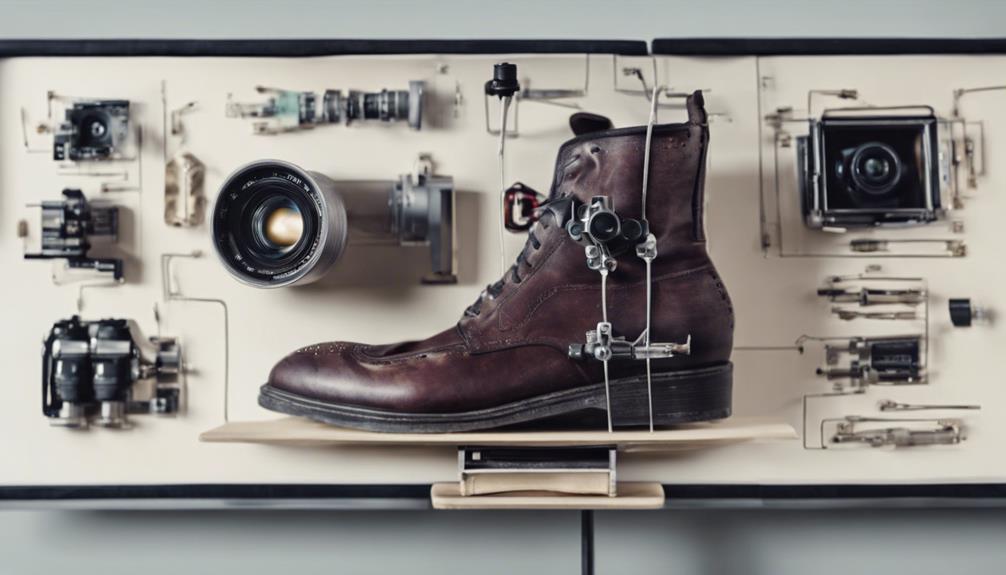

A shoe spy camera is a miniature camera system built into footwear, usually with the lens positioned in or near the sole, upper, or inner lining. Its purpose is to record from a low, forward-facing viewpoint while keeping the camera body integrated into the shoe’s structure.
Although the design sounds simple, fitting a camera into a shoe requires several compact components to work together: a lens, image sensor, processor, battery, storage, controls, and sometimes a wireless connection. The exact features differ between devices, so recording quality, battery life, storage capacity, and transmission range should be checked against the specifications for the particular model.
Where the camera is placed
The lens is usually installed in a location that provides an unobstructed view while remaining part of the shoe’s overall design. Common positions include the front of the sole, the toe area, or the upper lining. The camera module itself may be placed elsewhere inside the shoe and connected to the lens through the device’s internal electronics.
Placement affects both usability and image quality. A lens that sits too close to the ground may capture mostly floors and lower legs, while a lens mounted higher on the shoe may provide a broader view. The structure of the footwear can also introduce limitations: stitching, panels, laces, or dirt may obstruct the lens, and movement while walking can make footage unstable.
How the miniature lens captures video
The lens directs light onto a small image sensor. The sensor converts that light into an electronic image, and an onboard processor turns the captured frames into a video file. Compact lenses are designed to occupy very little space, but their small size can limit detail, low-light performance, and viewing angle compared with a full-sized camera.
Some models use a wide-angle lens to capture more of the scene in front of the wearer. This can be useful when the camera’s position makes precise aiming difficult, but wide-angle footage may show distortion near the edges. Image quality also depends on lighting, motion, lens cleanliness, and the camera’s resolution settings. A miniature camera should not automatically be assumed to produce clear footage in every environment.
Recording and file storage
When recording is activated, the sensor continuously captures frames and the processor saves them as digital video. Depending on the design, recording may begin through a physical button, a remote control, an associated device, or an automatic feature such as motion detection.
Recorded files are stored in internal memory or on removable storage when the device supports it. Storage capacity determines how much video can be retained before files must be transferred or deleted. Higher video settings generally use more space, while lower settings allow longer recording times but may reduce detail.
For reliable operation, users should check available space before recording and move important files to a secure location afterward. Storage should also be handled carefully because footage may contain personal or sensitive information.
Wireless transmission and remote viewing
Some shoe camera designs include wireless communication, while others store footage locally and have no live-streaming function. On models that support wireless transmission, the camera sends video to a nearby phone, tablet, computer, or monitoring system through the connection provided by the device.
Wireless viewing can make it possible to monitor or transfer footage without removing the storage media, but it introduces practical limits. Range, obstacles, battery consumption, connection stability, and device compatibility can all affect performance. A wireless connection should not be treated as automatically secure; account protection, pairing controls, and any available encryption features are important when handling recorded video.
Battery life and everyday limitations
The camera, processor, storage system, and wireless functions all consume power. Continuous recording and live transmission usually use more battery than occasional recording, and frequent movement may make footage harder to review even when the camera remains operational.
Charging the device before use, checking its battery indicator, and testing the recording process in advance can help prevent interruptions. It is also wise to confirm that the lens is clean, the date and time are set correctly if the device supports those settings, and the camera is positioned securely within the shoe.
Privacy and lawful use
A concealed camera can record people who do not realise they are being filmed. Laws and workplace, school, venue, or property rules may restrict recording in private or sensitive locations. Audio recording can be subject to additional requirements, and consent rules vary by jurisdiction.
Use any wearable camera only for a lawful, legitimate purpose and respect the privacy of others. Where consent is required, obtain it before recording. Avoid using concealed recording to invade private spaces, monitor people without permission, or capture sensitive personal activity.
In short, a shoe spy camera combines a miniature lens and image sensor with a processor, battery, and storage system inside footwear. Some versions add motion detection or wireless viewing, but all are constrained by placement, lighting, movement, power, storage, and privacy considerations.