
A spy camera at work may help an organisation investigate theft, protect equipment, document safety incidents, or address specific allegations of misconduct. However, covert surveillance is not a simple security upgrade. It can affect employee privacy, workplace trust, and legal compliance, particularly when cameras record private conversations or operate in areas where people reasonably expect privacy.
The best approach is to treat a hidden camera as a limited investigative or security measure—not as a substitute for clear policies, good supervision, visible security, or employee training.
When a workplace may consider covert monitoring
Businesses sometimes consider discreet cameras when there is a defined security problem that has not been resolved through less intrusive measures. Potential uses include:
- Investigating repeated theft, inventory loss, or property damage.
- Protecting sensitive equipment, stock, or restricted-access areas.
- Documenting a reported safety incident or hazardous behaviour.
- Supporting an investigation into suspected misconduct.
- Monitoring an area after hours where security risks have been identified.
Retail, warehouse, manufacturing, and office environments may have different surveillance needs. A camera covering a storage area, server room entrance, or stockroom may be easier to justify than one aimed at desks or areas used for private conversations. Visible cameras can also provide a deterrent, while discreet equipment may be considered only when there is a specific reason that visible monitoring is insufficient.
Choosing equipment for a workplace camera
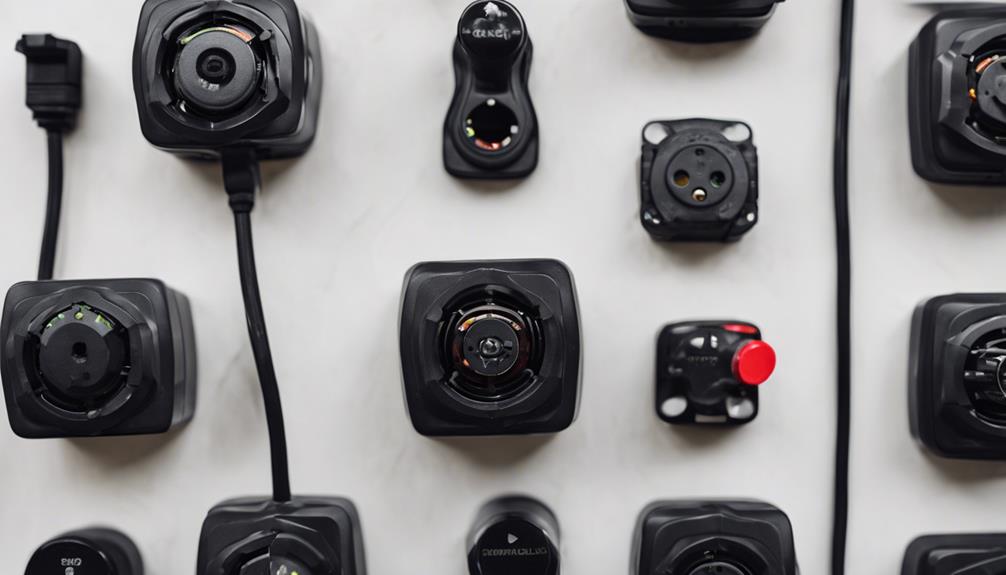
The appearance of a device should be less important than whether it is reliable, secure, and suitable for the stated purpose. Depending on the installation, an organisation may use a wired camera for continuous operation, a battery-powered unit for temporary monitoring, or a network-connected camera for remote review.
Features to assess
- Image quality: Footage should be clear enough to help establish what happened, including in low-light conditions where relevant.
- Motion detection: Adjustable detection can reduce unnecessary recording and make reviews more manageable.
- Time and date information: Accurate timestamps can help place an event in context.
- Power reliability: Consider whether the device can operate for the required period without avoidable gaps.
- Secure storage: Recordings should be protected with access controls and, where supported, encryption during transmission and storage.
- Audio settings: Audio recording may be subject to stricter rules than video. It should not be enabled without specific legal guidance.
Network-connected devices also create account and cybersecurity responsibilities. Default passwords should not be left in place, access should be limited, and footage should not be shared casually through personal devices or unsecured services.
Legal and ethical issues
Surveillance law differs by jurisdiction, and workplace rules may also be affected by employment agreements, union arrangements, or data-protection requirements. Before installing a hidden camera, obtain advice appropriate to the location and the proposed use.
Particular caution is required in restrooms, changing rooms, locker rooms, and other private areas. Recording private conversations can also create serious legal concerns, even where video monitoring might otherwise be permitted. A camera should never be placed in a location simply because it is hidden or technically easy to install.
Lawfulness is only part of the decision. Employers should ask whether the monitoring is necessary, proportionate, and limited to a genuine business purpose. If better lighting, access controls, visible cameras, revised procedures, or staff training could address the same risk, those options may be less intrusive.
Best practices for responsible deployment
- Define the problem. Record the specific risk, incident, or investigation that requires monitoring.
- Consider alternatives. Explain why ordinary security measures or visible cameras are insufficient.
- Limit the location and duration. Monitor only the area and period necessary for the stated purpose.
- Exclude private spaces. Do not record areas where employees or visitors reasonably expect privacy.
- Control access. Give footage access only to authorised people with a legitimate need to review it.
- Set retention rules. Keep recordings only as long as needed for the investigation, security purpose, or applicable legal requirement.
- Document decisions. Maintain records explaining approval, placement, access, retention, and permitted use.
- Review the arrangement. Remove temporary equipment when the identified risk or investigation ends.
Where permitted and appropriate, a workplace privacy or surveillance policy should explain monitoring practices, how footage is handled, and who may access it. Clear communication can reduce confusion and help demonstrate that surveillance is not being used arbitrarily.
What employees can do if they suspect a hidden camera
Unusual objects, wires, indicator lights, or unfamiliar devices may justify a question, but visual inspection alone cannot reliably confirm whether a camera is present. Depending on the circumstances, people may look for unexpected wireless devices or use specialist detection services. These methods are not perfect, particularly when equipment is wired or inactive.
If a suspicious device is found, avoid damaging or moving it. Note its location, take photographs if safe and permitted, and report it through the organisation’s HR, security, or incident-reporting process. If it appears to record a private area or capture audio unlawfully, preserve relevant information and seek advice from an appropriate legal professional or authority.
Use covert surveillance sparingly
A spy camera at work can support a narrowly defined security or investigative need, but indiscriminate monitoring can create legal exposure and damage workplace trust. A documented purpose, careful placement, strong data controls, and respect for privacy are essential. In many situations, the most responsible security strategy combines visible deterrence, sound procedures, and employee awareness rather than relying on hidden recording alone.