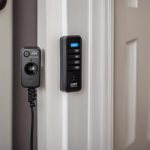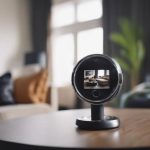

Japanese camera engineering is widely associated with precise optics, dependable manufacturing, and continual advances in digital imaging. These qualities are especially valuable in compact security and monitoring equipment, where limited space, difficult lighting, and continuous operation can place demanding requirements on a camera.
Although small cameras may be used in discreet installations, they should always be deployed lawfully and with appropriate notice or consent. The technical principles behind Japanese camera design are useful not only for security systems, but also for home monitoring, wildlife observation, industrial inspection, and other applications where a compact, reliable image source is needed.
Why Japanese Camera Engineering Matters
Camera performance depends on more than resolution. The sensor, lens, image processor, housing, firmware, and power system must work together to produce footage that is clear and dependable. Japanese engineering has traditionally placed strong emphasis on optical precision, tight manufacturing tolerances, and consistent quality control.
In practical terms, this can help a compact camera deliver:
- Sharper images from small lens assemblies
- More consistent performance between individual units
- Better colour reproduction and reduced optical distortion
- Improved reliability during extended operation
- More efficient use of battery power and storage
These benefits are important when a camera must be installed in a restricted space or positioned where replacing, adjusting, or servicing it frequently would be difficult.
Sensor Performance in Challenging Light
The image sensor is the foundation of a digital camera. Security and monitoring environments rarely provide perfectly controlled lighting: a doorway may contain both bright outdoor light and deep shadow, while an indoor scene may be illuminated only by weak artificial lighting.
Sensor improvements such as back-illuminated CMOS designs, stacked architectures, and refined pixel layouts can increase sensitivity and help limit image noise. Image-processing systems may also apply noise reduction and high-dynamic-range processing to preserve detail in areas that would otherwise appear too dark or too bright.
When comparing cameras, resolution should therefore be considered alongside low-light performance, dynamic range, motion handling, and the quality of the image produced at the intended distance. A high pixel count cannot compensate for excessive noise, poor exposure control, or an unsuitable lens.
Compact Optics Without Sacrificing Image Quality
Miniaturisation is one of the most important developments in modern camera design. A smaller housing can make installation easier and less visually intrusive, but reducing the size of the optical system can also introduce softness, distortion, flare, or reduced light transmission.
Carefully designed multi-element lenses and advanced coatings help address these problems. They can reduce reflections and ghosting while maintaining clarity across more of the frame. Mechanical precision is equally important: the lens must remain properly aligned so that the camera produces consistent images over time.
Before selecting a compact camera, check the lens angle and focal length rather than relying on size alone. A wide field of view may cover a larger area, while a narrower view can provide more useful detail at a specific distance. The right choice depends on whether the priority is broad scene coverage, identification detail, or a balance between the two.
Processing, Connectivity, and Data Protection
Modern cameras often include image processors that support motion detection, event-triggered recording, and other forms of local analysis. Processing events on the device can reduce the amount of video that must be transmitted or stored, which is useful when bandwidth and storage capacity are limited.
Wireless connectivity may include Wi-Fi, Bluetooth, or cellular communication, depending on the equipment and its intended environment. Any camera connected to a network should be assessed for more than convenience. Secure authentication, encrypted communications, protected boot processes, and signed firmware updates help reduce the risk of unauthorised access or tampering.
For sensitive recordings, also consider who can view the footage, how long it will be retained, and whether local storage or remote storage is appropriate. Strong technical security does not replace responsible access policies and compliance with applicable privacy requirements.
Power, Storage, and Reliability
Battery-powered cameras must balance image quality with operating time. Low-power processing modes and efficient components can extend runtime, particularly when recording is triggered only by an event rather than continuously. For fixed installations, a stable power source may be preferable, provided the equipment is installed safely.
Storage requirements depend on resolution, frame rate, codec, and recording schedule. Efficient codecs can reduce file sizes, but footage should still be tested in realistic conditions to confirm that important details remain visible after compression. A reliable camera is of limited value if its storage fills unexpectedly or its power system cannot support the required duty cycle.
How to Choose the Right Camera
Start with the scene rather than the feature list. Define the area to be covered, the distance to important subjects, the available lighting, and the expected recording duration. Then compare the following:
- Sensor performance: Evaluate low-light quality, dynamic range, and motion clarity.
- Lens design: Match the field of view and focal length to the installation area.
- Construction: Look for a housing and components suited to the environment.
- Connectivity: Confirm that the network or local-recording setup meets operational needs.
- Security: Review authentication, encryption, and firmware-update practices.
- Power and storage: Estimate real recording demands instead of relying on headline specifications.
Japanese camera technology is best understood as a combination of optical precision, sensor development, compact construction, and dependable manufacturing. Choosing a system on those practical qualities—not simply on brand reputation or resolution—can lead to clearer footage, easier installation, and more reliable long-term operation.