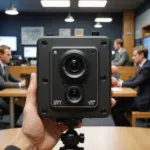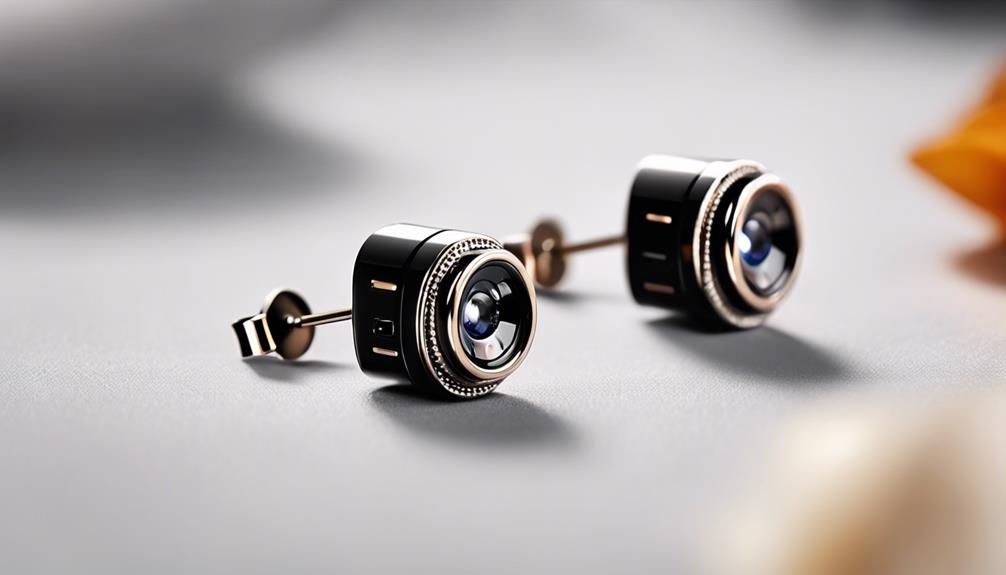

An ebony hidden cam is a discreet surveillance camera designed to blend with dark surfaces, furnishings, fixtures, or accessories. Its dark finish can reduce reflections and visual contrast, while compact designs make the device less conspicuous than a conventional security camera. These qualities can be useful for monitoring property, documenting incidents, or observing wildlife, but covert recording should always be planned around privacy, consent, and applicable law.
What defines an ebony hidden cam?
The term “ebony” generally describes the camera’s appearance rather than a single technical format. Most models use a black or deep charcoal housing, often with a matte finish, and may be small enough to fit into an unobtrusive location. Some are built into ordinary-looking objects, while others are standalone mini cameras intended to sit among existing equipment or décor.
Concealment alone does not determine whether a camera is useful. The lens must have a clear view, the recording system must be dependable, and the device should suit the environment in which it will operate. A camera that blends in well but produces unusable footage or loses power quickly may not meet its intended purpose.
Common types and recording arrangements
Ebony hidden cams are available in several general configurations:
- Pinhole cameras: These use a very small lens opening and may be installed behind a suitable dark surface or enclosure.
- Compact wireless cameras: Battery-powered or Wi-Fi-enabled models can be placed without running a visible cable, although battery life and network reliability require attention.
- Charger or adapter-style cameras: These combine a camera with a functional-looking power accessory. Their use should be especially carefully considered because people may not expect recording equipment in such an object.
- Mini dome cameras: These are better suited to a fixed installation, such as a ceiling or dark-colored fixture, and may support longer periods of operation.
- Weather-resistant observation cameras: Outdoor-capable models can support property monitoring or wildlife observation when placed according to the manufacturer’s environmental limits.
Features to compare before buying
Start with the scene you need to record rather than choosing based on size or appearance alone. Important considerations include:
- Image quality: Resolution, sensor performance, and low-light capability affect whether faces, movement, or other details can be identified.
- Power: Battery operation simplifies placement but requires charging. A wired power source is more suitable for continuous coverage when a cable can be installed safely and discreetly.
- Storage: Local memory cards provide direct control over recordings, while network or cloud options may support remote viewing but depend on connectivity and account security.
- Alerts and access: Motion notifications and remote access can be useful, but they should be protected with strong passwords and updated software.
- Viewing angle and placement: A wide field of view can cover more space, while a narrower view may provide greater detail in a specific area.
- Audio recording: If a model includes a microphone, check the rules governing recorded conversations before enabling it.
Suitable and unsuitable applications
When used lawfully, a discreet camera may help monitor an entrance, protect equipment, document activity around a private property, or observe animals without introducing a prominent camera into the scene. Businesses may also use security systems to investigate theft or damage, subject to workplace rules and notice requirements.
Covert recording is not appropriate simply because a camera can be hidden. Areas where people reasonably expect privacy—such as bathrooms, changing areas, bedrooms used by guests, or similar private spaces—should not be monitored. Recording employees, tenants, visitors, children, or domestic workers can involve additional consent, notice, employment, housing, or child-safety obligations.
Installation and maintenance
Test the camera before final placement. Confirm that the lens is unobstructed, the important area remains within the frame, and lighting does not create glare or deep shadows. Avoid pointing cameras into neighboring homes or private areas beyond the property you are authorized to monitor.
For reliable operation, clean the lens with a soft, suitable cloth, check available storage, confirm that timestamps are accurate, and keep device software updated when updates are provided. Review battery levels and connectivity regularly. Store recordings securely, limit access to people who genuinely need it, and delete footage when it is no longer necessary.
Legal and ethical responsibility
Rules for hidden cameras differ by location and may distinguish between video and audio recording, private and public spaces, personal and commercial use, and one-party or all-party consent. Do not assume that owning a property gives unlimited permission to record everyone inside it. Before installing an ebony hidden cam, check the relevant local requirements and obtain professional legal advice when the situation involves employees, tenants, childcare, shared housing, or audio.
The most responsible approach is to use discreet monitoring only for a specific, legitimate purpose, choose the least intrusive setup that meets that purpose, and be transparent whenever notice or consent is required. A well-selected ebony hidden cam can support security or observation, but responsible placement and respectful handling of footage matter as much as the device’s technical specifications.