
Choosing the best live bedroom IP camera online involves more than comparing resolution or price. A suitable camera should provide a dependable live view, perform well in low light, protect the video feed, and fit the reason you need monitoring. Whether you are checking on a child, supporting an older family member, supervising a pet, or improving household security, select a camera that is practical and use it transparently. Consider specific spy camera types when selecting small form factors for a live bedroom IP camera online.
What a bedroom IP camera can do
An IP camera connects to a home network and can send live video to a phone, tablet, or computer. Depending on the model, it may also offer motion alerts, recording, night vision, and two-way audio. These features can make remote check-ins easier than relying on a traditional camera connected to a dedicated monitor.
Before shopping, define the main purpose. A baby-monitoring setup may need clear night viewing and two-way audio, while general security monitoring may benefit more from motion zones, continuous recording, and a wide viewing angle. A camera intended for occasional check-ins does not necessarily need the same storage or power arrangement as one operating around the clock.
Features worth comparing
- Image quality: A 1080p camera is generally a useful baseline for viewing faces and room activity. A wide-angle lens can cover more of the room, but excessive coverage may reduce detail at a distance.
- Low-light performance: Infrared night vision or another low-light mode is important for monitoring after dark. Check whether indicator lights can be disabled if they might disturb sleep.
- Motion detection: Adjustable sensitivity and activity zones help prevent alerts caused by curtains, pets, or movement outside the area of interest.
- Two-way audio: A microphone and speaker can support brief communication or reassurance, provided the feature can be muted when it is not needed.
- Power and reliability: Wired models are often better suited to continuous monitoring, while battery-powered cameras offer more placement flexibility but require regular charging.
- Storage: Some cameras support a microSD card, while others depend on cloud storage. Review retention limits, subscription requirements, and how recordings can be downloaded or deleted.
- Account security: Look for encrypted connections, firmware updates, strong account controls, and two-factor authentication where available.
Choose a visible, appropriate design
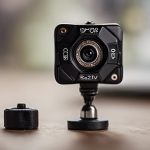
Small Wi-Fi cameras can be convenient when space is limited, but the smallest model is not automatically the best choice. Compact hardware may have weaker microphones, shorter wireless range, or less effective night performance. A conventional indoor camera placed openly is usually easier for household members and visitors to understand.
A bedside, shelf, or wall-mounted camera can work well when it has a clear view without being aimed at areas that do not need monitoring. Avoid disguised cameras built into clocks, chargers, or other everyday objects when people may be recorded without their knowledge. Covert bedroom surveillance can seriously violate privacy and may be unlawful. Choose visibility and consent over concealment.
Installation and setup tips
Place the camera where it cannot be easily knocked over and where cables will not create a hazard. For child monitoring, keep the device and its cable safely away from the crib or bed, and follow the manufacturer’s placement guidance. Aim only at the area required for the stated purpose rather than recording an entire private room unnecessarily. For privacy-conscious bedroom monitoring, explore discreet Blink placement techniques before choosing a live IP camera setup.
Test the wireless signal at the intended location before completing installation. A weak connection can cause delays, dropped streams, or missed alerts. During setup, change any default password, install available firmware updates, enable two-factor authentication, and review every sharing permission in the app. Configure motion zones and notification schedules so alerts remain useful rather than intrusive.
Privacy, consent, and responsible use
Bedrooms are highly private spaces. Tell household members, guests, caregivers, and other affected people that a camera is present, explain what it records, and obtain consent where required. Laws differ by location, particularly for audio recording, cloud storage, rental properties, and recording people who have a reasonable expectation of privacy. Check applicable local rules before installation.
Limit access to the smallest number of trusted users. Review the provider’s privacy policy, recording retention practices, and deletion controls before enabling cloud features. If the camera supports local storage, protect the memory card and remove recordings that are no longer needed. Turn off video or audio recording when monitoring is not necessary.
Making the final choice
The best live bedroom IP camera online is the one that matches the intended use without creating unnecessary privacy or security risks. Prioritise dependable connectivity, useful low-light performance, appropriate storage, secure account controls, and a placement that everyone understands. A visible camera installed with consent can provide practical remote monitoring while respecting the dignity and autonomy of the people in the room.