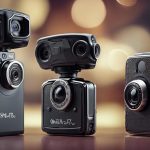

A camera with long battery life can be useful for authorized monitoring when access to a power outlet is limited. The best choice depends on where the camera will be used, how often it needs to record, and whether you need live viewing or occasional motion-triggered clips.
Before installing any camera, make sure your use complies with local privacy laws and workplace, rental, or household rules. Do not place a camera in private areas such as bedrooms or bathrooms, and do not record people without the consent required in your location. In many situations, a clearly visible security camera is the safer and more appropriate option.
What Affects Camera Battery Life?
A battery rating alone does not determine how long a camera will operate. Battery life is also influenced by recording settings, wireless connectivity, environmental conditions, and how frequently the camera detects movement.
- Continuous recording: Recording around the clock uses considerably more energy than recording only when activity is detected.
- Live streaming: Frequent remote viewing can drain the battery faster, particularly when the camera maintains a constant wireless connection.
- Night vision: Infrared illumination may increase power consumption in dark environments.
- Video resolution: Higher-resolution recording generally requires more processing and storage power.
- Wireless signal strength: A camera working hard to maintain a weak connection may use more energy.
- Temperature: Very hot or cold conditions can affect battery performance.
Features to Look For
Motion-activated recording
Motion activation is one of the most useful ways to extend operating time. Instead of recording an empty area continuously, the camera remains in a lower-power state and starts recording when movement is detected. Adjustable sensitivity is helpful because it can reduce unnecessary recordings caused by pets, passing traffic, or changing light.
Replaceable or rechargeable batteries
A camera with a replaceable battery can remain in service with less downtime. Some models use rechargeable battery packs, while others require the entire unit to be removed for charging. Check how the battery is accessed and whether a spare battery can be kept ready.
If the camera will be installed in a difficult-to-reach location, a model with a convenient charging arrangement is especially important. An external power option can also be useful, provided the installation is safe and suitable for the location.
Low-power operating modes
Look for settings that reduce energy use without disabling essential monitoring. Useful options may include scheduled recording, reduced live-view activity, adjustable frame rates, and standby modes. The ability to change these settings allows you to balance recording detail against operating time.
Local storage
Some cameras save footage to built-in storage or a memory card rather than relying entirely on cloud services. Local recording may reduce dependence on a constant internet connection, although the camera still needs power for recording and storage. Check storage capacity, recording format, and how easily files can be retrieved.
Solar and External-Power Options
For outdoor monitoring, a solar-assisted camera can reduce the frequency of manual charging when the panel receives adequate sunlight. Solar power is not equally effective in every location, so consider shade, seasonal weather, panel placement, and the camera’s energy requirements before relying on it as the primary power source.
An external battery pack or wired power supply may be more dependable for long-term operation. Any external connection should be protected from moisture, heat, and accidental damage. Follow the manufacturer’s instructions and avoid improvised wiring.
Choosing the Right Camera for the Job
A compact camera may be convenient to position, but a smaller body does not always provide the largest battery. Prioritize practical endurance over size when the camera must operate for long periods. For an area that only needs occasional monitoring, motion activation and a moderate recording resolution may be sufficient. For continuous observation, a larger battery or reliable external power source is usually more important than portability.
Other features may also matter, including night vision, image quality, weather resistance, notification controls, and the ability to replace or expand storage. Select only the features you genuinely need; unnecessary functions can increase power use and complicate setup.
Ways to Extend Battery Life
- Use motion-triggered recording instead of continuous recording when appropriate.
- Reduce unnecessary live streaming and frequent remote checks.
- Adjust motion sensitivity to limit false alarms.
- Schedule monitoring for the hours when it is actually needed.
- Lower resolution or frame rate when maximum detail is not essential.
- Keep rechargeable batteries fully charged and replace worn batteries promptly.
- Install outdoor equipment where its power source can work effectively and safely.
The best long-battery camera is not simply the one with the largest stated capacity. It is the model whose power system, recording controls, storage, and installation method match the monitoring task. For lawful and respectful security use, choose a dependable camera with efficient motion detection, practical charging, and settings that help it remain available when you need it.