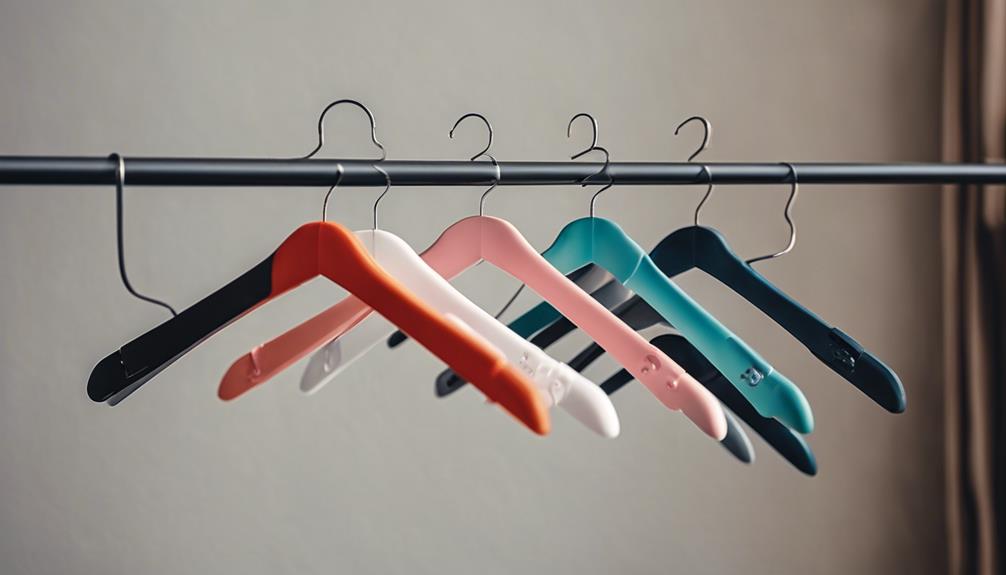

Clothes hanger cameras are designed to resemble an ordinary hanger while recording video from a fixed position. Their appearance can make them less visually distracting than a conventional security camera, but the disguise also creates important privacy and legal responsibilities. Use any camera only where you have permission to record, and never use a concealed device to monitor private spaces such as bedrooms, bathrooms, changing areas, or other locations where people reasonably expect privacy.
Because specifications vary between models, the most useful way to compare these devices is to look beyond appearance. The following ten features can help you evaluate whether a hanger-style camera is suitable for an authorised security or monitoring purpose.
1. Camera resolution
Resolution affects how clearly the camera records faces, clothing, documents, and other details. A higher stated resolution may produce a sharper image, but results also depend on lighting, lens quality, compression, and storage settings. Check sample footage when available rather than relying only on marketing labels.
2. Field of view
A wide-angle lens can cover more of a room from one position, which may be useful for an entryway, storage area, or office. However, wider coverage can introduce distortion around the edges. Consider whether you need a broad overview or a narrower image with more detail in a specific area.
3. Motion-triggered recording
Motion detection can reduce unnecessary footage and make recorded events easier to review. Performance depends on sensor sensitivity, movement across the frame, lighting, and the camera’s software. Test the settings in the intended location to reduce missed events and unwanted recordings.
4. Low-light performance
If monitoring may continue after dark, examine whether the camera supports infrared or another low-light mode. Night footage should be tested at the actual distance and under the lighting conditions where the camera will operate. Do not assume that a night-vision label guarantees a clear image.
5. Storage options
Determine whether footage is saved to a memory card, internal storage, a computer, or a cloud service. Each option has trade-offs involving capacity, cost, access, and privacy. Review how recordings are overwritten, exported, and deleted, especially if the device may capture identifiable people.
6. Battery life and power
Battery performance can change significantly when motion detection, wireless access, or night vision is active. Look for information about charging time, standby operation, and recording duration under realistic conditions. A camera that is difficult to recharge may be unsuitable for extended authorised monitoring.
7. Wired or wireless operation
Wi-Fi can make it easier to view or transfer footage, but it also introduces network-security considerations. Change any default password, use a secure wireless network, keep firmware updated when updates are provided, and avoid exposing the camera directly to the public internet. A model with local recording may be preferable when remote access is unnecessary.
8. Remote viewing
Some cameras allow live viewing through a mobile app or computer. Before relying on this feature, check whether it requires a subscription, how accounts are protected, and whether footage passes through a third-party service. Disable remote access if it is not needed, and use strong, unique account credentials.
9. Physical design and installation
A hanger-style camera should be stable, appropriately sized for the intended wardrobe or storage system, and easy to position without obstructing the lens. A secure installation helps prevent accidental changes in the camera angle. Do not place it where it could fall, damage clothing, or create a safety hazard.
10. Privacy and recording controls
Look for visible recording indicators, configurable activity zones, user-access controls, and simple deletion tools. These features support responsible operation and help limit recording to the area and times covered by your authorisation. Audio recording deserves particular caution because consent requirements may differ from those for video.
Responsible use checklist
- Confirm that recording is lawful in your location and appropriate for the setting.
- Obtain consent or provide notice where required.
- Record only the area necessary for the stated security purpose.
- Protect stored footage with strong passwords and restricted access.
- Set a reasonable retention period and delete recordings that are no longer needed.
- Tell anyone responsible for the property how the device operates and who can access footage.
Final considerations
A clothes hanger camera should be judged on image quality, coverage, storage, power management, security, and privacy controls—not simply on how convincingly it resembles a hanger. For many situations, a visible security camera may be more transparent and easier to operate lawfully. If you choose a disguised design for an authorised purpose, document the reason for recording, limit access to the footage, and verify local rules before installation.