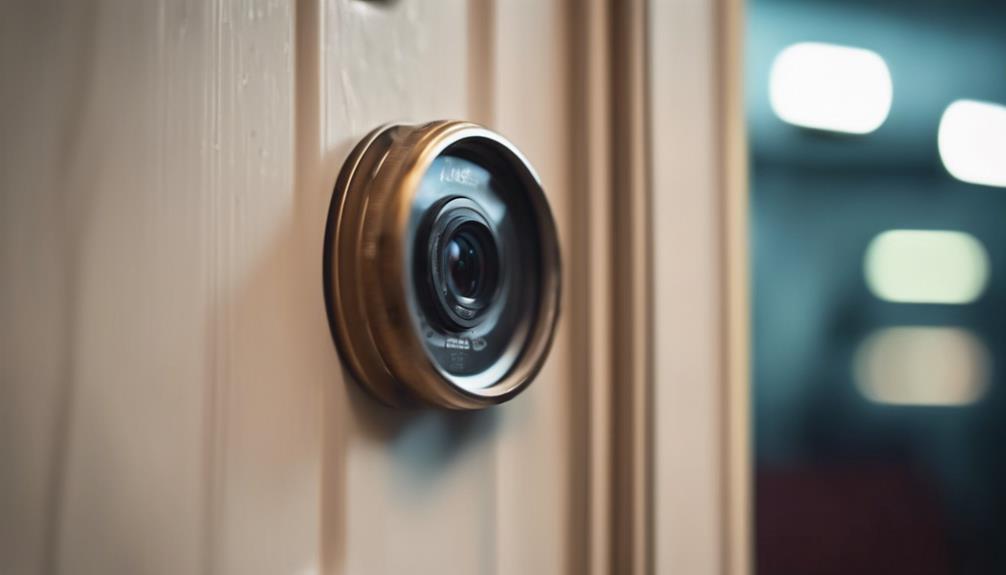

A door spy hole camera is a compact security camera designed to fit into or replace a traditional door peephole. It lets you view the area outside your door before deciding whether to open it. Depending on the model, the camera may display a live image on an interior screen, record video, or provide additional features such as night vision and motion detection.
Because the camera is positioned within the door, it can offer a discreet way to check visitors and monitor activity near an entrance. It is useful for homes, apartments, offices, and other spaces where seeing who is outside is an important part of access control.
How a Door Spy Hole Camera Works
A conventional peephole uses a small optical lens to provide a view through the door. A spy hole camera uses a camera lens in a similar position, but sends the image to an indoor display or another supported device. Some models also store video or still images for later review.
The main parts usually include:
- Camera lens: Captures the view outside the door.
- Interior display: Shows the live image without requiring you to look through the peephole directly.
- Power source: May be a battery or a wired connection, depending on the design.
- Storage or connectivity: Some cameras record locally, while others may connect to a compatible system or network.
The exact operation varies by model, so the product instructions should be checked before installation or use.
Benefits of Using a Spy Hole Camera
The primary benefit is the ability to identify a visitor before opening the door. This can be especially helpful when someone arrives unexpectedly or when you do not want to make your presence immediately obvious.
A door spy hole camera can also provide:
- A clearer view than a small traditional peephole may provide.
- Discreet monitoring of activity near the entrance.
- Improved visibility in low-light conditions when night vision is included.
- Motion alerts or recorded footage on models that support those functions.
- An indoor viewing position that can be more convenient for some users.
These features can add another layer of awareness, but a spy hole camera should be treated as one part of an overall security approach rather than a complete security system.
Features to Consider Before Buying
Image quality and viewing angle
Choose a camera with enough resolution to show faces and other relevant details clearly. A wider viewing angle can help cover more of the area in front of the door, while an adjustable angle may make it easier to position the view correctly.
Night vision
If the entrance is poorly lit, night vision can make the camera more useful after dark. Check how the camera performs in low light and whether the area immediately outside the door is adequately covered.
Motion detection and recording
Motion detection can notify you when activity is detected near the entrance. If recording is important, confirm how video is stored, how much capacity is available, and whether recordings can be reviewed easily.
Power and operation
Battery-powered models may be simpler to fit, but they require regular checks and eventual battery replacement or recharging. Wired models can provide continuous power but may require more complex installation.
Door compatibility
Measure the door thickness and the existing peephole opening before choosing a camera. Also check whether the installation requires drilling, whether the camera suits the door material, and whether the interior display leaves enough clearance for normal use.
Basic Installation Guidance
Select a position that provides a clear view of the entrance and places the camera at a practical height. If the device replaces an existing peephole, remove the old fitting carefully and follow the supplied instructions for securing the camera and interior display.
Some installations require a correctly sized hole through the door. Avoid enlarging or drilling the opening until you have confirmed the measurements. Once fitted, check that the camera is aligned, all connections are secure, and the display shows the intended field of view. Test any motion detection, recording, or night vision settings before relying on them.
If the installation involves wiring, specialist tools, or a door with unusual construction, professional assistance may be preferable. Always consider building rules, landlord requirements, and privacy expectations where other people could appear in the camera’s view.
Maintenance and Troubleshooting
Keep the camera lens clean and free from fingerprints, dust, and smudges. Periodically inspect the fitting for looseness, damage, or signs of water exposure. For battery-powered devices, check the power level regularly.
If the image is blurred, confirm that the lens is clean and that the camera has not shifted. Poor night-time visibility may indicate inadequate lighting, an obstructed lens, or a setting that needs adjustment. When a feature does not work as expected, consult the model’s manual for the appropriate troubleshooting steps.
Conclusion
A door spy hole camera combines the familiar purpose of a peephole with electronic video viewing and, in some models, recording or motion detection. By choosing a camera that matches your door, lighting conditions, power preferences, and viewing needs, you can make it easier to assess visitors before granting access while keeping the installation discreet and practical.