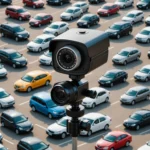

A small ceiling camera can provide broad, unobtrusive coverage without dominating a room’s appearance. Mounted overhead, these compact cameras are useful for monitoring entrances, shared living areas, retail floors, offices, and other spaces where a clear view is important. The best results come from treating the camera as part of a complete security plan: choose suitable hardware, position it carefully, protect the recordings, and respect privacy requirements. Explore ceiling concealment techniques to integrate small ceiling cameras for covert monitoring in sensitive spaces.
Why use a small ceiling camera?
Ceiling mounting creates an elevated viewpoint that can reduce obstructions from furniture and make it harder for a camera to be bumped or tampered with. A compact dome or low-profile camera may also blend more easily with a light-colored ceiling than a larger wall-mounted unit.
Depending on the model, useful features may include motion detection, infrared or low-light viewing, wireless networking, and local or remote recording. These features are not equally important for every installation, so the right choice depends on the area being monitored and how recordings will be used.
Where ceiling-mounted cameras can help
In a home, a small ceiling camera may cover an entryway, hallway, living room, or other shared area. It can also be useful as a pet monitor when positioned to view an open room. In a small business, overhead coverage can help document activity near entrances, counters, stock areas, or checkout points. Lobbies, reception areas, and other semi-public spaces may benefit from an elevated camera because the device is less exposed to accidental contact.
Surveillance should be limited to areas where monitoring is appropriate. Cameras should not be used to record bathrooms, changing areas, or other locations where people reasonably expect privacy. Bedrooms and private accommodation areas require particular caution and may be subject to specific laws, regulations, or platform rules.
Features to compare before buying
- Image detail: A higher-resolution camera can make faces, labels, or other details easier to review, but image quality also depends on lighting, lens quality, and placement.
- Field of view: Wide-angle lenses cover more of a room, while narrower lenses may provide a clearer view of a particular doorway or counter. Very wide views can make objects near the edges appear distorted.
- Low-light performance: Check whether the camera uses infrared illumination or another low-light mode, and consider how that feature affects the appearance of the scene at night.
- Power and connection: Wired cameras generally provide a consistent connection, while wireless models can be easier to place. Both still require dependable power and appropriate network security.
- Recording and storage: Depending on the system, footage may be stored on a microSD card, a network video recorder, or a cloud service. Include subscription, storage, and replacement costs in the overall budget.
- Compatibility: If the camera will connect to an existing recorder, alarm system, or smart-home hub, confirm that the devices support the same connection standards and recording features.
Planning the installation
Start by identifying the activity that must be captured. Position the camera toward an entrance, service counter, or other priority area rather than simply placing it in the most central location. A central ceiling position can provide broad room coverage, while mounting near an access point may produce more useful views of people entering or leaving.
Avoid aiming directly at bright windows or strong light sources, which can leave subjects appearing as dark silhouettes. Test the camera at different times of day and, if night coverage is needed, check the image after dark. Make sure the intended view is not blocked by shelves, light fittings, doors, or tall furniture. For broader coverage beyond a small ceiling camera, explore commercial surveillance options suited to business environments.
Even a discreet camera needs an accessible installation path. Leave room for cleaning the lens, checking cables, updating software, resetting the device, or replacing storage media. Concealment should not make maintenance impossible or encourage installation in an inappropriate private area.
Privacy, consent, and responsible use
Camera and audio-recording rules vary by location. Before installation, check the requirements that apply to your home, workplace, rental property, or business. Audio can raise additional privacy concerns, so disable it if it is not necessary for the stated security purpose.
In workplaces and customer-facing environments, a clear surveillance policy and suitable signage can explain what is monitored, why it is monitored, and how recordings are handled. Access to footage should be restricted to authorised people, and recordings should not be shared casually or used for purposes unrelated to safety, security, or a documented operational need.
Maintenance and security checks
Inspect the camera periodically for dust, shifted alignment, damaged cables, and changes in the scene. Confirm that motion alerts and recording schedules still work, and review retention settings so footage is kept only as long as necessary. Use strong, unique account credentials, enable available security protections, and keep the camera’s software updated through the manufacturer’s supported process.
A small ceiling camera is most effective when its coverage, storage, access controls, and privacy practices are planned together. Thoughtful placement and responsible operation can provide useful awareness while keeping the camera’s visual impact—and its impact on the people being monitored—as limited as possible.