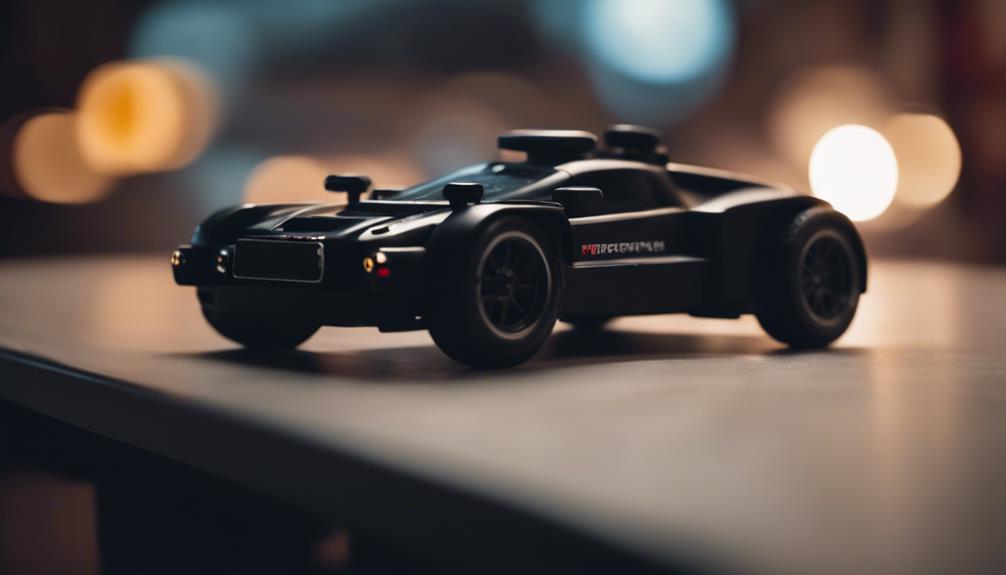

RC cars with cameras can be useful for remote observation, hobby photography, inspecting hard-to-reach spaces, and exploring areas where a person cannot easily stand. The best choice depends less on a “spy” label and more on practical details such as camera performance, control, battery life, and how well the vehicle moves across the intended surface.
Because camera-equipped vehicles can affect other people’s privacy, use them only where you have permission. Avoid recording private conversations or entering restricted areas, and check the rules that apply to filming on private property or in public spaces.
1. Camera quality and viewing options
The camera is the most important part of an RC surveillance vehicle. Look for image quality that is suitable for the task rather than relying only on promotional descriptions. A camera used for checking a storage area may not need the same performance as one intended for outdoor observation.
- Live viewing: A real-time feed lets you see the vehicle’s surroundings while driving it.
- Recorded video: Local storage or recording support is useful when you need to review footage later.
- Low-light performance: Night vision or infrared illumination can help in dim areas, although image detail may be limited in complete darkness.
- Camera angle: A fixed forward-facing camera is simple, while an adjustable camera can provide a broader view.
Before buying, confirm how the video feed is delivered and whether the required app, phone, memory card, or network connection is included.
2. Maneuverability and vehicle design
A compact RC car can be easier to guide through narrow passages, beneath furniture, or around obstacles. However, small size does not automatically mean better performance. Consider the surface where the vehicle will operate and choose a design with suitable tires, ground clearance, and steering response.
For smooth indoor floors, a lightweight model may be sufficient. Uneven ground calls for stronger traction and a chassis that can handle small bumps. Tight turning ability is also valuable because it allows the operator to reposition the camera without needing a large open area.
3. Control range and connection reliability
The advertised control distance is only one part of the experience. Walls, furniture, other wireless devices, and the layout of a building can reduce practical range. A stable connection is more useful than a high maximum speed if the vehicle is being used for careful observation.
Check whether the car is controlled by a dedicated remote, a smartphone, or both. Phone-based control may make live video convenient, while a physical controller can provide more immediate steering. Also consider whether the video feed remains responsive when the vehicle is farther away from the operator.
4. Battery life and charging
Short operating time can interrupt an inspection or exploration session. Compare expected driving time with charging time, and find out whether the battery is removable. A spare compatible battery can reduce waiting between sessions, provided the manufacturer supports safe replacement.
Battery performance varies with driving speed, terrain, camera use, and wireless streaming. Treat runtime figures as estimates rather than guarantees. It is also sensible to charge the vehicle before use and store the battery according to the manufacturer’s instructions.
5. Durability and overall value
A camera RC car should be able to tolerate ordinary bumps and careful outdoor use if that is part of the intended purpose. Look for protected camera components, sturdy wheels, accessible controls, and replacement parts or accessories that are actually available for the model.
The best value is not necessarily the lowest purchase price. A less expensive vehicle may lack reliable video, have limited range, or require frequent charging. Compare the complete package, including the camera, controller, app, battery, charger, storage options, and any additional equipment needed to operate it.
Responsible use matters
Use a camera-equipped RC car transparently and lawfully. Get consent before recording people in private settings, respect signs and restricted areas, and avoid using the vehicle to follow, intimidate, or monitor someone without permission. For legitimate observation, maintenance, and hobby projects, choosing a model with dependable video, controllable handling, adequate range, and practical battery life will produce a more useful experience than focusing on speed alone.