
Outdoor surveillance equipment needs to do more than record clear video. It must also cope with rain, changing light, limited power access, and the practical demands of installing a camera where it can monitor the right area. The best choice depends on whether your priority is image detail, discreet placement, motion detection, night coverage, remote access, or long-term operation.
Use any outdoor camera responsibly and comply with applicable privacy laws. Avoid recording areas where people reasonably expect privacy, and obtain consent when required.
1. High-Resolution Mini Spy Camera
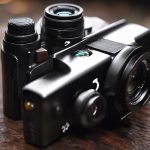
A high-resolution mini camera is suited to situations where a compact design and detailed recordings are important. Its small form makes it easier to position near an entrance, gate, storage area, or other location without installing a large visible device.
When comparing this type of camera, look beyond the stated resolution. Check whether the lens provides a useful view of the area, whether recordings can be stored reliably, and whether the housing is genuinely designed for outdoor exposure. A discreet camera is only useful if it remains protected from moisture and produces usable footage in the available light.
2. Wireless Outdoor Hidden Camera
A wireless outdoor camera can simplify installation because it does not require a video cable running back to a recorder. This gives you more flexibility when monitoring a driveway, garden, side passage, or entrance where wiring would be difficult.
Wireless does not necessarily mean completely maintenance-free. Battery-powered models need regular charging or battery replacement, while network-connected models depend on a suitable wireless signal. Before installation, confirm that the camera can communicate reliably from its intended position and that remote viewing is supported if you need access while away from the property.
3. Motion-Activated Surveillance Camera
Motion activation helps reduce unnecessary recording by starting capture when movement is detected. It can be especially useful for battery-operated cameras, since recording only when activity occurs may reduce storage and power demands compared with continuous recording.
Look for practical control over detection sensitivity and the monitored area. Poor placement can result in recordings triggered by passing traffic, moving branches, or other routine activity. Alerts sent to a phone or computer can make this camera type more useful, but notifications should be configured carefully so important events are not buried among false alarms.
4. Night-Vision Waterproof Spy Camera
For monitoring after dark, choose a camera designed for low-light operation. Night-vision models commonly use infrared illumination to produce footage when visible light is limited, making them suitable for outdoor areas that are not consistently lit.
Pay attention to where the camera is pointed. Reflective surfaces, nearby walls, glass, or objects close to the lens can interfere with night footage. A weather-resistant housing is also essential if the camera will remain outside, but the product’s stated protection level should match the exposure at the installation site.
5. Solar-Powered Covert Camera
A solar-powered camera can be useful in locations without convenient access to mains electricity. Its panel is intended to support the camera’s power needs and reduce dependence on frequent battery changes.
Placement is the central consideration. The panel needs suitable exposure to sunlight, and shading from buildings, trees, or seasonal changes can affect performance. A solar model may also be paired with motion detection to limit power use. Confirm how the camera stores footage and what happens during periods when available sunlight is limited.
6. 360-Degree Panoramic Security Camera
A panoramic camera is designed to cover a broad area from one mounting position. This can be helpful for open outdoor spaces where a conventional fixed lens would leave significant blind spots.
Wide coverage does not guarantee close-up detail everywhere in the scene. Consider the distance to the areas you need to monitor, the camera’s mounting height, and whether the view can be accessed remotely. A panoramic model is most effective when installed in a central position with a clear view in all relevant directions.
7. Weatherproof Mini Bullet Camera
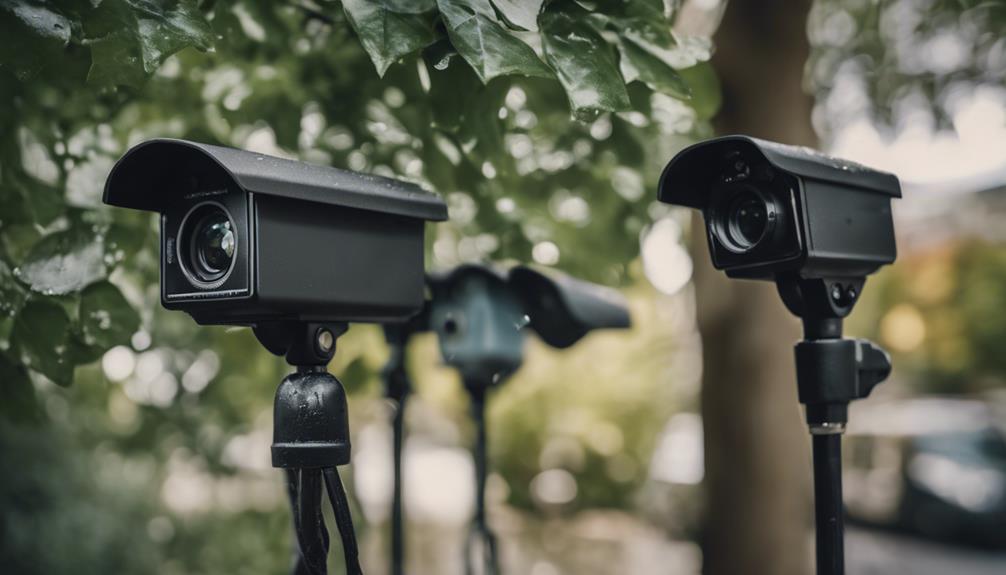
A mini bullet camera combines a compact profile with a housing intended for outdoor use. It can be a practical choice for monitoring a doorway, fence line, driveway, or other defined area while keeping the installation relatively unobtrusive.
Its narrow, directional form makes aiming important. Mount it so the lens covers the intended zone without pointing toward neighbouring private spaces or areas that do not need to be recorded. Check the mounting method, cable protection, and weather resistance before leaving the camera exposed to the elements.
How to Choose the Right Outdoor Camera
- For detailed footage: consider a high-resolution mini camera.
- For flexible placement: a wireless model may be more convenient.
- For reduced recording and power use: choose motion activation.
- For darkness: select a camera with suitable night vision.
- For remote locations: solar power may reduce dependence on outlets.
- For broad coverage: consider a 360-degree panoramic design.
- For a focused outdoor view: a weatherproof mini bullet camera may be appropriate.
Before buying, verify the camera’s outdoor protection, power method, storage options, viewing range, and installation requirements. Matching those details to the location will matter more than choosing the smallest or most feature-packed device.