
Bathrooms are private spaces, so discovering an unfamiliar device or sign of tampering can be deeply unsettling. A careful, methodical inspection can help you identify visible cameras or clues of unauthorized surveillance. No single test is conclusive, however: some cameras record locally, use cellular connections, or remain powered off, meaning they may not appear on a Wi-Fi scan or wireless detector.
Start with a careful visual inspection
Begin by looking for anything new, misplaced, or aimed toward areas where privacy is expected. Pay particular attention to objects that provide a clear view of the room while appearing ordinary, including:
- Air fresheners, chargers, clocks, or other small electronic items
- Smoke detectors, light fittings, and electrical outlets
- Mirrors, shelves, ornaments, and toiletries
- Ceiling corners, vents, and gaps around fixtures
Look for a tiny glass lens, a pinhole, unexplained indicator lights, loose screws, fresh adhesive, damaged paint, or covers that do not fit correctly. Compare the bathroom with how it normally looks and investigate recent changes, especially objects you did not install yourself.
Inspect likely hiding places without damaging anything
A concealed camera needs both a view of the room and a way to receive power or store or transmit footage. Examine the front and underside of suspicious objects, along with nearby cables, outlets, and mounting points. Check behind mirrors and around vents only if they can be inspected safely and without dismantling building systems.
Do not put your fingers into electrical outlets, ventilation openings, or unfamiliar equipment. Avoid removing fixtures, cutting into walls, or disturbing wiring. If an item appears connected to mains electricity or is difficult to access, stop and ask a qualified professional for help.
Use a flashlight or lens finder
A bright flashlight can sometimes reveal a camera lens through a small opening. Dim the room if practical, hold the light close to your eyes, and slowly scan suspicious objects from different angles. A lens may reflect the light as a small, sharp glint, although reflective surfaces and ordinary glass can produce similar results.
Dedicated camera lens finders use light to make lens reflections easier to spot. Treat any reflection as a lead rather than proof. Check whether the apparent lens is part of a legitimate device and whether its direction makes sense for a camera.
Consider a wireless signal detector
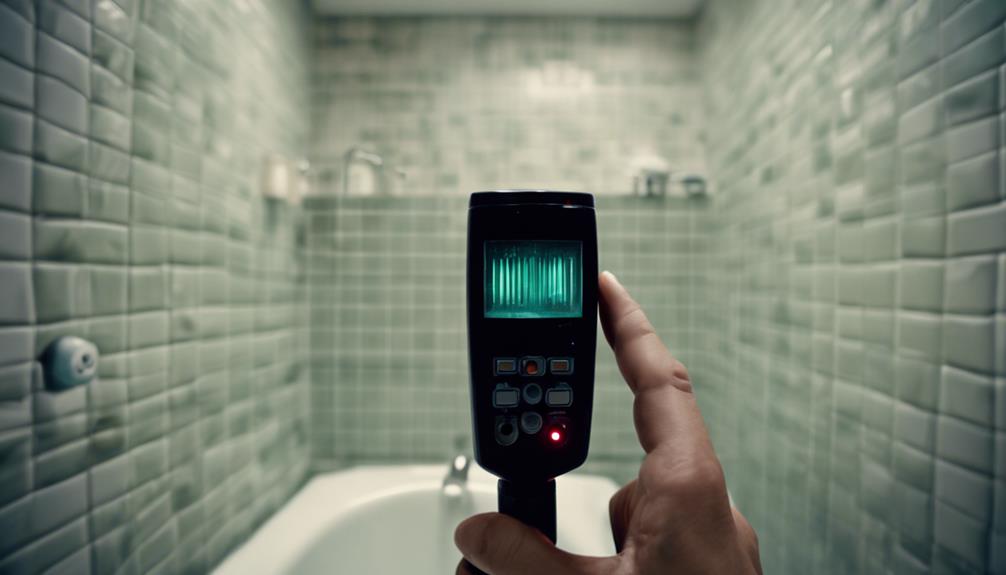
A radio-frequency or wireless signal detector may identify transmissions from some active wireless devices. Sweep slowly around objects, fixtures, and areas where you noticed anything suspicious. Strong signals near a particular object may justify closer inspection.
These detectors can also respond to ordinary Wi-Fi equipment, phones, Bluetooth devices, routers, and other electronics. Turn off or move your own wireless devices where possible and repeat the sweep to reduce misleading results. A quiet reading does not prove that no camera exists: a device may be recording to internal storage, transmitting intermittently, using a different connection, or be switched off.
Review devices connected to your network
Log in to your router or use its device list to review phones, computers, smart-home products, and other equipment connected to your Wi-Fi. Look for an unfamiliar device, an unrecognized manufacturer, or a device that appears at unusual times. Rename or disconnect equipment only when you are confident it is not needed by someone in the household.
Network monitoring can provide useful clues, but it cannot find every camera. Devices using cellular service, a separate network, local storage, or no active connection may not appear. Unknown network activity is a reason to investigate further, not conclusive evidence of surveillance.
If you find something suspicious
Prioritize your immediate safety and privacy. If possible, photograph the device in place, record when and where you found it, and note any visible cables, lights, or identifying marks. Do not destroy, reset, or disassemble it, since that could remove useful evidence. If you need privacy immediately, leave the room or cover the apparent lens without handling the device.
Consider contacting local law enforcement, a lawyer, building management, or another trusted authority. Rules about recording in bathrooms and handling suspected surveillance equipment vary by location. If a thorough inspection is needed, a reputable professional counter-surveillance service may have equipment and experience beyond consumer detectors.
Reduce future privacy risks
- Keep track of fixtures and electronic items installed in the bathroom.
- Secure your Wi-Fi with a strong, unique password and review connected devices periodically.
- Limit access to private areas and question unexpected repairs or installations.
- Repeat a visual check after decorating, moving, or servicing the room.
A calm combination of visual inspection, optical checks, wireless testing, and appropriate follow-up is more reliable than relying on one detector or app alone.