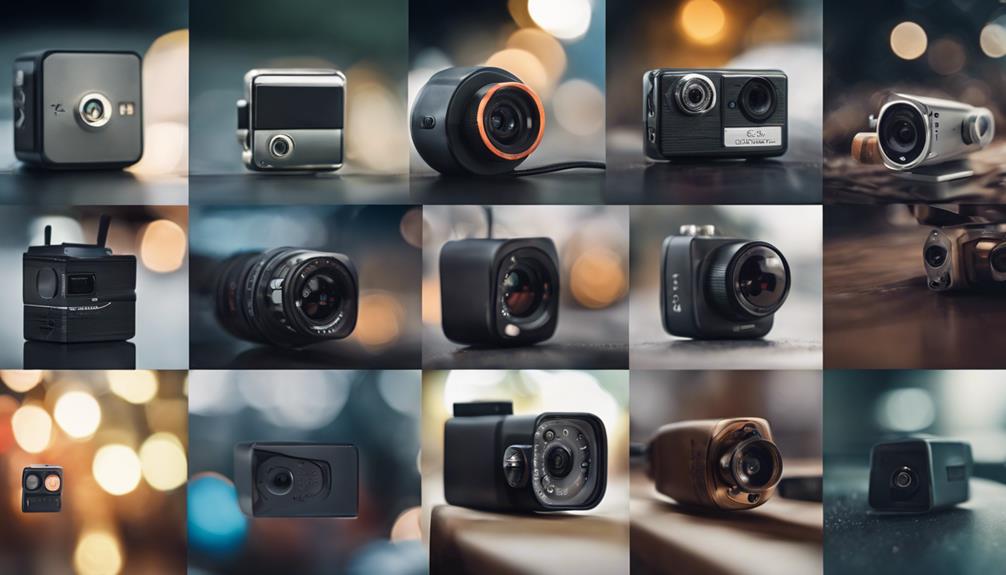

Choosing a camera for 24-hour monitoring involves more than finding the smallest device. You also need to consider how the camera is disguised, how it records, whether it can operate in low light, and how footage is stored. The five camera styles below offer different approaches to discreet surveillance, from compact standalone units to cameras built into familiar household objects.
Before installing any concealed camera, check the laws that apply to your location and respect privacy rules. Cameras should not be placed where people reasonably expect privacy, and recording others may require permission or notice.
What to Look for in a 24-Hour Recording Camera
- Recording mode: Continuous recording captures an uninterrupted view, while motion-activated recording saves footage only when movement is detected.
- Power supply: A camera intended for round-the-clock operation needs a dependable power source. Battery-powered devices may require frequent charging.
- Storage: Check whether the camera uses removable memory, loop recording, or another storage method. Loop recording replaces older footage when available space runs out.
- Night performance: Night vision or low-light recording is important if monitoring continues after dark.
- Remote viewing: Some compact wireless cameras can transmit live footage to a connected device, although this depends on the model and its connection requirements.
1. Miniature Spy Camera
A miniature spy camera is designed for situations where a low-profile installation matters most. Its small size makes it easier to position inside a room or integrate with an everyday setting without attracting attention. This format can suit home, office, or workspace monitoring where a larger security camera would be distracting.
Wireless models may provide live video transmission to a connected phone or computer, giving you the option to check the monitored area remotely. When comparing models, confirm whether wireless connectivity supports viewing only or also recording, and check how the camera receives power during extended use.
2. Hidden Clock Camera
A hidden clock camera combines a familiar household object with a discreet recording system. Because clocks are common in bedrooms, offices, and living areas, this design can blend into its surroundings more naturally than a visibly mounted camera.
The legacy model description highlights high-definition video, motion detection, and remote viewing. These features can make a clock camera useful when you want to review activity without watching a live feed continuously. Motion detection may also reduce the amount of unimportant footage, but buyers should verify whether the camera can record continuously if that is a specific requirement.
3. Wireless Charger Camera
A wireless charger camera is concealed within a device that resembles an ordinary charging accessory. This can make it suitable for a desk, side table, or other location where a charger would not look unusual.
Night vision is a useful feature for monitoring in dim conditions, while motion detection can trigger recording when activity occurs. The combination may help preserve storage and make important clips easier to locate. However, a charger-style camera should be assessed carefully for its actual charging function, viewing angle, recording duration, and ability to remain powered during continuous operation.
4. Smoke Detector Camera
A smoke detector camera is designed to resemble a common safety fixture mounted on a ceiling or wall. Its elevated position can provide a broad view of a room, while the discreet appearance keeps the recording equipment less noticeable.
The described model includes motion detection and night vision. Motion activation can capture activity without requiring constant manual operation, and night vision supports recording in dark or poorly lit areas. Do not rely on a camera disguised as a smoke detector as a substitute for a genuine, properly maintained smoke alarm. Safety equipment should remain functional and clearly identifiable where required.
5. USB Wall Charger Camera
A USB wall charger camera is built into a compact plug-in device, making it practical for locations with a nearby electrical outlet. Its main advantage for extended monitoring is the direct power connection, which avoids the limited runtime associated with small internal batteries.
Motion-activated recording can help focus storage on periods when movement occurs. The described USB wall charger camera also supports loop recording, allowing new footage to replace the oldest clips when the memory becomes full. Before choosing one, check the storage capacity, recording resolution, field of view, and whether it records continuously or only after detecting motion.
How to Choose Between These Camera Styles
Select the format that matches the installation location and your recording priorities. A miniature camera offers the greatest flexibility in placement, while a clock or charger design may blend more easily into indoor surroundings. A smoke detector format is suited to an elevated position, and a USB wall charger is convenient when dependable mains power is the priority.
For genuine 24-hour recording, confirm the power and storage specifications rather than relying on the product’s appearance. If you only need clips when someone enters the area, motion activation may be more practical. For uninterrupted coverage, look specifically for continuous recording support, sufficient storage, and a stable power source.