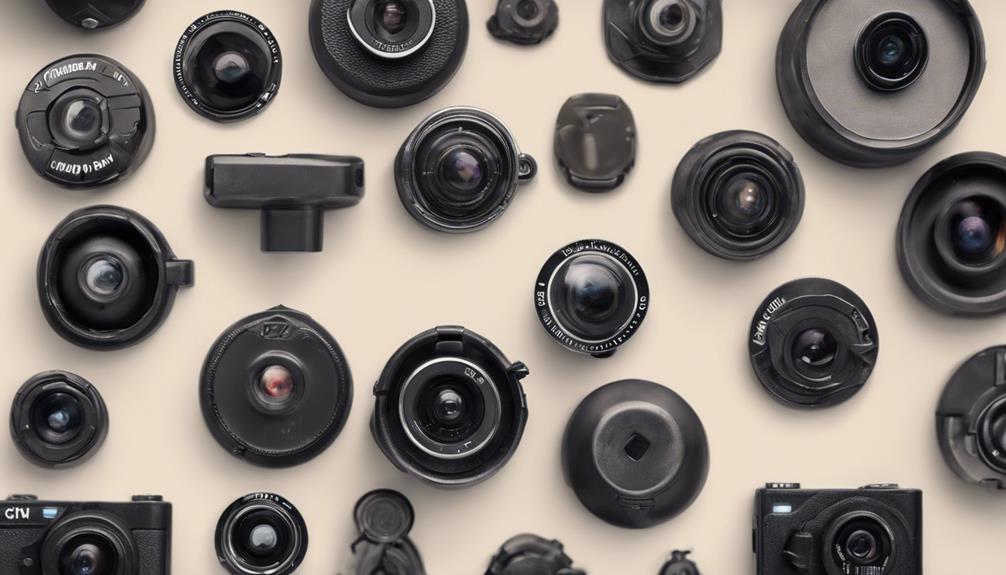

Round cameras are popular for monitoring because their compact shape can fit naturally into rooms, vehicles, personal equipment, and everyday objects. The right design depends on what you need to observe, how much coverage is required, whether recordings must be made in low light, and how easily the device can be accessed.
Before using any discreet camera, check applicable privacy and recording laws. Video and audio surveillance may require notice or consent, particularly in workplaces, shared homes, rented spaces, and private conversations. Use these devices for lawful security, care, or property-monitoring purposes rather than secretly recording people where they have a reasonable expectation of privacy.
1. Mini Round Wi-Fi Camera
A mini round Wi-Fi camera is suited to situations where remote access is more important than a large viewing area. A compatible app or network connection may allow live viewing from another location, making it useful for checking a room, entryway, or other permitted area while away.
Its small circular housing can be easier to position discreetly than a conventional box-shaped camera. When choosing one, consider network reliability, account security, power requirements, and whether recordings are saved locally or accessed through a connected service.
2. 360-Degree Panoramic Camera
A 360-degree round camera is designed to provide broad coverage from a central mounting position. This can reduce the need for several fixed cameras in an open room and helps limit the blind spots associated with a single forward-facing lens.
Panoramic footage may require more careful positioning and review than standard video. Check how the camera presents its image, whether it supports live viewing, and how easily important areas can be identified in the recording.
3. Night-Vision Round Camera
For monitoring in dim rooms or after dark, a round camera with infrared night vision can be more suitable than a standard daylight-only model. Night-vision performance varies, so look for clear information about the camera’s low-light range, image detail, and whether infrared illumination is visible.
Night recording is particularly relevant for entrances, storage areas, and other locations that are not continuously lit. Even a good low-light camera needs a sensible mounting position and an unobstructed view.
4. Motion-Activated Hidden Camera
A motion-detection model can begin recording when movement occurs instead of capturing hours of uneventful footage. This may conserve storage and make later review faster.
Useful controls can include adjustable sensitivity, activity zones, and recording duration. Sensitivity that is too high may trigger on pets, changing light, or moving curtains, while a setting that is too low may miss relevant activity.
5. Round Camera Clock
A camera integrated into a clock combines an ordinary household function with monitoring hardware. This format may blend into a room more naturally than a standalone device, provided its use is lawful and clearly appropriate for the setting.
Potential considerations include the clock’s placement, visibility of the lens, motion recording, storage options, and whether the time display remains readable. Avoid placing such devices in bedrooms, bathrooms, or other private areas without explicit consent.
6. Circular Body-Worn Camera
A small circular body-worn camera is intended for hands-free recording while walking, working, or documenting an activity. Its compact form can be convenient for authorized security, personal documentation, or field work.
Because body-worn cameras may capture bystanders and private conversations, audio and video rules are especially important. Check whether the device has a recording indicator, a quick-access control, secure file storage, and a battery suitable for the intended period.
7. Round Camera with Audio Recording
Some round cameras capture sound as well as video. Audio can add context to an incident, but it also creates additional privacy and legal responsibilities. In many places, recording a conversation is treated differently from recording images in a shared or public space.
Only use audio recording when you have the required permission. If audio is unnecessary, a video-only setting may reduce privacy risk while still supporting basic security monitoring.
8. Portable Round Camera for Travel
A portable round camera can be carried for temporary monitoring of permitted spaces, such as personal equipment or a private lodging area where recording is allowed. A compact design is easier to pack and position than larger security equipment.
For travel, practical features include simple controls, dependable battery life, local storage, and a secure way to transfer files. Check local rules at the destination, and never use a camera to record private areas or people without the necessary consent.
9. Round Nanny Camera with Remote Viewing
A round camera with remote viewing can help an authorized caregiver check on children, pets, or a room from another location. Live viewing may provide reassurance, while motion notifications can draw attention to activity that needs a response.
Secure the account with a strong, unique password and keep access limited to trusted users. Tell household members and caregivers about monitoring arrangements, and position the camera only in appropriate shared areas.
10. Compact Round Camera for Home Security
A compact round camera is a flexible option for monitoring an entryway, hallway, office, or other area of your property. Its unobtrusive shape can be useful where a large security camera would be impractical, while its small footprint allows more placement choices.
Before installing one, identify the area that actually needs coverage, check for power and network access, and decide how long recordings should be retained. Clear signage or advance notice may be appropriate, and secure storage matters whenever footage could identify other people.
How to Choose the Right Round Camera
- Coverage: Choose a standard lens for a focused view or a panoramic design for broader room coverage.
- Lighting: Consider infrared night vision if the monitored area is regularly dark.
- Recording triggers: Motion detection can reduce storage use, but sensitivity should be adjustable.
- Access and storage: Review Wi-Fi security, local memory, remote access, and file-transfer options.
- Privacy: Disable audio when it is not needed and follow consent, notice, and retention requirements.
The best round camera is not necessarily the smallest or most feature-packed. Select the design that provides the necessary coverage while keeping installation, data security, and everyone’s privacy in view.