
Compact action cameras are designed for movement, weather, and situations where a larger camera would be inconvenient. Their small size, wide-angle lenses, durable housings, and image stabilisation also make them useful for activities such as wildlife observation, vehicle recording, property documentation, and outdoor monitoring. However, the best camera depends on whether you need short action clips, longer unattended recordings, or a discreet but lawful setup.
What makes an action camera useful?
A GoPro-style camera combines portability with features normally associated with larger video equipment. It can be mounted on a helmet, vehicle, tripod, chest harness, or other secure surface, allowing hands-free recording from unusual viewpoints.
When comparing cameras like GoPro, focus first on the conditions in which you will record. Important characteristics include:
- Video quality: Choose a resolution and frame-rate combination that matches your subject and available storage. Higher settings can produce more detailed footage but may use more battery and memory.
- Stabilisation: Electronic image stabilisation can make footage easier to watch when the camera is mounted to a moving person, bicycle, vehicle, or animal enclosure.
- Lens coverage: Wide-angle views capture more of the scene, but they may make distant subjects appear smaller and can introduce distortion near the edges.
- Low-light performance: If recording at dusk, indoors, or in shaded areas, compare how well the camera handles noise, motion, and changing illumination.
- Weather protection: A rugged body or compatible protective housing is valuable for rain, dust, mud, and outdoor use.
Features for longer or unattended recording
Action cameras are often used for short recordings, so extended monitoring requires extra planning. Check whether the camera supports loop recording, scheduled recording, motion-triggered capture, or automatic file splitting. These features can help manage storage, although they do not eliminate the need to check the camera and preserve important files.
Battery capacity is another major consideration. Small cameras have limited room for batteries, and demanding video settings can shorten operating time. For a fixed installation, look for an approved external power option or a way to connect the camera safely to a continuous power source. Test the complete setup before relying on it, especially if the camera will be placed outdoors.
Removable storage can simplify file transfer, while wireless connectivity may help with framing, playback, or remote control when the camera is nearby. Wireless functions can also consume additional power. Disable features you do not need, and protect any connected account or network with a strong password.
Small camera alternatives and mounting choices
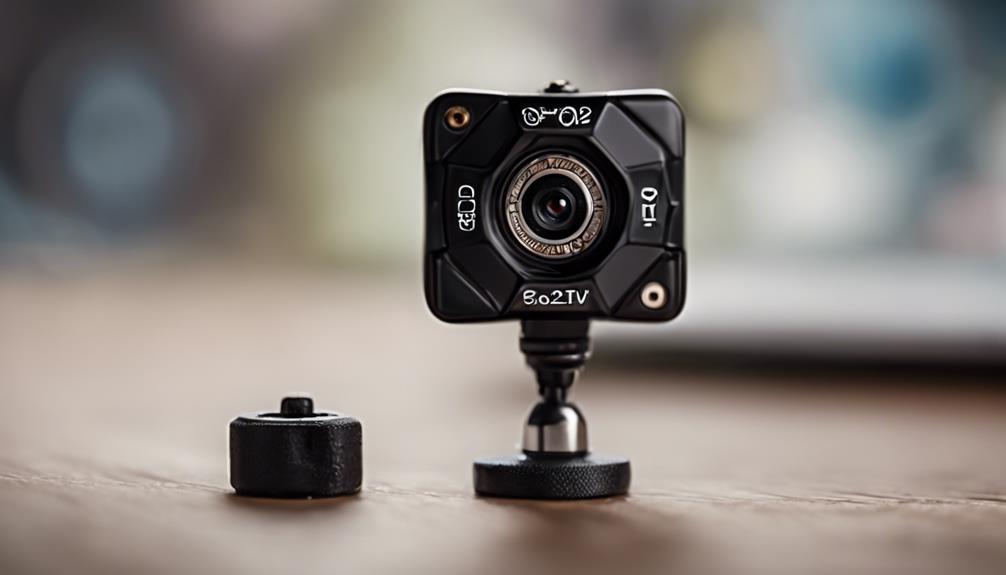
A smaller GoPro-like camera may be preferable when space is limited or when a lightweight setup is important. The trade-off is often reduced battery capacity, fewer controls, less robust construction, or more difficult access to the memory card and charging port.
Use mounts that keep the lens unobstructed and hold the camera firmly. Adhesive mounts, clamps, tripods, suction mounts, and flexible arms each suit different surfaces. For vehicle or outdoor use, check for vibration, heat, moisture, and the possibility that the mount could loosen. Avoid placing a camera where it blocks a driver’s view, interferes with safety equipment, or could become a hazard if it falls.
Choosing a camera for different uses
Action and travel recording
Prioritise stabilisation, simple controls, ruggedness, and easy mounting. A wide field of view works well for activities where the camera moves quickly, while a narrower setting may be better when the subject is farther away.
Wildlife observation
Consider battery life, weather resistance, quiet operation, and the ability to record for longer periods. Place equipment carefully so it does not disturb animals or create a danger for people or wildlife. A wider lens can document an entire area, but it may not provide enough detail for distant behaviour.
Property or vehicle documentation
Prioritise reliable power, stable mounting, clear timestamps, and sufficient storage. Review how files are saved after a recording stops, since an unexpected shutdown can affect the final clip. Keep original files unchanged if they may be needed for an insurance, maintenance, or security record.
Privacy, consent, and responsible use
A compact camera should not be treated as permission to record people secretly. Laws differ by location, particularly for private conversations, workplaces, homes, shared buildings, and areas where people reasonably expect privacy. Before recording, obtain consent when required and use visible, proportionate monitoring wherever possible.
Do not place a concealed camera in bedrooms, bathrooms, changing areas, or other private spaces. If footage includes other people, store it securely, limit access, and delete it when it is no longer needed. For evidence or incident documentation, retain the original file, note when and how it was captured, and avoid unnecessary editing.
Final buying checklist
- Does the camera suit the lighting and movement in your recording environment?
- Will the battery and storage last for the intended session?
- Is the mounting method secure and safe?
- Can you transfer, protect, and organise the recorded files?
- Is the planned recording lawful, ethical, and respectful of privacy?
The strongest alternative to a GoPro is not necessarily the smallest or highest-resolution model. Choose the camera whose stabilisation, lens, power options, durability, and recording controls fit the job, then test the complete setup before using it in the field.