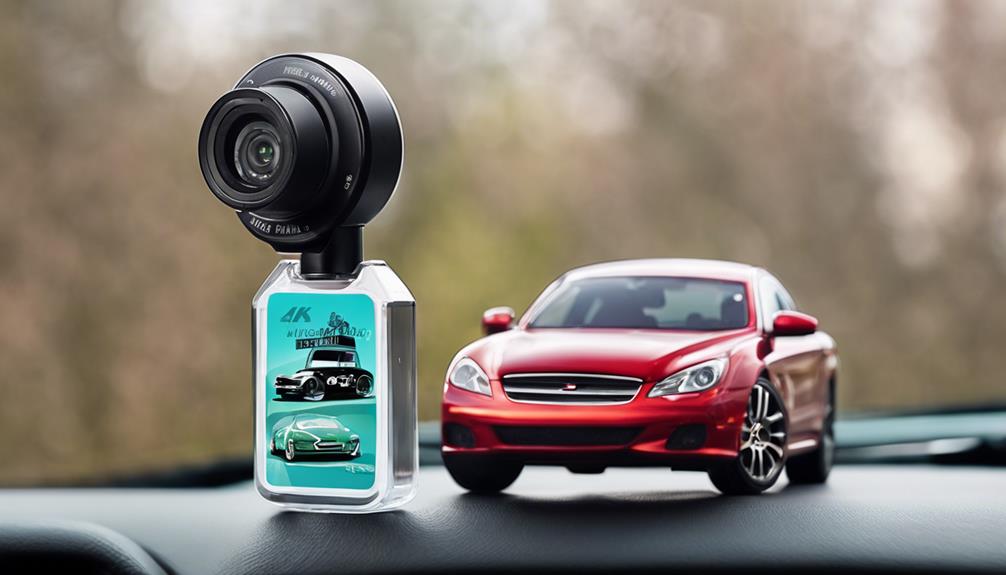

A car air-freshener camera is designed to combine a familiar interior accessory with a small recording device. If you are comparing this type of product, focus on practical performance rather than appearance alone. Video quality, recording controls, installation, power, and responsible use all affect whether a camera is useful in a real vehicle.
Because these devices may record people without their knowledge, check the privacy and recording laws that apply where you live. Use a camera only for a lawful purpose, avoid recording private conversations or areas where people reasonably expect privacy, and obtain consent when required.
1. A Discreet, Compact Design
The main appeal of an air-freshener camera is its compact form. A well-designed unit should fit naturally within the vehicle without blocking the driver’s view, interfering with controls, or creating a distraction. Its placement should also be stable so that the lens remains pointed in the intended direction while the car is moving.
Before buying, consider:
- Whether the camera can be mounted securely without obstructing the windshield or dashboard
- How easily the lens angle can be adjusted
- Whether indicator lights can be managed without disabling important status information
- Whether the air-freshener compartment or exterior is replaceable and practical to maintain
A small design is useful only when it remains safe and functional inside the vehicle.
2. Clear Video and Adequate Viewing Coverage
Video resolution is one of the most important specifications, but it is not the only measure of image quality. A camera should produce footage that remains clear enough to review in the lighting conditions where it will be used. Lens quality, exposure handling, and the viewing angle can make a major difference.
A wide-angle lens may cover more of the cabin or surrounding area, while a narrower angle can provide a more focused view. Wider coverage can also introduce distortion around the edges. Look for sample footage captured in daylight and low light rather than relying only on a resolution number.
3. Motion Detection and Recording Options
Motion detection can help reduce unnecessary recording by activating the camera when movement is detected. This may save storage space and battery power, especially when the vehicle is parked for extended periods. However, motion detection is not perfect: very small movements may be missed, while changes in light or passing activity may trigger unwanted clips.
Useful recording features may include loop recording, adjustable clip length, timestamp settings, and support for removable storage. Check how recordings are accessed and whether older files are automatically overwritten. If the camera connects to a phone or another device, review the app’s permissions and security settings before enabling remote access.
4. Simple Installation and Connectivity
A practical camera should be straightforward to position, configure, and review. Wireless connectivity can make setup easier by allowing footage or settings to be accessed through a companion app, but wireless operation does not necessarily mean the camera is completely cable-free. Many models still need a USB connection for charging or continuous power.
Look for clear instructions, reliable pairing, and controls that can be used without distracting the driver. If you plan to connect the camera to the vehicle’s power system, installation should be performed safely and in accordance with the vehicle manufacturer’s guidance.
5. Battery Life and Power Management
Battery performance determines how long the camera can operate when the engine is off. Motion-triggered recording and automatic sleep modes can reduce power consumption, while continuous recording will generally require more energy and storage capacity.
Compare the expected runtime with your intended use instead of relying on a headline battery claim. Also check charging time, battery replacement options, and whether the device can operate from a vehicle power source. A camera that stops recording unexpectedly is less useful than one with fewer features but dependable power management.
Final Considerations Before Buying
The best car air-freshener camera is not necessarily the smallest or most feature-packed option. Choose one that provides clear footage, stable placement, manageable storage, dependable power, and an installation method that does not compromise driving safety.
Most importantly, use any in-car camera transparently and lawfully. Do not use a concealed device to invade someone’s privacy, and verify local rules concerning audio recording, passengers, employees, and surveillance in parked vehicles.