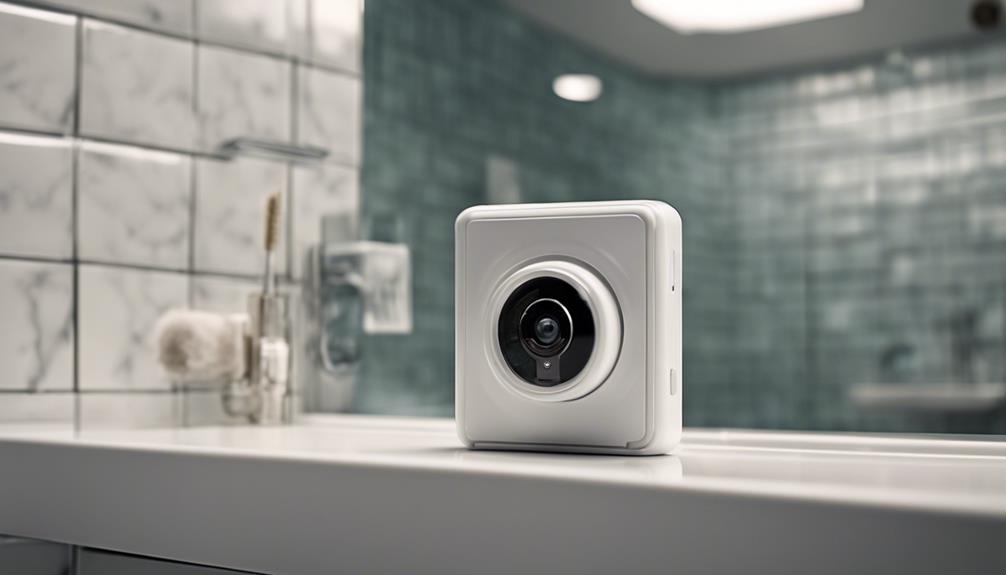

Washroom security matters, but hidden cameras are not an appropriate solution for toilets, changing areas, showers, or other spaces where people reasonably expect privacy. Devices disguised as air fresheners, chargers, or other everyday objects can capture highly sensitive footage without consent and may violate privacy laws. They can also expose the property owner, employees, and visitors to serious ethical and legal risks.
A safer security plan focuses on preventing unauthorized access, responding to emergencies, and protecting people without recording private activity. The right combination depends on whether the washroom is in a home, workplace, hospitality venue, school, or public facility.
Why spy cameras are unsuitable for washrooms
Miniature, motion-activated, Wi-Fi, waterproof, and high-definition cameras all create the same fundamental problem when used inside a private washroom: they can record people in an intimate setting without their informed permission. Remote viewing and cloud storage increase the potential impact of a breach, while concealed placement makes it difficult for visitors to understand what is being collected or who can access it.
Even visible surveillance equipment may be restricted in areas such as toilet cubicles, shower rooms, and changing spaces. Laws differ by location, so anyone responsible for a facility should obtain qualified local legal advice before installing any monitoring system. A sign alone does not automatically make covert recording lawful or ethical.
Better ways to improve washroom security
Secure the entrance and surrounding areas
If video surveillance is permitted, limit it to appropriate public-facing locations such as an exterior approach, entrance, reception area, or corridor. Cameras should not point into cubicles, mirrors, shower areas, or other places where private activity may be visible. Use clear notices, restrict access to recordings, and establish a defined retention and deletion policy.
Improve lighting and visibility
Bright, reliable lighting around entrances, corridors, parking areas, and building approaches can discourage vandalism and make it easier to identify hazards. Keep sightlines clear and avoid layouts that create hidden corners near the washroom entrance.
Use access controls
- Repair damaged locks, latches, hinges, and door closers.
- Consider controlled access where the facility requires it.
- Provide a reliable way to report a door or lock that does not work.
- Inspect accessible and single-occupancy washrooms regularly.
Add emergency assistance
Emergency call buttons, pull cords, two-way communication systems, or clearly displayed contact instructions can help someone request assistance without being filmed. These systems should be tested routinely, kept reachable, and connected to a response process that staff understand.
Consider non-imaging sensors
Where appropriate, occupancy or door sensors can provide useful operational information without capturing images. For example, a facility may use them to identify an occupied single-user room, detect a door being left open, or flag a possible maintenance issue. Sensor placement and data handling still require careful privacy review, but these tools avoid recording identifiable bathroom activity.
Privacy checklist for facility managers
- Do not install concealed cameras inside washrooms, cubicles, showers, or changing areas.
- Document the specific safety problem before choosing technology.
- Collect the minimum information needed for that purpose.
- Use visible notices and explain monitoring in straightforward language where surveillance is lawful.
- Limit who can view security data and protect accounts with strong authentication.
- Set a short, justified retention period and securely delete recordings when they are no longer needed.
- Review the system regularly to ensure it does not capture private areas.
A practical security approach
Start with physical security, lighting, maintenance checks, emergency communication, and clear reporting procedures. If video is genuinely necessary, keep it outside the private washroom environment and use it only after reviewing local requirements. This approach can address vandalism, unauthorized access, and emergencies while respecting the dignity and privacy of everyone who uses the facility.