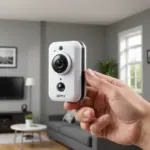

A 4K spy camera can provide highly detailed footage in a small, discreet package, but resolution is only one part of a useful surveillance setup. The best choice depends on where the camera will be used, how long it must operate, whether remote access is important, and what local privacy laws allow.
Key features of a good 4K spy camera
Compact, discreet design
Small cameras are easier to position in confined spaces and less likely to obstruct the area being monitored. Look for a design that can be mounted securely and aimed at the required coverage area without drawing unnecessary attention. A compact body is useful, but it should not come at the expense of reliable power, ventilation, or a stable lens position.
True 4K video quality
4K recording captures more detail than lower-resolution video, which can help when reviewing faces, objects, or activity within the frame. However, image quality also depends on the lens, lighting, compression, frame rate, and storage capacity. Before buying, check whether 4K recording is available continuously or only in selected modes, and confirm how much storage high-resolution footage will require.
Night vision and low-light performance
For monitoring after dark, infrared night vision is an important feature. It allows the camera to record in low-light conditions without relying on visible illumination. Compare the expected night-vision range and remember that performance can be affected by walls, reflective surfaces, and complete darkness. A camera that produces clear daytime video may not perform equally well at night.
Motion detection
Motion detection can reduce the amount of footage that needs to be reviewed and may help conserve battery power. More useful systems allow you to adjust sensitivity or define activity zones so that movement from curtains, pets, or changing light is less likely to trigger unnecessary alerts.
Motion alerts should not be treated as proof that a person is present. Review the recorded clip and adjust the settings after installation to reduce false notifications.
Field of view
A wide-angle lens can cover more of a room or other monitored area from a single position, reducing blind spots. Wider coverage can also introduce distortion around the edges of the image. Consider whether you need a broad overview or more detailed footage of a narrower area, and position the camera so that important entrances or activity zones remain clearly visible.
Connectivity, storage, and remote access
Wi-Fi connectivity can allow you to view a live feed, receive motion notifications, and change settings from a phone or computer. Wireless performance depends on distance, walls, interference, and the quality of the network. A camera should also provide clear security controls, including a strong password, encrypted connections where supported, and firmware updates.
Storage options commonly include a memory card, internal storage, or a cloud service. Local storage may avoid recurring fees but can be lost or damaged with the camera. Cloud storage may offer easier remote access, but it can involve subscriptions and requires careful account security. Check recording duration, overwrite behaviour, and whether the camera continues recording if the internet connection fails.
Audio recording and privacy
Some compact cameras include microphones for recording sound with video. Audio can add context, but it is often subject to stricter privacy rules than video. Do not record conversations or place a camera where people have a reasonable expectation of privacy unless you have a lawful basis and the required consent.
Use these devices only for legitimate purposes, such as protecting property or monitoring an area where recording is permitted. Avoid hidden recording of bedrooms, bathrooms, changing areas, or private conversations. If other people may be recorded, provide notice or obtain consent when required by the applicable rules.
Installation and battery considerations
An easy setup process is helpful, particularly if the camera must be repositioned to find the best angle. Look for clear mounting options, straightforward controls, and the ability to test the live view before leaving the device in place.
Battery-powered models are flexible, but runtime varies with resolution, motion activity, Wi-Fi use, night vision, and temperature. A camera that records continuously will generally use more power than one that activates only when movement is detected. If uninterrupted monitoring is important, consider a dependable wired power source or a model that supports safe, convenient recharging.
How to choose among the options
- Choose 4K when fine image detail is more important than minimal storage and power use.
- Prioritise infrared performance if the camera will operate in darkness.
- Check the field of view and place the camera to minimise blind spots.
- Compare local and cloud storage, including fees and offline recording behaviour.
- Review wireless security features before connecting the camera to your network.
- Confirm that video and audio recording are lawful in the intended location.
The best 4K spy camera is not necessarily the smallest or most feature-packed model. It is the one that provides suitable image quality, dependable power, secure access, and appropriate coverage while respecting the privacy of everyone who may be recorded.