
Cameras that respond to movement can do more than record a fixed view. Depending on the design, a motorized camera may pan from side to side, tilt vertically, zoom in on distant activity, or follow a detected person, vehicle, or animal. This makes moving cameras useful when one device needs to cover a broad area or react to activity without constant manual control. For advanced setups, review specific device categories that include mobile surveillance units for discreet tracking.
They are used in homes, businesses, warehouses, offices, and other security environments. However, the same features that improve coverage can also increase privacy risks. Choosing and installing a moving camera therefore requires attention to its detection method, mechanical range, network security, and the laws that apply to recording people.
How motion-responsive cameras work
A moving camera usually combines a motion-detection system with a motorized mount. Basic systems may react to changes between video frames or to input from a separate motion sensor. More advanced cameras use video analysis to classify activity, helping distinguish people and vehicles from events such as changing light, moving foliage, or small animals.
When the system identifies relevant movement, it can activate a pan-and-tilt mechanism, adjust the lens, or begin tracking a subject. The quality of this response depends on several factors:
- The accuracy and range of the motion sensor or video analytics.
- The camera’s ability to identify the type of moving object.
- The speed and precision of the motorized mount.
- The camera’s field of view, zoom capability, and available light.
- The settings used for sensitivity, tracking, and activity zones.
Main types of moving cameras
Pan-tilt-zoom cameras
PTZ cameras can rotate horizontally, move vertically, and zoom in or out. They are commonly used to survey large rooms, yards, entrances, aisles, and loading areas. A PTZ model can provide a wide overview and then focus on activity at a distance, although its coverage is still affected by placement and obstructions.
Auto-tracking cameras
Auto-tracking models add software that attempts to keep a detected subject within the frame. This can be useful where people or vehicles move through a monitored area. Tracking performance may decline when several subjects overlap, when lighting changes sharply, or when the subject leaves the camera’s usable range.
Compact motorized cameras
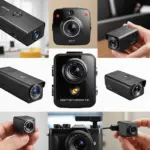
Small motorized cameras are designed for situations where a compact enclosure is important. Some are marketed for discreet observation, but discreet placement does not remove privacy obligations. Recording inside private spaces or monitoring someone without the required consent can be unlawful, particularly in places where people reasonably expect privacy.
Drone-mounted cameras
A camera mounted on a drone can move through three dimensions and survey areas that are difficult to cover from a fixed position. This option introduces additional operational and legal requirements, including safe handling, trained operation, and compliance with applicable aviation rules.
Practical applications
At home, a moving camera can help monitor a large outdoor area or an open interior space without installing multiple fixed cameras. Businesses may use PTZ or tracking systems near entrances, retail areas, warehouse aisles, and loading docks. In offices and hospitality settings, motorized cameras can also follow a presenter during a meeting, event, or video conference. For discreet alternatives to motion-tracking setups, explore ebony concealed models designed for unobtrusive placement.
Private investigators and law-enforcement personnel may have specialized uses for tracking equipment, but those uses must be assessed under the laws and procedures that govern surveillance in the relevant location. A camera should not be selected or deployed solely because it is difficult for people to notice.
Installation and configuration considerations
Placement determines how effectively a moving camera can respond. Mount the unit where its view is not blocked and where the motorized range covers the intended area. The height and angle should also reduce unnecessary triggers from irrelevant movement.
Motorized cameras may require more power than fixed models, especially while moving or using other active features. Confirm that the power supply, cables, and connectors are suitable for the device. For networked cameras, use secure account credentials, protect remote access, install available firmware updates, and enable encrypted video transmission where supported.
Before relying on automatic tracking, test the system at different times and under different lighting conditions. Adjust motion sensitivity, define activity zones, and exclude areas that should not trigger recording or movement. Proper calibration can reduce false alerts, limit needless repositioning, and reduce mechanical wear.
Privacy, legal, and ethical boundaries
Moving cameras can actively follow people, making them more intrusive than equipment that records a fixed scene. Rules differ by jurisdiction, but private areas such as bathrooms and changing rooms generally require especially strict protection. Covert recording in a home, vehicle, workplace, or other private setting may also create serious legal consequences when consent is absent.
Organizations should establish a clear purpose for surveillance, limit access to recordings, and use signs or notices where required. The least intrusive camera position and tracking mode should be chosen when it can meet the same security goal. Reviewing local privacy and recording laws before installation is essential.
Choosing the right system
Start with the area to be monitored and the type of activity the camera must capture. Compare PTZ range, image quality, low-light performance, tracking accuracy, response speed, durability, storage, and compatibility with the existing security platform. A fixed camera may be more appropriate when continuous coverage of one specific view matters more than active tracking.
When movement is genuinely useful, a well-placed and carefully configured camera can improve situational awareness while reducing blind spots. The best results come from matching the equipment to a clearly defined purpose and operating it in a way that respects consent, privacy, and applicable law.