
A bag designed to conceal a camera can help equipment blend into an everyday setting, but it should be used responsibly. Recording people without their knowledge may violate privacy or surveillance laws, so always follow local regulations and obtain consent where required. With that in mind, the right bag should be comfortable, practical, and unobtrusive rather than attention-grabbing.
1. Sleek and Stylish Camera Bag
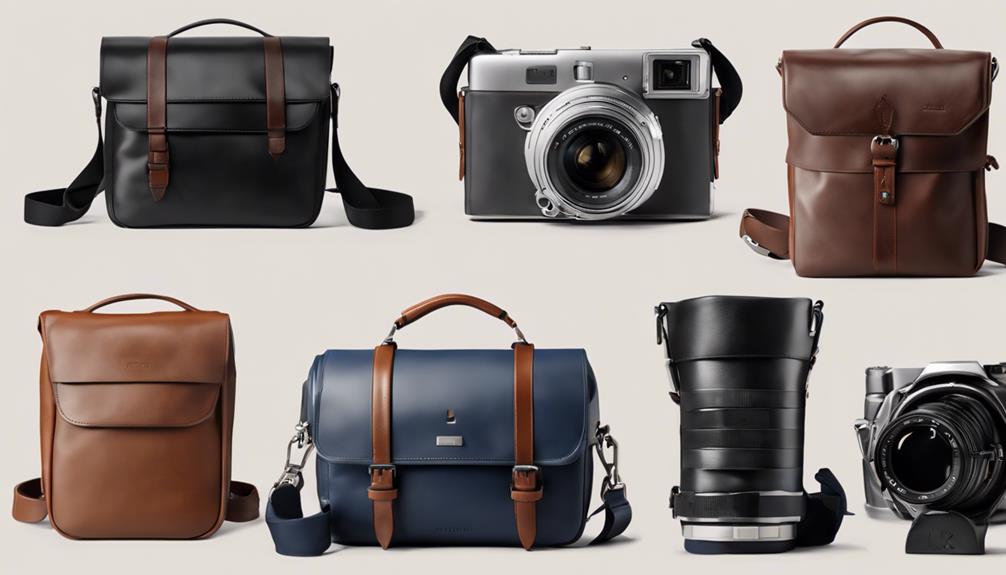
A sleek camera bag is a good choice when appearance matters as much as equipment storage. Its understated styling is intended to resemble an ordinary accessory, helping it fit naturally into professional, urban, or social environments without a conspicuous technical look.
The minimalist design and neutral appearance described for this style make it suitable for users who want a discreet option that does not look like specialist gear. Adjustable straps can make the bag easier to carry for longer periods, while padded storage helps protect a camera and related accessories during transport.
Why choose this style?
- It has a polished appearance that can blend into everyday surroundings.
- Padded compartments provide a dedicated place for recording equipment.
- Adjustable carrying options can improve comfort.
- Organised pockets make commonly used accessories easier to reach.
This design is best for someone who wants a refined, compact bag for carrying equipment discreetly. Before buying, check that the internal layout fits the specific camera, power source, and accessories you intend to carry.
2. Multi-Functional Everyday Backpack
An everyday backpack offers the most flexible approach to carrying surveillance equipment alongside ordinary belongings. Rather than being limited to camera use, this format can accommodate personal items, work essentials, and accessories while maintaining a conventional exterior.
The main appeal is its capacity and versatility. Separate compartments can help keep recording equipment organised and reduce the need to carry a second bag. A simple exterior also allows the backpack to function as a normal daily-use item, which may be preferable for lawful documentation, event recording, or other situations where a low-profile appearance is useful.
What to look for in a backpack
- Compartments that separate camera equipment from personal items.
- Enough padding to protect devices during regular travel.
- Comfortable shoulder straps for extended carrying.
- Quick, practical access to equipment without unpacking the entire bag.
- A conventional design that does not advertise expensive electronics.
This option is the strongest choice for people who need one bag for several purposes. Its larger format can be less convenient than a small satchel in crowded spaces, but it generally provides more room and better organisation.
3. Compact Crossbody Surveillance Satchel
A compact crossbody satchel is designed for portability and quick access. Its smaller size makes it easier to carry while walking, travelling, or moving through busy surroundings, and the crossbody format can keep the bag close to the user.
Strategically arranged pockets may provide convenient access to a camera or recording device without requiring the bag to be fully opened. That can be useful when equipment must be retrieved promptly, although the bag should never be positioned or used in a way that records people where they have a reasonable expectation of privacy.
Advantages of the compact format
- Lightweight and easy to carry throughout the day.
- Smaller profile than a full-size backpack.
- Quick access to essential equipment and accessories.
- Suitable for users who carry only a limited amount of gear.
The trade-off is storage capacity. A compact satchel may not leave much room for extra batteries, personal belongings, or larger equipment, so it is worth planning what you actually need before choosing this style.
How to choose the right bag
Consider the setting, the amount of equipment you need to carry, and how long the bag will be worn. A stylish camera bag suits a polished appearance, a backpack offers the greatest everyday flexibility, and a crossbody satchel prioritises portability and access. In every case, look for comfortable carrying, secure storage, durable construction, and a design that suits legitimate, consent-based recording.
These three bag styles cover the main needs of discreet equipment transport: refined presentation, all-purpose capacity, and compact mobility. Choosing based on comfort and practical storage—not simply concealment—will make the bag more useful and responsible in everyday use.