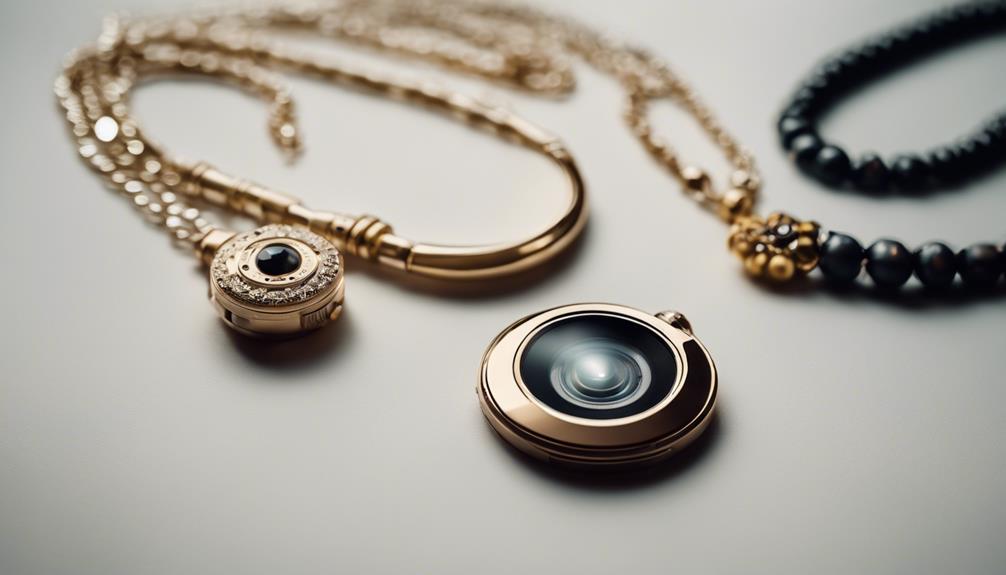

Hidden camera necklaces combine wearable design with compact video technology. They may look like ordinary jewelry, but some pendants contain a small camera, storage system, battery, and recording controls. Because these devices can capture people without their knowledge, they should be used only for lawful purposes and with the required consent. Privacy, recording, and audio laws vary by location, so check the rules that apply before using one.
Rather than choosing a device based only on its appearance, compare the features that affect recording quality, reliability, and responsible use. These are the three most important areas to examine.
1. Discreet, Practical Necklace Design
A wearable camera is useful only if it can be worn comfortably and operated without constant adjustment. Look for a pendant and chain that resemble ordinary accessories without making exaggerated claims about being completely undetectable. The camera opening should be positioned where it has a clear forward-facing view, while the controls should be accessible enough to use without removing the necklace.
Design details worth checking
- Viewing angle: A camera pointed toward the wearer’s chest may record very little of what is ahead. Check how the lens is aligned when the necklace is worn naturally.
- Weight and comfort: A heavy pendant can shift position, creating unstable or poorly framed footage.
- Material and finish: A conventional appearance may make the accessory easier to wear in appropriate, consent-based situations.
- Control layout: Buttons should be clearly identified in the instructions and should not be so easy to press accidentally that recording starts or stops unintentionally.
Comfort also matters during longer recordings. A necklace that twists, catches on clothing, or requires frequent repositioning can reduce both usability and image quality.
2. Video Quality and Storage
Resolution is one of the first specifications buyers notice. Devices in this category may advertise recording at 1080p or higher, with some claiming up to 4K. However, a resolution number alone does not guarantee useful footage. Image quality also depends on lighting, lens design, stabilization, frame rate, compression, and the available storage capacity.
When comparing models, consider whether the camera produces a sufficiently wide and steady image for the intended lawful use. Test footage, when available, can reveal more than a headline specification. Pay attention to faces and fine details at realistic distances, especially indoors or in low light.
Questions to ask before buying
- What video resolutions and frame rates are actually supported?
- Does the camera record sound, and is audio recording legal in the intended setting?
- What type and capacity of memory does it use?
- Are files easy to transfer, review, and delete securely?
- Does the device add a date or time stamp, and can that information be set accurately?
Higher resolution can produce larger files, so storage should be considered alongside image quality. A camera that fills its memory quickly may be less useful than one with a lower setting but more dependable recording time.
3. Battery Life, Reliability, and Connectivity
Battery performance determines how long the necklace can record before it needs to be recharged. Published operating times are often based on particular settings and conditions, so treat them as estimates rather than guarantees. Continuous recording, high-resolution video, poor signal conditions, and wireless functions can all affect runtime.
Choose a model with a charging method that suits the way it will be used. It is also worth checking whether the camera can record while charging, how long a full recharge takes, and whether the battery is replaceable. Clear status indicators are helpful because they reduce the chance of assuming a device is recording when it is not.
Remote access and data protection
Some wearable cameras may offer wireless connectivity or remote access to live or recorded footage. These features can be convenient, but they add privacy and security considerations. Before enabling them, review how the connection is protected, where recordings are stored, and whether an account or mobile application is required.
Use strong account credentials, update the associated software when appropriate, and avoid sharing recordings unnecessarily. Keep footage only for as long as there is a legitimate reason to retain it.
Responsible Use Matters
A hidden camera necklace is not automatically suitable for personal security, investigations, entertainment, or workplace use. Recording someone without permission may violate privacy expectations or local law, particularly when audio is captured. Do not use a wearable camera to invade private spaces, monitor people secretly, or collect sensitive information without a lawful basis.
The best choice is the one that combines a comfortable design, dependable video performance, and realistic battery life while respecting the people being recorded. Compare the full specifications, read the instructions, and confirm the legal requirements before operating any concealed camera.