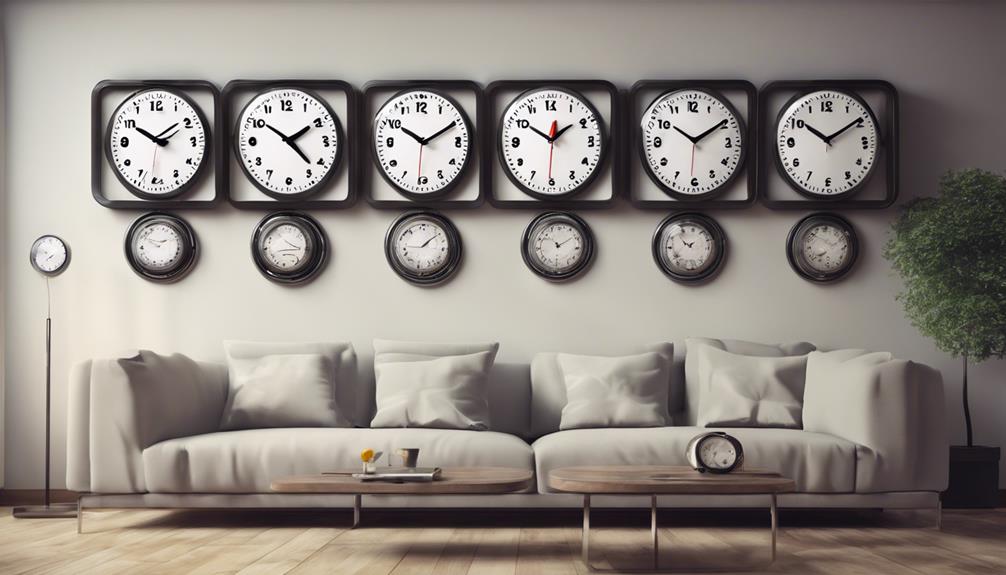

Hidden camera wall clocks combine an everyday household object with video-monitoring equipment. Their main appeal is discreet placement: a clock can fit naturally into a living room, hallway, office, or entryway without the appearance of a conventional security camera. However, the right choice depends less on appearance alone and more on how well its recording, connectivity, and detection features match your security needs.
Below are five important features to compare when evaluating a hidden spy camera wall clock.
1. A design that fits the room
A wall clock intended for discreet monitoring should look like a normal part of the room. Minimalist styling, neutral colors, clean lines, and a practical clock face can help the device blend with existing décor rather than attract attention.
Consider where the clock will be installed before choosing a design. The camera’s viewing angle should cover the area you want to monitor, while the clock itself should be placed at a suitable height and position. A visually convincing design is useful only when it also provides a clear, unobstructed view.
2. Wi-Fi and remote access
Wi-Fi connectivity can make a wall-clock camera more convenient to manage. Depending on the model, it may allow you to view a live feed or review saved recordings through a smartphone, tablet, or computer. Remote access is particularly useful when you need to check a property while away from home.
Some devices may also allow settings such as motion sensitivity or recording schedules to be adjusted remotely. Before buying, check how the camera connects, which devices it supports, and whether recorded footage is stored locally, in the cloud, or through another method. Cloud storage can provide a backup if the camera is damaged, but storage arrangements and account requirements should be reviewed carefully.
3. High-definition video recording
Video resolution directly affects how much detail appears in recorded footage. The supplied product descriptions refer to 1080p or higher as a useful benchmark, but resolution is not the only factor that determines image quality. Lighting, lens placement, viewing angle, and the camera’s ability to handle movement also matter.
Look for footage that is clear enough for the intended purpose, whether that means observing an entryway, checking on a room, or reviewing an event after it occurs. If possible, confirm how recordings are saved, how much storage is available, and whether older files are automatically overwritten.
4. Adjustable motion detection
Motion detection allows the camera to begin recording when movement appears within its field of view. This can reduce unnecessary footage and make important events easier to find than continuous recording alone.
Adjustable sensitivity is valuable because every room has different conditions. Curtains, pets, changing light, or activity outside a window can trigger unwanted recordings. A model with configurable detection settings may help reduce false alerts. Also consider whether the device sends notifications, records short clips, or continues recording for a set period after movement is detected.
5. Night vision and low-light performance
Security monitoring should not stop when the room becomes dark. Wall-clock cameras with infrared LEDs can capture footage in low-light or dark conditions without relying on visible lighting. Infrared illumination is designed to support the camera sensor while remaining invisible to most people in the room.
Night vision performance can vary, so pay attention to the area you need to cover and the expected distance between the camera and the subject. A camera that works well in a dim hallway may not provide the same results across a large room. Test or review sample footage when that information is available.
Important privacy and installation considerations
Discreet cameras should be used responsibly. Recording people without their knowledge may be restricted by privacy or surveillance laws, especially in bedrooms, bathrooms, workplaces, rental properties, or shared spaces. Obtain appropriate consent and check the rules that apply in your location before installing one.
It is also worth securing the device with a strong account password, keeping access details private, and positioning the clock so it monitors only the area you are permitted to record. A hidden camera is not a substitute for sensible physical security, but the right combination of design, remote access, video quality, motion detection, and night vision can make a wall-clock camera a practical monitoring option.