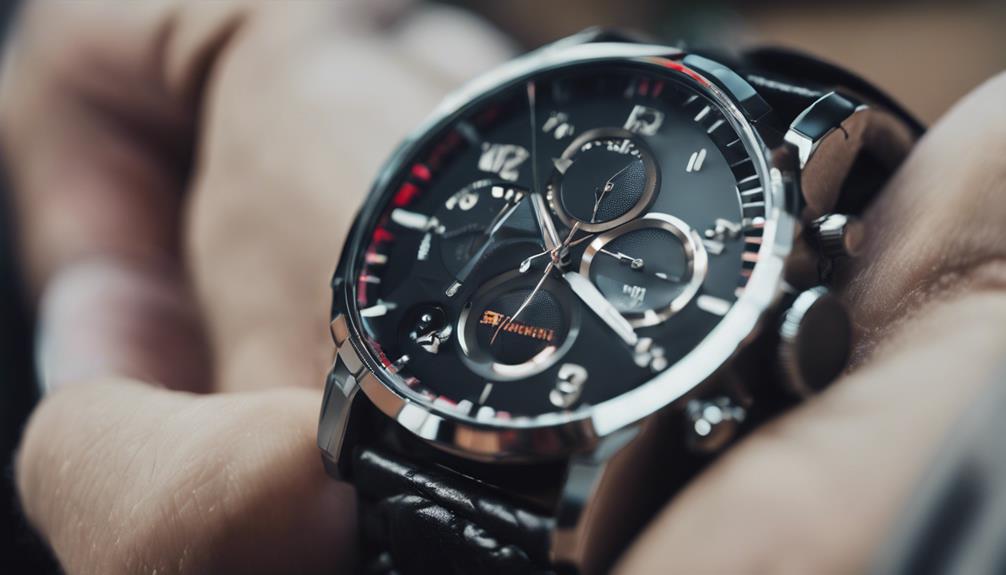

A hidden camera watch combines the appearance of an ordinary timepiece with video-recording hardware. That unusual format may be useful for lawful documentation, personal security, or authorized monitoring, but it also raises important privacy concerns. Before choosing one, look beyond its discreet appearance and compare the recording quality, controls, battery performance, and security features that matter in real-world use.
1. Natural, Wearable Design
The most convincing camera watches are designed to look like regular wristwatches rather than novelty gadgets. A simple case, conventional strap, and restrained styling can make the device less conspicuous in everyday settings. However, appearance should not be the only priority. Check whether the watch feels comfortable, whether the lens is visibly exposed, and whether the design allows the camera to point in the intended direction while worn.
2. Video Quality and Storage
Recording resolution affects how useful captured footage will be. Higher-definition video can make details easier to review, but advertised resolution alone does not guarantee clear results. Image quality also depends on lighting, lens placement, stabilization, and the available storage capacity.
Before buying, check how recordings are saved and transferred. Some devices may use removable storage, while others require a cable or companion software. Confirm the maximum supported capacity, file format, recording limits, and whether the watch overwrites older files when storage is full.
3. Performance in Low Light
Night vision or infrared recording can help in dim environments, but performance varies considerably between devices. Look for clear information about the expected range and whether infrared illumination is visible. Low-light footage may still contain less detail, more noise, or reduced color accuracy than daytime video.
If reliable identification is important, test the camera in the lighting conditions where it will actually be used rather than assuming that a night-vision label guarantees usable footage.
4. Motion Detection and Recording Modes
Motion detection can reduce unnecessary recordings by activating the camera when movement is detected. This may conserve storage and make longer sessions easier to review. Some watches may also offer continuous recording, still images, or short clips, although the available modes depend on the model.
Consider how easily these settings can be changed and whether motion detection responds appropriately to movement in the background. A feature is only useful if it can be configured without complicated menus or accidental activation.
5. Battery Life and Charging
Camera recording uses substantially more power than ordinary timekeeping. Battery performance therefore depends on recording resolution, screen use, motion detection, night vision, and wireless functions. Treat broad battery claims as estimates and look for separate information about standby time and continuous recording time.
A practical camera watch should be straightforward to charge and should provide a clear indication of remaining power. If the device is intended for extended use, consider whether carrying a charging cable or taking regular breaks to recharge will be convenient.
6. Controls and Everyday Operation
Discreet operation should not mean confusing operation. Clearly placed buttons, tactile feedback, and a simple menu can make it easier to start or stop recording without repeatedly looking at the watch. Review how files are played back, deleted, or transferred, and whether the device records a visible indicator that may affect privacy in a shared environment.
Audio recording, if included, deserves particular attention. Sound can be more sensitive than video, and recording conversations may be restricted even when filming in the same location is permitted.
7. Connectivity and Data Protection
Some camera watches may offer wireless transfer, live viewing, location functions, or remote access. These features can be convenient, but they also introduce additional privacy and security considerations. A connected device may expose recordings or location information if its account, application, or wireless connection is poorly protected.
Use strong, unique account credentials where applicable, keep recordings stored securely, and avoid sharing footage unnecessarily. If a product claims to provide GPS tracking or remote monitoring, verify exactly how those functions work rather than assuming they are included or available at all times.
Use Camera Watches Responsibly
Covert recording laws differ by jurisdiction and may depend on where the recording takes place, whether audio is captured, and whether people have a reasonable expectation of privacy. Do not use a concealed camera in private spaces or to record people without the consent required by local law. Employer, venue, school, and household rules may impose additional restrictions.
For legitimate uses, consider whether a visible camera, written consent, or another transparent recording method would be more appropriate. A hidden camera watch should be judged not only by how discreetly it records, but also by how safely and lawfully it can be used.
Final Buying Checklist
- Does the design look and feel like a normal watch?
- Are video quality, storage, and file transfer clearly explained?
- Will low-light performance match the intended environment?
- Can recording modes be controlled quickly and reliably?
- Is the battery adequate for the planned recording duration?
- Are wireless, audio, and location features genuinely necessary?
- Can the device be used with proper consent and in compliance with local law?
The best hidden camera watch is not necessarily the one with the longest feature list. It is the model whose recording quality, controls, battery, and data handling suit a clearly defined and lawful purpose.