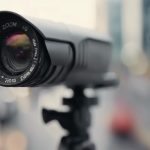

A home security camera for a baby can help parents and caregivers check on sleep, respond to sounds, and monitor activity without repeatedly entering the nursery. Today’s options range from dedicated baby monitors to general indoor security cameras and portable battery-powered models. The best choice depends on where the camera will be used, how much remote access you need, and how carefully you want to manage recording and privacy. When monitoring a nursery, consider compact surveillance options that describe specific covert camera types and applications.
Why use a camera in the nursery?
A camera provides a live view of the baby’s room and may send alerts when it detects movement or sound. This can make it easier to notice that a baby has woken up or needs attention. Two-way audio can also allow a caregiver to speak calmly to the baby before entering the room.
Video monitoring should support, rather than replace, normal supervision. A camera cannot prevent every hazard or assess a baby’s condition as reliably as being physically present. Its value is in providing additional awareness during naps, nighttime sleep, and periods when a caregiver is nearby but not in the nursery.
Types of baby-monitoring cameras
Dedicated Wi-Fi baby cameras
Purpose-built Wi-Fi baby cameras typically connect to a home network and display video through a phone app or included monitor. Common features include night vision, two-way audio, sound or motion alerts, and remote viewing. Some models also include room-temperature readings or other nursery-focused functions.
These cameras are a practical choice when you want regular access from another room or location. Because they use the internet, however, their account, app, network, and storage settings need careful attention.
Indoor security cameras
An indoor security camera can also serve as a nursery monitor, particularly when you want features such as remote pan and tilt, a wide viewing angle, or local recording. Before choosing one, confirm that it provides a clear view in low light and that its alerts are suitable for a quiet sleeping environment.
Discreet or nanny-style cameras
Small cameras designed to blend into their surroundings may be used to observe shared spaces or caregiver interactions. Discreet monitoring requires extra care: people who may be recorded should be informed where local law or household agreements require it, and the camera should not be used to invade a person’s private space.
Do not place a camera inside a stuffed toy, under bedding, or anywhere a baby can reach it. A concealed design is never a reason to compromise electrical, mounting, or nursery safety. Parents comparing nursery cameras may also explore Bluetooth monitoring options for convenient short-range video connections.
Portable and battery-powered cameras
Portable cameras are useful for travel, temporary arrangements, or moving between rooms. They may use clips, magnetic mounts, or rechargeable batteries. Their main limitation is that battery life can restrict continuous monitoring, so check the charge regularly if the camera is being used as the primary monitor.
Features worth prioritising
- Clear video and night vision: The camera should show the sleep area clearly in both daylight and low light.
- Two-way audio: Useful for speaking to or reassuring a baby from another room.
- Sound and motion alerts: Notifications can reduce the need to watch a live feed continuously.
- Appropriate viewing angle: A wide-angle, pan, or tilt function can help cover the room without moving the camera.
- Reliable recording options: Decide whether you prefer local storage, such as a memory card, or cloud-based recording.
- Account security: Use strong, unique passwords and two-factor authentication when available.
- Simple controls: A monitor or app should be easy to use during the night and should not create unnecessary alerts.
Safe placement in a nursery
Install the camera out of the baby’s reach and use a secure, suitable mount. Keep cords away from the crib, cot, and areas where a child could pull or become entangled in them. The camera should face the sleep area without resting on the mattress, rail, or nearby soft furnishings.
Position the device so it captures the area you need while avoiding unnecessary views of private spaces. Test the image at night, check that the mount remains stable, and review the setup whenever furniture or the sleeping arrangement changes.
Privacy and responsible use
Internet-connected cameras should be treated as home network devices. Change any default login details, install available firmware updates, limit account access, and review whether video is being stored locally or uploaded to a service. Share access only with people who genuinely need it.
Recording laws differ by location, especially when adults or caregivers are captured. Before using a hidden or nanny-style camera, check the rules that apply where you live and communicate the monitoring policy when required. Responsible use protects both the child and the privacy of everyone in the home.
Making the choice
For everyday nursery monitoring, a dedicated Wi-Fi baby camera or a well-suited indoor security camera may provide the most useful balance of visibility and convenience. A portable model can work for travel, while a discreet camera should be considered only with careful attention to safety, consent, and local law. Whichever type you choose, focus on secure access, dependable alerts, safe placement, and a clear view of the room rather than on concealment alone.