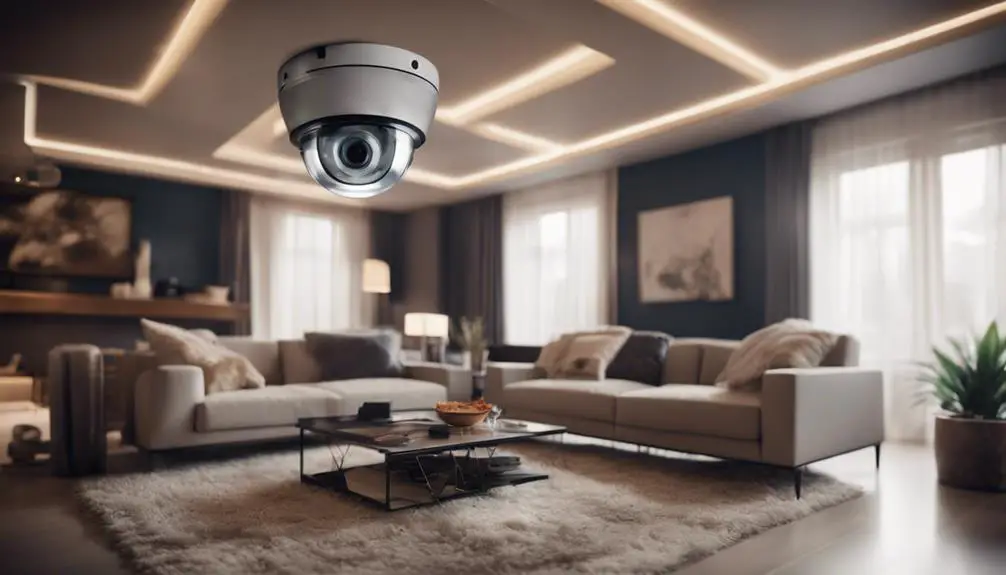

Security cameras do not always need to look like cameras. A light-fixture camera combines surveillance equipment with an everyday household fitting, allowing it to blend more naturally into a room while still covering an important area. Depending on the model, useful features may include high-definition video, motion-triggered recording, low-light or night-vision support, and remote viewing.
These devices should be selected and installed carefully. Privacy laws and consent requirements vary by location, so use them only in areas where monitoring is lawful and appropriate. Avoid private spaces such as bedrooms and bathrooms, and inform household members, guests, tenants, or employees when disclosure is required.
Five light-fixture camera styles to consider
1. Ceiling fan camera
A ceiling fan camera places the lens within the fan assembly, combining overhead airflow with a discreet monitoring position. Because ceiling fans are commonly located near the center of a room, this style may provide a useful perspective over entrances, seating areas, or other open spaces.
When comparing models, look for a lens position that is not obstructed by the fan blades and a recording system suited to the room’s lighting conditions. Motion detection can help limit recording to periods of activity, while night vision may be useful when the lights are off. Installation also deserves attention: the fixture must be safely mounted, correctly wired, and positioned so the camera does not point into an inappropriate area.
2. Wall sconce camera
A wall sconce camera integrates surveillance into a decorative wall light. It can be a practical choice for hallways, living rooms, and entry areas where a wall-mounted viewpoint is more useful than an overhead one.
The main consideration is coverage. A broad viewing angle can reduce blind spots, but the camera should still be aimed carefully so it records the intended doorway or passage rather than neighboring private areas. Some designs may offer remote access or live viewing through a connected device. Before choosing one, confirm how footage is accessed, where it is stored, and whether the lighting and camera functions operate independently.
3. Pendant light camera
A pendant light camera is designed to hang from the ceiling while incorporating a concealed lens into the fixture. Its contemporary appearance can suit kitchens, dining areas, offices, or other rooms where pendant lighting is already part of the decor.
Smart-home compatibility may be an important factor for buyers who want to check footage remotely or connect the light to an existing control system. However, compatibility can differ between products. Check the required app, network connection, power arrangement, and user permissions before installation. A pendant camera should also be positioned with its field of view in mind; a stylish location is not necessarily the most effective surveillance position.
4. Chandelier surveillance fixture
A chandelier with an integrated camera combines decorative lighting with a less conspicuous security function. It may be considered for larger rooms, reception areas, or entry spaces where a prominent light fitting is already expected.
The decorative design should not distract from practical security questions. Make sure the camera has a clear line of sight, sufficient lighting for the expected conditions, and an accessible method for reviewing recordings. Chandeliers can also require more involved electrical and mounting work than simpler fixtures, so professional installation may be appropriate. The camera should never be hidden in a way that violates local privacy or recording laws.
5. Recessed light camera
A recessed light camera sits within or beside a ceiling light, creating a low-profile appearance. Its compact design can be useful where a conventional camera would be visually distracting or where a ceiling-mounted viewpoint is preferred.
Before fitting one, check the ceiling depth, power requirements, light output, and access needed for maintenance. Recessed placement can make the lens less noticeable, but it can also make adjustment or troubleshooting more difficult. Choose a location that covers a defined area rather than attempting to monitor an entire property with one device.
Features worth comparing
- Video quality: Higher-resolution recording can make details easier to review, although the result also depends on lighting and lens placement.
- Motion detection: Activity-triggered recording may reduce unnecessary footage and make important events easier to find.
- Low-light performance: Night vision or another low-light mode can help when the fixture is not illuminated.
- Remote viewing: Connected models may allow live or recorded footage to be checked from a phone or computer.
- Storage: Understand whether recordings are saved locally, accessed through a connected service, or handled in another way.
- Installation: Confirm that the fixture can be installed safely and that the camera remains correctly aligned after fitting.
Choosing the right fixture
Start with the area you need to monitor, then choose the fixture style that provides the clearest and most lawful view. A wall sconce may suit a corridor, while a recessed or pendant design may work better in an open room. Review the camera’s viewing angle, lighting behavior, recording controls, and access method before making a decision.
Used responsibly, a light-fixture camera can add surveillance without making a room feel dominated by security equipment. The best choice balances dependable coverage, safe installation, straightforward footage access, and respect for everyone’s privacy.