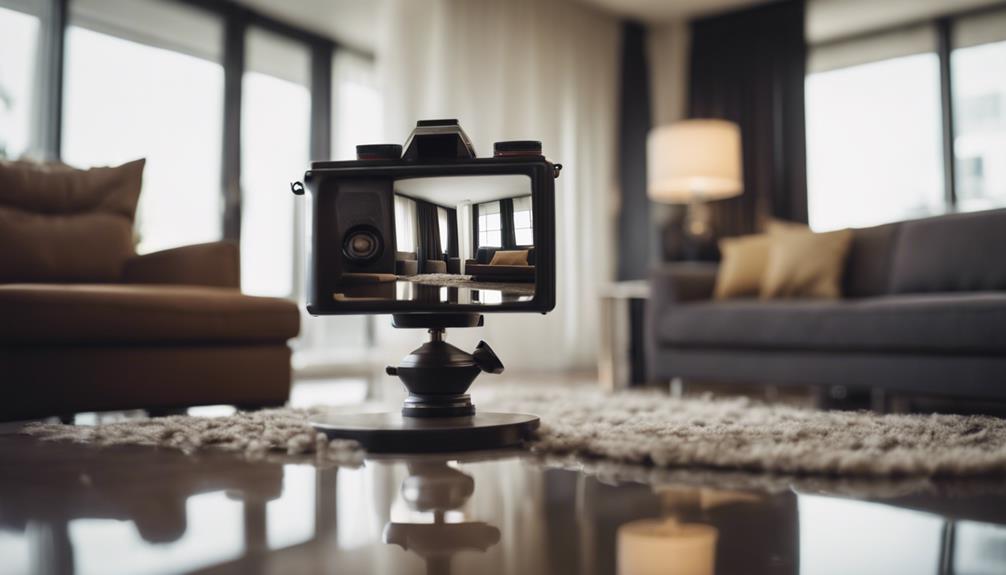

Mirror spy cameras are designed to combine a reflective surface with a concealed camera, allowing the device to blend into a room more easily than a conventional camera. That discreet appearance may seem useful for security, but it also creates serious questions about consent, privacy, and lawful use.
The most important consideration is not whether a mirror camera can be hidden. It is whether recording is justified, permitted, and handled responsibly. In many situations, a clearly visible security camera, an access-control measure, or improved lighting may provide protection without creating the same privacy concerns.
What mirror cameras are used for
A mirror camera may be considered for monitoring an area where security is a legitimate concern and the equipment can be installed lawfully. Possible applications include observing an entrance, protecting property, or monitoring a designated space in a home or business. The mirror format can preserve the appearance of a room when a visible camera would be distracting or unsuitable.
However, the device should not automatically be described as an appropriate solution for every room. The presence of a mirror does not make recording acceptable, and a concealed camera should never be treated as a substitute for a clear security policy.
Why discreet monitoring can be appealing
Conventional cameras can affect how people behave because their location is obvious. A camera integrated into a mirror may be less visually disruptive and can help maintain the design of a space. In a properly authorised setting, discreet placement may also reduce tampering or prevent the equipment from becoming an unnecessary focal point.
These advantages must be balanced against the risks. People may feel deceived if they discover that an apparently ordinary mirror is recording them. Hidden monitoring can damage trust, expose sensitive information, and create legal problems even when the original intention was security.
Privacy, consent, and legal boundaries
Rules governing surveillance vary by location and by the type of space being recorded. Requirements may also differ for video and audio. Before installing any camera, check the laws and regulations that apply to the property, the people being recorded, and the intended purpose of the footage.
Private areas require particular caution. Bathrooms, changing areas, bedrooms, and similar spaces commonly carry strong expectations of privacy. Recording in such locations without clear, lawful justification and appropriate consent can cause serious harm and may lead to severe consequences.
Even in a workplace or shared building, recording should not be broader than necessary. Consider who needs to know about the monitoring, how people will be notified, and whether the same security objective can be achieved through a less intrusive method.
Guidelines for responsible installation
- Establish a legitimate purpose. Define the specific security problem before choosing a concealed camera.
- Confirm that surveillance is lawful. Review local requirements, property rules, and any obligations related to audio recording.
- Prefer transparency where possible. Inform affected people about monitoring rather than relying on secrecy as the main feature.
- Avoid highly private spaces. Do not place cameras where people reasonably expect to be free from observation.
- Limit the viewing area. Point the camera only at the location relevant to the security purpose.
- Protect recorded material. Restrict access, use secure storage, and avoid retaining footage longer than necessary.
- Review the arrangement. Reassess whether the camera remains justified and whether a less intrusive option would work better.
Technology and future surveillance concerns
Surveillance systems are increasingly associated with automated analysis, including artificial intelligence and facial recognition. These capabilities may make it easier to search or interpret footage, but they also increase the potential impact of inaccurate identification, excessive monitoring, and unauthorised data use.
Adding advanced analysis to a concealed camera does not remove the need for consent, proportionality, or legal review. In fact, more capable systems may require stronger safeguards because they can reveal or infer more about the people recorded. The same concern applies to other remote or automated monitoring technologies: security benefits should be weighed against intrusion and misuse.
Choosing a safer security approach
A mirror spy camera can be part of a security plan only when its use is necessary, lawful, and carefully controlled. For many homes and businesses, visible cameras, locks, alarms, lighting, and clear policies offer a more transparent approach. If a concealed device is being considered, document the reason, seek appropriate professional or legal guidance, and make privacy protection part of the design from the beginning.
The surface appearance of a mirror camera is only one part of the decision. Responsible surveillance depends on purpose, consent, placement, access controls, and accountability—not simply on how effectively the equipment remains unseen.