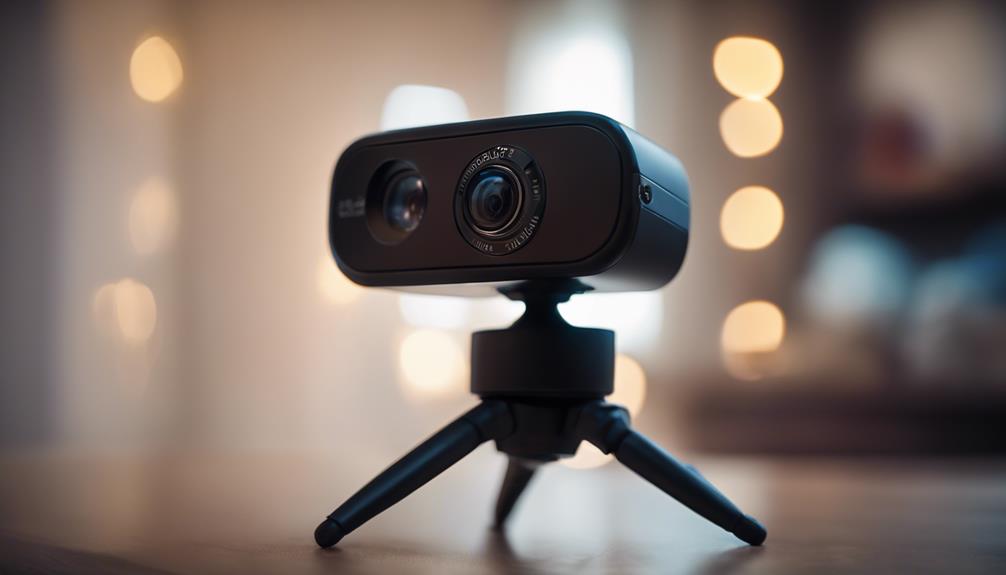

A motion-detection spy camera is more useful than a camera that simply records continuously. The strongest models combine dependable movement detection, clear video, remote access, discreet placement, and efficient power use. Together, these features help users monitor a room, entryway, office, or other permitted space without sorting through hours of irrelevant footage.
However, “spy camera” should not be treated as a license for secret surveillance. Recording laws vary by location, and monitoring people without appropriate consent may violate privacy rules. Use any camera responsibly and only where you have the legal right to record.
Accurate Motion Detection
Motion detection is the feature that separates this type of camera from a basic video recorder. Infrared-based sensing can identify movement in changing conditions, including dim environments, and can trigger recording or notifications when activity occurs.
Accuracy matters as much as sensitivity. A camera that reacts to every shadow, lighting change, or minor environmental movement can produce too many false alerts. Better motion-sensing systems aim to distinguish meaningful activity from harmless changes, making notifications more useful and reducing the time spent reviewing unnecessary clips.
Some cameras also include tracking functions that keep a moving subject within view. This can be helpful when activity travels across the camera’s field of view, although the feature should be assessed for smoothness, coverage, and control through the camera’s software.
Clear Footage in Daylight and Darkness
Motion alerts are only valuable when the resulting footage is clear enough to review. High-resolution recording can preserve more detail in faces, clothing, objects, and other parts of a scene. Image quality should be considered alongside lighting, camera placement, and viewing distance rather than judged by resolution alone.
Night vision is another important consideration. A camera intended for around-the-clock monitoring should remain useful in low-light conditions, not just during the day. Infrared night vision can improve visibility after dark, but performance may depend on the size of the space and the distance between the camera and the subject.
Storage That Fits the Recording Pattern
Motion-activated recording can reduce storage use because the camera saves footage when activity is detected instead of recording continuously. Even so, storage capacity remains important if the camera monitors a busy area or needs to retain clips for an extended period.
- Local storage: Keeps recordings on or near the camera and may allow access without relying entirely on an online service.
- Cloud backup: Can preserve footage if the camera is damaged, removed, or stolen, but may involve account requirements or additional service terms.
- Playback tools: Make it easier to locate motion events, review clips, and export important footage.
Before choosing a camera, check how footage is saved, how long it remains available, and what happens when the storage becomes full.
Remote Viewing and Useful Alerts
Remote access adds convenience by allowing users to view a live feed, review recorded clips, change settings, and receive motion notifications through a mobile app. This is particularly useful when the camera is installed in a location that cannot be checked in person regularly.
A good remote-monitoring experience should be straightforward rather than overloaded with controls. Look for clear navigation, dependable alert delivery, and simple access to live video and recorded events. An alert is most useful when it arrives promptly and provides enough context to decide whether further action is needed.
Compact, Discreet, and Practical Placement
A small camera can be easier to install in a room, on a shelf, or near an entrance without dominating the space. Its compact form may also help it fit into locations where a larger security camera would be impractical.
Discreet design should be understood as a placement advantage, not a reason to disregard privacy. Avoid recording private areas or people who have not been properly informed where notice or consent is required. The camera should also be positioned so that it captures the intended area without unnecessary views into neighboring or personal spaces.
Battery Life and Power Management
Long battery life can make installation easier and reduce the need for frequent charging. Motion-activated operation may help conserve power by keeping the camera in a lower-power state until activity is detected.
Battery performance still depends on factors such as alert frequency, live viewing, night vision, wireless connectivity, and environmental conditions. Consider how often the camera will need charging and whether it can continue recording while connected to a power source.
Choosing the Right Combination of Features
The best motion-detection spy camera is not necessarily the one with the longest list of features. It is the model whose detection accuracy, video quality, storage method, remote access, placement options, and battery performance match the intended use. Prioritising reliable alerts and usable footage will usually matter more than adding functions that are rarely needed.