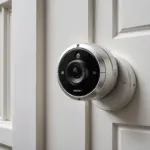

A pinhole security camera is a compact surveillance device designed to capture video through a very small lens opening. Because the camera can be mounted behind or within thin materials, it offers a low-profile alternative to larger dome or bullet cameras. This makes it useful where a discreet appearance is important, although it also requires careful attention to image quality, placement, privacy, and local law.
What is a pinhole security camera?
Pinhole cameras use a small aperture that may be concealed behind materials such as plastic, wood, or fabric. Unlike visible security cameras, which can deter unwanted activity, a pinhole model is intended to blend into its surroundings or sit flush with a surface.
The small lens opening can affect light-gathering ability and image performance, particularly in dark environments. Resolution, sensor quality, infrared illumination, and low-light processing therefore matter when choosing a camera. Concealment should never be the only selection criterion.
Wired, wireless, and hybrid options
Pinhole cameras are available in several configurations. The best choice depends on how long the camera will operate, whether cabling is practical, and how footage will be accessed.
- Wired pinhole cameras: These connect to a power source and, in many systems, a recorder. They are generally suited to permanent installations where dependable, continuous operation is important.
- Wireless or Wi-Fi cameras: These transmit video over a network and may support remote viewing through a mobile application. They are easier to position when running video cable is impractical.
- Hybrid cameras: Some models use a small cable for power while sending video wirelessly. This can combine stable operation with a less noticeable installation.
Wireless models may run from replaceable batteries or rechargeable packs. Battery-powered operation improves portability, but it also introduces charging requirements and the possibility of interruptions.
Important features to compare
Consider the environment and the type of footage required before selecting a model. Useful specifications include:
- Resolution: Higher resolutions can provide more detail for identifying faces, objects, or activity, provided the lighting and lens quality are adequate.
- Low-light performance: Infrared illumination or a sensor designed for dim conditions may be important for nighttime monitoring.
- Motion detection: Motion-triggered recording can reduce storage use and extend battery life compared with continuous recording.
- Storage: Check whether footage is saved to a memory card, a local recorder, cloud storage, or a combination of these options.
- Network security: Wi-Fi cameras should use secure network settings, and stored footage should be protected through appropriate account and access controls.
- Weather resistance: A sealed housing may be necessary for outdoor locations, but the camera should still be installed in a position protected from unnecessary exposure to water and physical damage.
- Audio recording: A camera with a microphone can capture sound, but audio surveillance often has stricter legal requirements than video recording.
Power and recording considerations
Battery life varies according to the camera, recording mode, network activity, and environment. Motion-triggered recording may allow a portable camera to operate longer than continuous recording, but it can also miss activity outside the detection zone. For long-term monitoring, a wired power connection is usually more practical when one can be installed safely.
Also consider how the camera will be serviced. A concealed device may be difficult to reach when its battery needs charging or its storage needs to be replaced. Plan access points before installation rather than treating maintenance as an afterthought.
Placement and installation tips
Choose a position with a clear view of the area that needs monitoring. Avoid placing the lens behind thick, reflective, or irregular material, since this can reduce sharpness and create glare. Test the camera during both daytime and nighttime conditions before relying on its footage.
- Position the lens to capture people at a useful angle rather than pointing sharply down at the top of their heads.
- Check for obstructions that may block the view as doors open, shelves are moved, or lighting changes.
- For Wi-Fi models, confirm that the camera maintains a reliable connection at its intended location.
- Route wired connections neatly and safely, using suitable cable management rather than leaving cables exposed.
- Test motion-detection boundaries and recording schedules after installation.
Privacy, legal, and ethical responsibilities
Covert monitoring can affect the privacy of employees, visitors, household members, customers, and other people who enter the monitored area. Rules differ by location and may address consent, audio recording, signage, evidence, and the use of cameras in places where people reasonably expect privacy.
Do not install cameras in highly private areas such as bathrooms or changing rooms. Before recording audio, check the applicable rules carefully, since consent requirements may be stricter than those for video. Use discreet monitoring only for a legitimate, lawful purpose, limit access to recorded footage, and avoid collecting more information than necessary.
Choosing the right pinhole camera
Start with the monitoring period, available power, lighting, network coverage, and storage requirements. A wired model may suit a permanent installation, while a wireless or hybrid model can be more convenient for temporary or difficult-to-cable locations. Match the resolution, night performance, weather protection, and motion features to the environment, then verify that the installation respects privacy and local law.