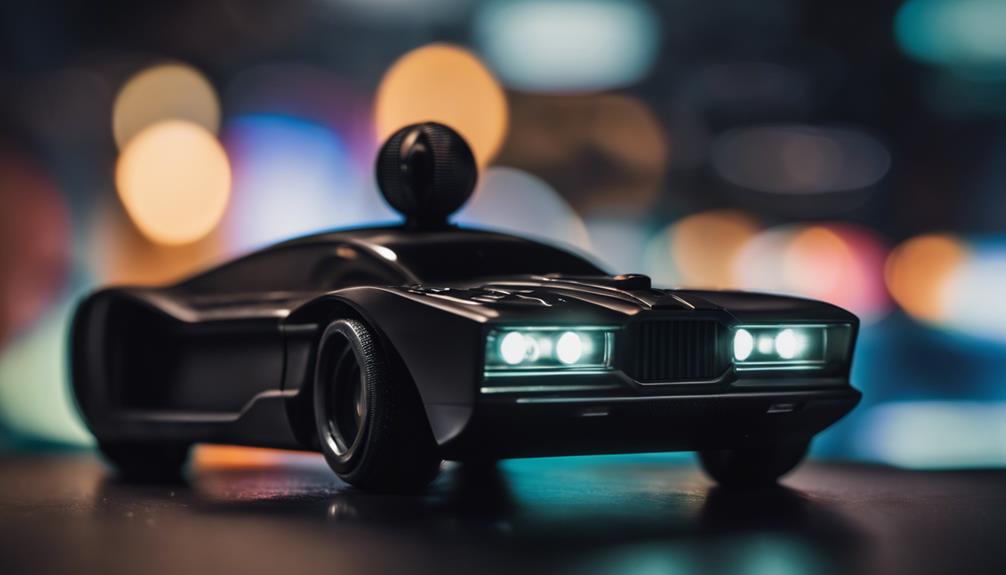

An RC spy camera car combines a remote-controlled vehicle with a camera for mobile video capture. The term “spy” is often used as a product label, but these cars are best used for lawful, consent-based activities such as hobby filming, inspecting hard-to-reach areas of your own property, documenting a model layout, or exploring an indoor obstacle course.
What to Look for in an RC Camera Car
The right model depends on where you plan to drive it and how you intend to use the footage. Instead of choosing based on appearance alone, compare the camera, controls, mobility, and transmission features.
Camera quality
A high-definition camera can produce clearer footage, making it easier to review details later. Check how the camera records and whether the system provides a live view while the car is moving. Real-time video is useful for steering around corners, positioning the vehicle, and seeing areas that are difficult to observe directly.
Camera placement also matters. A forward-facing camera is suitable for driving and exploration, while an adjustable or wider-angle camera may provide a better view of the surrounding space. If the vehicle will be used indoors, consider whether the camera performs well under the lighting available in your room.
Low-light performance
Night vision or another form of low-light support can help when the car is used in dim areas. However, night-vision performance varies between models, so it should not be treated as a guarantee of clear footage in complete darkness. For responsible use, avoid recording people in private spaces without their knowledge or permission.
Manoeuvrability and size
A compact car can reach narrow spaces, but a small design may sacrifice battery capacity or stability. Look for controls that allow precise forward, reverse, and turning movements. Good manoeuvrability is particularly important when driving beneath furniture, around obstacles, or through a custom course.
Consider the surface as well. Some vehicles are designed mainly for smooth indoor floors, while others are better suited to uneven ground. Wheel design, ground clearance, turning radius, and overall weight all affect how easily the car can travel.
Control Range and Live Video
Remote-control range determines how far you can drive the car while maintaining a connection. The practical range may be affected by walls, other wireless devices, and the layout of the area. A reliable connection is more useful than an impressive-sounding range that only applies in ideal conditions.
Live streaming can make the vehicle easier to operate, but video quality and responsiveness are equally important. A delayed feed may make precise driving difficult. If the car saves recordings, check how footage is stored and transferred, and protect any files that contain private information.
Battery Life, Charging, and Durability
Short operating time can interrupt an otherwise enjoyable session. Compare the expected running time with the charging period, and consider whether spare batteries are available. Rechargeable systems are convenient, but batteries should be charged and stored according to the manufacturer’s instructions.
A camera car intended for frequent use should also have a durable body and protected camera housing. A strong design will better withstand minor bumps, although no RC vehicle should be treated as indestructible. Check whether replacement wheels, batteries, or other parts can be obtained before committing to a model.
Features That May Be Useful
Some RC camera cars include additional technology that may suit particular projects:
- Adjustable camera angles: Helpful when the vehicle needs to look upward, downward, or around an obstacle.
- Two-way audio: Potentially useful for supervised demonstrations, provided everyone being recorded has agreed to it.
- Location tracking: Useful for recovering a vehicle during outdoor hobby use, but it does not replace careful supervision.
- Speed settings: Lower speeds improve control indoors, while faster settings may suit open spaces.
- Obstacle-friendly wheels: Better suited to carpets, thresholds, or outdoor surfaces than basic smooth-floor designs.
Using an RC Spy Camera Car Responsibly
Before operating one, check local privacy rules and any venue restrictions. Use the vehicle on your own property or in places where recording is clearly permitted. Do not use a hidden camera car to follow people, enter private areas, record conversations without consent, or gather personal information.
For most buyers, the best choice is not necessarily the fastest or most discreet model. Prioritise a dependable camera, responsive controls, suitable mobility, stable video transmission, and manageable battery life. Those features make an RC camera car more useful for recreation, inspection, and creative filming while keeping its operation safe and respectful.