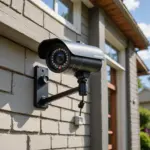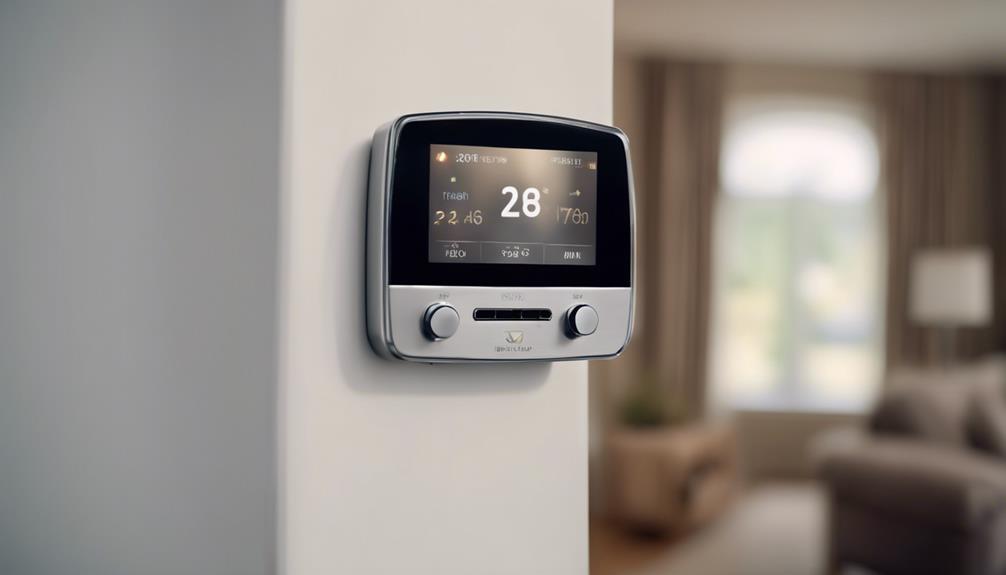

Satellite security cameras are designed for places where fixed broadband and cellular networks are unavailable, unreliable, or too costly to extend. They can help monitor remote homes, farms, ranches, construction sites, mining areas, maritime locations, and critical infrastructure by sending selected video and alerts through a satellite communications service. Advances from satellite security camera systems have influenced covert aerial monitoring methods for concealed surveillance applications.
A satellite-based system is not simply a conventional camera pointed at the sky. It usually combines a camera, video encoder, satellite modem or transceiver, power equipment, and a service connection that routes information to cloud storage or a remote monitoring centre. The most suitable design depends on the location, available power, required image quality, and how often video needs to be transmitted.
How satellite security camera systems work
The camera captures ordinary or infrared images, while an encoder compresses the footage into a format that uses less bandwidth. A satellite modem then sends the data to a satellite, which relays it through a ground station and onward to the selected platform or monitoring service.
Because satellite bandwidth and airtime may be limited, many systems are configured to transmit events rather than continuous high-resolution video. Local recording, motion detection, and other edge-processing features can help the system send short clips, still images, or alerts only when activity is detected. Users may then review footage, receive notifications, and adjust settings through a web portal or mobile application, depending on the equipment and service plan.
Where satellite surveillance is useful
Satellite connectivity is most valuable when a site is beyond the practical reach of normal communications infrastructure. Common applications include:
- Remote homes and cabins: Check exterior areas, access points, and signs of damage when the property is unoccupied.
- Farms and ranches: Monitor gates, equipment, livestock areas, and outbuildings across large properties.
- Construction and mining sites: Help identify trespassing, vandalism, or conditions requiring attention at temporary or isolated sites.
- Critical infrastructure: Provide an additional visual check where rapid access may be difficult.
- Wildlife and conservation work: Support remote observation while reducing the need for frequent visits to the site.
Discreet equipment may be appropriate where a visible camera would be vulnerable to tampering or could affect an observation. However, concealment should never be used to bypass privacy obligations or to record people in places where they reasonably expect privacy.
Planning a satellite home security system
Check the site and satellite view
The antenna or terminal needs a suitable view of the sky. Buildings, dense vegetation, terrain, and other obstructions can interfere with the connection. Before choosing a mounting point, assess the camera’s field of view as well as the communications equipment’s signal path.
Plan power for the whole installation
Remote installations may use grid power, solar panels, batteries, or a combination of these options. Calculate the needs of the camera, modem, network equipment, and any heaters or lighting used by the system. Battery capacity and solar generation should be considered together, particularly where maintenance visits are infrequent. For broader business coverage, compare business surveillance systems featuring 4K clarity, scalable monitoring, and dependable remote access.
Control bandwidth and alerts
Continuous high-resolution streaming can consume more data than an event-based design. Consider using motion-triggered recording, lower-resolution previews, short clips, local storage, or scheduled uploads. Detection settings should also be adjusted for the environment so that wind-blown vegetation, weather, or passing wildlife do not generate excessive alerts.
Protect the equipment
Outdoor cameras and communications hardware should be suitable for the expected weather and temperature conditions. Tamper-resistant housings, secure mounting, and careful cable protection can reduce the risk of damage. If the camera must remain discreet, choose a position that does not compromise its view, ventilation, serviceability, or legal compliance.
Features to compare
- Image quality and low-light or infrared performance
- Motion detection and other available analytics
- Local recording and event-based transmission
- Camera and modem power consumption
- Weather resistance and tamper protection
- Compatibility between the camera, modem, satellite provider, and cloud platform
- Expected connection delay and its effect on live viewing
- Data allowances, service costs, and alert-delivery options
Satellite links can introduce more delay than local networks. That may make live conversations or instant remote control less practical, while event notifications and recorded evidence can still be useful. Confirm the expected performance before selecting equipment for a situation that depends on real-time response.
Privacy, security, and responsible use
Camera laws differ by jurisdiction, so review the rules that apply to the property and the people being recorded. Avoid areas such as bathrooms and private interiors unless recording is clearly lawful and properly authorised. Rental properties, shared workplaces, and other occupied spaces may require notice or consent, and exterior-only monitoring may be a more appropriate option.
Limit access to footage, use strong account protections, and select encryption features where available. Establish how long recordings will be kept and who may retrieve them. A clear purpose, restricted viewing permissions, and sensible retention practices help reduce the risk of misuse.
Conclusion
Satellite security cameras extend monitoring to locations that conventional internet and cellular systems cannot reliably serve. The strongest installations combine a clear view of the sky, dependable power, bandwidth-conscious recording, suitable outdoor hardware, and carefully configured alerts. Legal compliance and respect for privacy are equally important, especially when cameras are concealed or used around occupied properties.