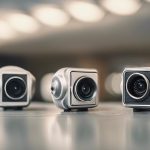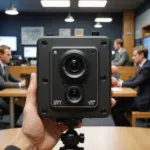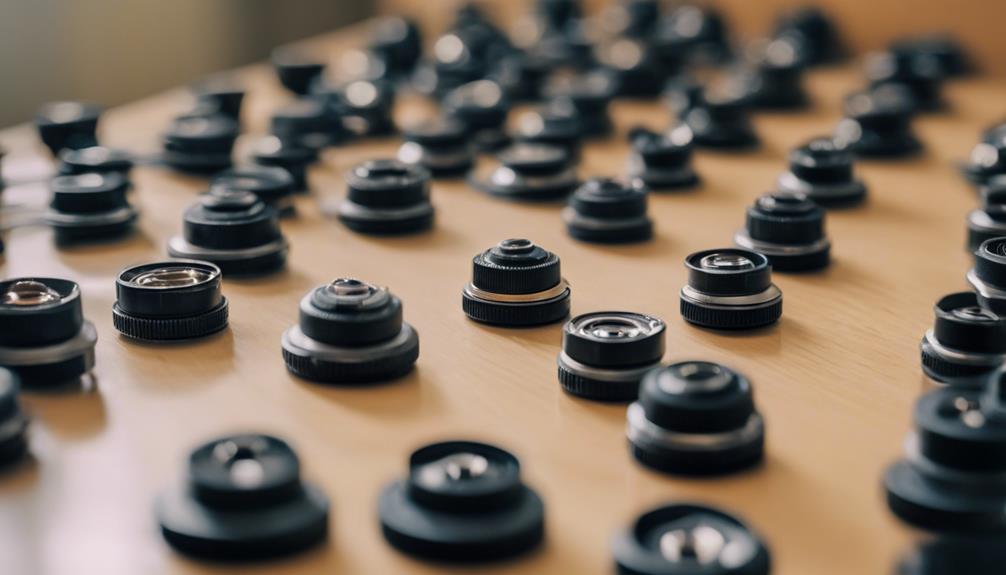

Screw-style cameras are compact security devices designed to fit discreetly into indoor or outdoor monitoring setups. Their small form factor can be useful when a conventional camera would be visually distracting, but discreet design should never be treated as permission to record people without their knowledge. Use any camera only for a lawful, clearly defined security purpose, and follow applicable privacy, audio-recording, and property rules.
What Is a Screw-Style Camera?
A screw-style camera is built to resemble or attach like a screw, allowing it to blend with fixtures, panels, or other suitable surfaces. Depending on the model, it may offer wired or battery-powered operation, local recording, wireless connectivity, motion detection, or low-light recording.
These cameras are best evaluated as compact security tools rather than as inherently “covert” devices. A visible notice, appropriate placement, and restricted access to recordings can help support responsible use.
Features to Compare
Compact size and mounting
Miniature designs can be practical in tight spaces, but a smaller camera may also have limitations in lens angle, battery capacity, and heat management. Check whether the mounting method is suitable for the intended surface and whether the lens can be adjusted after installation.
Video quality
Some screw-style cameras are marketed with 1080p video or similar high-definition specifications. Resolution is only one part of image quality: lighting, lens quality, compression, storage, and the camera’s field of view also affect how useful the footage will be.
Wi-Fi and remote viewing
Wi-Fi models can provide access to live footage through a connected phone or computer. Before choosing one, review how recordings are stored, whether the camera depends on an app or cloud service, and how account security is managed. Use a strong, unique password and keep the camera’s software updated when updates are available.
Night vision
Infrared or other low-light features can help a camera capture footage in darker conditions. Performance varies with distance, lighting, reflective surfaces, and the camera’s sensor. Test the camera at night in its intended position rather than assuming that a night-vision rating will cover every area.
Motion detection
Motion-activated recording can reduce unnecessary footage and preserve storage or battery power. It may still produce false alerts caused by changing light, moving curtains, pets, or passing vehicles. Adjustable sensitivity and activity zones are useful when available.
Power options
Battery-powered cameras are easier to position because they do not require a nearby outlet or visible cable. Their operating time depends on recording quality, motion settings, wireless activity, temperature, and battery capacity. A wired model may be more appropriate for continuous monitoring, provided the cable can be installed safely and lawfully.
Weather resistance
For outdoor use, look for the manufacturer’s stated weather-resistance information rather than assuming that a compact camera is suitable for rain or snow. Place the device where water, condensation, direct heat, and physical impact are less likely to affect operation.
Viewing angle
A wide-angle or panoramic camera can cover more of a room or entrance, while a narrower view may provide greater detail in a specific area. A very wide image can introduce distortion, so check sample footage if possible and position the camera to avoid blocked or irrelevant areas.
Responsible Installation
- Use the camera on property you own or where you have clear authorization.
- Do not place cameras in bedrooms, bathrooms, changing areas, or other locations where people reasonably expect privacy.
- Be especially careful with audio recording, which may be subject to separate rules from video.
- Tell household members, employees, visitors, or customers about monitoring when required.
- Secure recordings with strong passwords and limit access to people who need it.
- Position the lens to capture only the area necessary for the stated security purpose.
- Test the camera’s angle, motion alerts, storage, and power before relying on it.
Choosing the Right Option
For a small indoor area, a compact wired or battery-powered model may be sufficient. Wi-Fi is useful when remote access matters, while motion detection can help reduce recording volume. Night vision is worth considering for dim locations, and weather-resistant construction is important for outdoor placement. A magnetic mount may make repositioning easier, but it should be used only where the camera can remain secure and cannot create a hazard.
The best screw-style security camera is not necessarily the smallest or most feature-heavy model. Prioritize dependable placement, appropriate image coverage, secure storage, reliable power, and lawful, transparent use. These factors determine whether a compact camera provides genuinely useful security without compromising other people’s privacy.