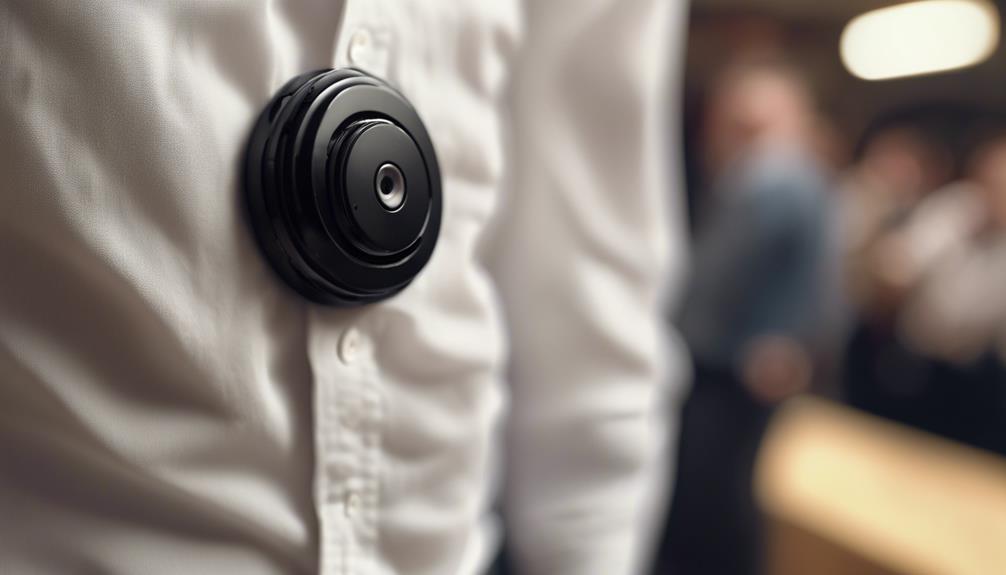

A shirt-button camera is a compact camera designed to resemble an ordinary clothing button. Its purpose is to record video or still images while remaining small and relatively unobtrusive. Because this type of device can affect other people’s privacy, it should only be used where recording is lawful and appropriate, with consent whenever required.
What a Shirt-Button Camera Does
The camera is built into or positioned behind a button-style housing. A small lens captures the scene in front of the wearer, while the internal electronics process and save the footage. Depending on the model, the device may record continuously, capture individual photographs, or begin recording when its motion-detection feature identifies movement.
The button-style form is intended to make the camera easier to wear with everyday clothing. It may be useful for legitimate documentation, personal safety, or hands-free recording, but its small size does not remove the need to respect privacy rules. Recording people without their knowledge can be unlawful in some locations, particularly in private settings or where audio is involved.
Typical Technical Features
Video and image quality
The supplied description presents the device as capable of high-definition recording, including 1080p video. That resolution can produce reasonably detailed footage when lighting and camera positioning are suitable. Actual image quality depends on the specific model, lens, lighting conditions, movement, and the way the footage is compressed.
Some versions may also capture still images. Before relying on the camera for important documentation, check whether the product records at its advertised resolution and whether the files can be played on the devices you intend to use.
Motion detection
Motion detection can start recording when movement is identified in the camera’s field of view. This may reduce unnecessary footage and conserve storage compared with recording continuously. It is not a guarantee that every event will be captured: rapid movement, poor lighting, obstructions, or an incorrectly positioned lens can affect detection.
Battery and recording time
A built-in rechargeable battery powers the camera. The original description refers to extended recording sessions, but runtime varies with resolution, motion detection, wireless connectivity, battery condition, and temperature. Continuous recording generally uses more power than standby or motion-triggered operation. For dependable use, charge the camera fully and test its real recording time before an important session.
Connectivity
Depending on the model, footage may be transferred through USB, and some devices may provide Wi-Fi access for viewing or managing recordings. Wireless features can be convenient, but they also increase power use and may create security considerations. Use strong account credentials where applicable, keep access limited, and avoid connecting the camera to networks you do not trust.
Storage Options
Many compact cameras use a microSD card for local storage. Local recording allows footage to remain on the device until it is transferred or the card is overwritten. Check the supported card capacity, file format, and recording limits before purchasing storage media.
Some versions may also support cloud storage or remote backups. Online storage can provide access when the camera or memory card is unavailable, but it depends on an internet connection and an account or subscription where applicable. Treat recorded video as sensitive personal data: protect accounts, restrict sharing, and retain files only as long as there is a legitimate reason to keep them.
Appropriate Uses and Important Boundaries
A shirt-button camera may be suitable for openly agreed-upon recording, hands-free documentation, personal safety situations, or creating video where everyone present understands that recording is taking place. It should not be used to secretly monitor employees, visitors, household members, or strangers. Workplace, residential, and public-recording rules differ by location, and audio recording may be subject to additional restrictions.
- Obtain consent when required and make the purpose of recording clear.
- Do not place the camera in bathrooms, bedrooms, changing areas, or other private spaces.
- Review local laws and workplace or building policies before recording.
- Secure stored footage and avoid unnecessary distribution.
- Test framing, focus, battery life, and storage before legitimate use.
Summary
A shirt-button camera combines a small button-like housing with video, still-image, storage, and—in some models—motion-detection or wireless features. Its practical value depends less on concealment than on reliable image quality, battery performance, secure file handling, and responsible use. Confirm the exact specifications for the model in question, and use it only in ways that respect consent, privacy, and applicable law.