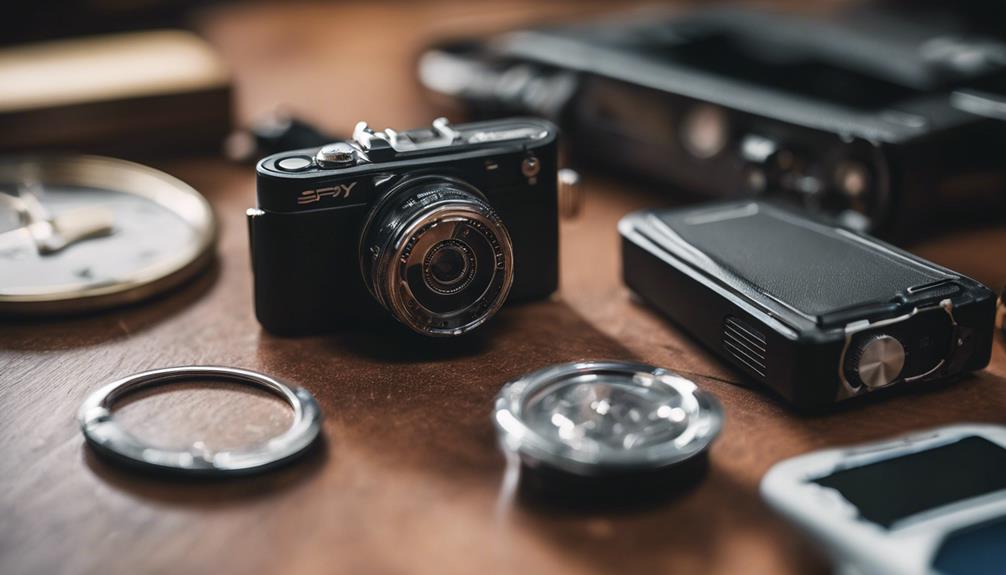

Battery-powered cameras are useful when a wired installation is impractical or when a camera needs to be placed temporarily. Their small size, wireless operation, and flexible placement can support home security, property checks, and other authorised monitoring tasks. However, discreet surveillance also creates significant privacy concerns. Always follow applicable laws, obtain consent where required, and avoid recording private spaces or conversations unlawfully.
What to Look for in a Battery Spy Camera
The best camera depends on where it will be used, how long it must operate, and whether you need live access or recorded footage. A compact design alone is not enough; battery life, image quality, storage, connectivity, and responsible placement all affect its usefulness.
1. Compact battery camera
A miniature camera can be easier to position in a room, vehicle, office, or other authorised area without a permanent installation. Look for a design that is practical to mount and operate rather than choosing solely on the smallest dimensions. A camera should remain unobstructed and stable so that the recording is usable.
2. Extended-battery surveillance camera
Battery capacity determines how often the device needs attention. Longer operating time is especially valuable for temporary monitoring where regular access is inconvenient. Review the manufacturer’s stated runtime in relation to the camera’s settings, since features such as high-resolution recording, wireless transmission, motion detection, and night vision can increase power use.
3. Wireless covert camera
Wireless operation avoids the visible cable required by a wired camera and makes placement more flexible. Before choosing one, check the expected wireless range, network requirements, connection stability, and how footage is stored if the connection is interrupted. A camera that relies on a wireless network should still offer a sensible recording option when the network is unavailable.
4. Motion-activated camera
Motion activation records when movement is detected instead of running continuously. This can conserve battery power and reduce the amount of footage to review. Check whether the sensitivity and detection area can be adjusted, and consider the possibility of missed events or unwanted recordings caused by pets, changing light, or other movement.
5. Night-vision battery camera
For low-light monitoring, infrared night vision can make footage more useful after dark. Performance varies by camera and by the available ambient light, so placement remains important. Avoid aiming the camera through glass, as reflections from infrared illumination may obscure the scene.
6. High-resolution hidden camera
Higher resolution can preserve more detail, but it usually produces larger files and may reduce battery runtime. Choose the image quality according to the purpose of the recording. A clear, steady view at a moderate resolution may be more useful than a high-resolution camera positioned too far away or blocked by furniture.
7. Portable surveillance camera
A portable model is suited to temporary, authorised monitoring because it can be moved without drilling or installing permanent equipment. Consider its mounting method, charging process, storage capacity, and resistance to accidental movement. Portability should make legitimate security checks easier, not encourage recording people without their knowledge.
8. Remote viewing camera
Some wireless cameras provide live viewing through a phone or tablet app. Remote access can help you check a property while away, receive motion alerts, and review stored clips. Secure the account with a strong, unique password and keep the camera’s software updated. Confirm whether remote viewing requires a subscription or a continuous internet connection before buying.
9. Discreet battery-powered camera
A discreet design can be useful when a camera must blend into an authorised monitoring setup, but concealment should never be treated as permission to record private activity. Prioritise reliable controls, a visible status or recording indicator where appropriate, and a placement that respects personal privacy. Make sure the lens has a clear, stable view and that the device can be retrieved safely for charging.
10. Wide-angle camera
A wide-angle lens can cover more of a room or entrance from a single position. The trade-off is that objects near the edges may appear distorted, and distant subjects may look smaller. Test the camera’s field of view before relying on it, and position it so that important areas remain near the centre of the frame.
Battery Camera Buying Checklist
- Expected runtime and charging method
- Local storage, cloud storage, or both
- Video resolution and recording format
- Motion detection and alert controls
- Night-vision performance in the intended location
- Wireless range and internet requirements
- Viewing angle and possible lens distortion
- Ease of installation, removal, and secure data deletion
Use Discreet Cameras Responsibly
Before recording, check local privacy and surveillance rules, workplace policies, and any consent requirements. Do not place cameras in bedrooms, bathrooms, changing areas, or other spaces where people reasonably expect privacy. Audio recording may be subject to stricter rules than video. For lawful home or property security, a visible camera with clear notice may be the most appropriate option.
The right battery spy camera is therefore not simply the smallest or most feature-packed model. Match its battery life, recording method, viewing options, lens, and low-light performance to a clearly defined and authorised purpose.