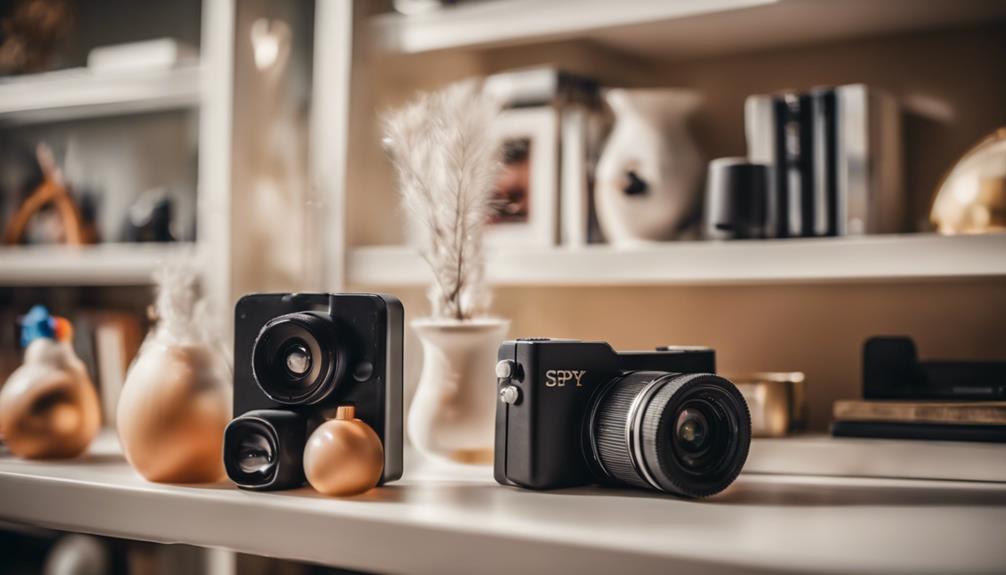

Spy camera air fresheners are designed to resemble ordinary household accessories while incorporating a small camera. Because the device combines a familiar object with video equipment, it may attract interest from people looking for a compact monitoring solution. However, discreet appearance does not remove the legal or ethical responsibilities that come with recording people.
This guide explains the features commonly associated with camera-equipped air fresheners, what to check before buying one, and how to use any monitoring device responsibly. It is intended for lawful, disclosed security uses—not for secretly recording people in places where they reasonably expect privacy.
What Is a Camera Air Freshener?
A camera air freshener is a surveillance device built into, or styled to resemble, an air-freshening product. Depending on the design, it may record video to local storage, connect to a phone, or activate when movement is detected. The air-freshener housing can make the device less visually conspicuous than a conventional security camera.
That discreet design can be useful when a camera needs to fit neatly into a room, but it also creates serious consent concerns. Anyone using one should clearly establish permission, follow applicable privacy and recording laws, and avoid placing it in bedrooms, bathrooms, changing areas, or other private spaces.
Features to Evaluate
Video quality and viewing angle
Resolution affects how clearly a recording can show faces, movement, and objects. A wide-angle lens can cover more of a room, but it may also capture areas that were not intended to be monitored. Check the camera’s actual field of view and position it only toward an agreed monitoring area.
Motion-activated recording
Motion detection can reduce the amount of unused footage by starting a recording when movement occurs. Before relying on it, consider possible false alerts caused by pets, changing light, curtains, or passing traffic. Review how motion clips are stored and whether the sensitivity can be adjusted.
Night recording
Some models include infrared illumination for low-light recording. Night vision can be useful for an openly disclosed security camera, but it does not make secret recording acceptable. Check whether infrared lights are visible, whether image quality declines in darkness, and whether nighttime monitoring is actually necessary.
Storage options
Footage may be saved to a memory card, an internal storage system, or a cloud service. Local storage avoids dependence on an internet connection, while remote storage can provide access if the device is damaged or removed. Compare storage capacity, overwrite behavior, backup controls, and any recurring service charges.
Wireless access and app security
Wi-Fi-enabled devices may allow live viewing, notifications, and playback through a mobile application. These conveniences also introduce account and network-security risks. Use a unique password, enable multi-factor authentication when available, keep the firmware and app updated, and avoid sharing access credentials. A device should not be treated as secure merely because it offers remote viewing.
Power and installation
Battery-powered units are easier to place but may require regular charging. Continuous recording, wireless transmission, and night vision can shorten operating time. Wired models may be more reliable for extended use, although their cables can make placement less tidy. Follow the manufacturer’s mounting instructions and make sure the camera cannot be easily knocked out of position.
Privacy and Legal Considerations
Recording rules vary by location and may treat video and audio differently. In some places, capturing sound without the required consent can create additional legal problems. Before installing a device, tell affected people what is being recorded, why it is being recorded, where the camera is positioned, and how long footage will be retained.
- Use monitoring only for a legitimate, clearly explained purpose.
- Obtain consent when required, especially for audio recording.
- Never place a camera in spaces intended for private activity.
- Restrict access to recordings and delete footage when it is no longer needed.
- Display appropriate notices where local rules or workplace policies require them.
Safer Alternatives
If the goal is home or office security, a visible indoor camera, doorbell camera, alarm sensor, or motion detector is usually easier to explain and manage. Visible equipment can deter unauthorized access without creating the same expectation that people are being secretly watched. For monitoring pets, deliveries, or shared work areas, choose a device that makes recording obvious and communicate its use in advance.
Final Buying Checklist
Before choosing a camera air freshener, confirm the recording resolution, viewing angle, storage method, battery or power requirements, app security, warranty, and privacy controls. Most importantly, decide whether a disguised camera is necessary at all. A transparent security setup is often the more responsible and dependable option.