
Choosing a camera for a bedroom requires more than comparing discreet designs and recording features. Bedrooms are highly private spaces, so any monitoring should be limited to a clear, legitimate purpose and carried out with the knowledge and consent of everyone who may be recorded. In many situations, an overt camera or a non-recording security device is a safer choice than a concealed camera.
Start with privacy and consent
Before installing any bedroom security device, check the laws that apply where you live. Rules can differ by state or country, particularly when audio is recorded. Secretly recording another person in a private space may create serious legal and personal consequences, including privacy violations, fines, or criminal charges.
Do not use a hidden camera to monitor a partner, roommate, guest, child, caregiver, or employee without appropriate consent. If monitoring is necessary for a specific safety reason, explain what is being recorded, why it is needed, who can access it, and how long footage will be retained.
Better alternatives to concealed bedroom cameras
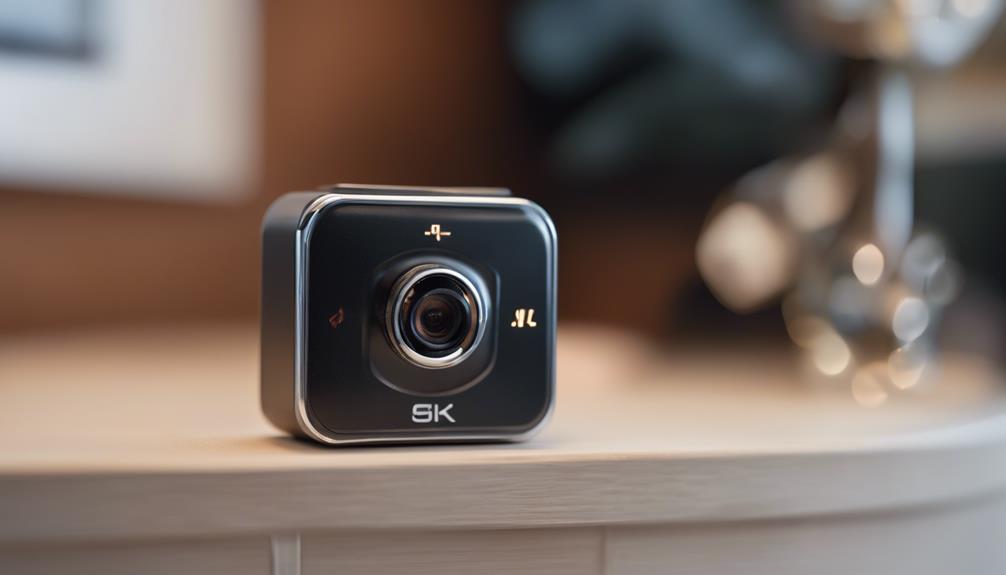
Visible indoor security camera
A clearly visible camera can help monitor an entrance, valuable belongings, or another defined area without disguising its purpose. Position it so that it captures only the area needed for security, rather than beds, changing areas, or other intensely private parts of the room.
Motion sensor or door contact sensor
If your goal is to know when someone enters the room, a motion sensor or door sensor may provide the information you need without recording video or audio. These devices can be less intrusive and easier to explain to everyone in the household.
Personal safety and environmental monitors
For concerns involving smoke, temperature, or other hazards, use purpose-built alarms and environmental sensors. A standard smoke detector, for example, addresses fire safety without adding covert surveillance to a private room.
Features to evaluate in a lawful setup
When an agreed-upon camera is appropriate, focus on practical features rather than how well the device can be hidden:
- Privacy controls: Look for a physical lens cover, a clear recording indicator, or an easy way to disable video and audio.
- Limited viewing zones: Use software or physical placement to exclude private areas that do not require monitoring.
- Motion alerts: Alerts can reduce the need to record continuously and make it easier to review relevant events.
- Night performance: If low-light monitoring is genuinely necessary, confirm that the feature can be enabled only when appropriate.
- Storage and access: Protect recordings with strong passwords, restrict account access, and delete footage when it is no longer needed.
- Reliable power: Choose a device with a dependable power arrangement rather than relying on an improvised or disguised charger.
Why disguised camera products deserve extra caution
Products presented as clocks, wall outlets, smoke detectors, picture frames, books, teddy bears, pens, or USB chargers are designed to blend into their surroundings. That characteristic can make them especially difficult for other people to identify or avoid. The same concealment that appears convenient for monitoring can also undermine informed consent.
Features such as motion detection, loop recording, audio capture, and night vision do not resolve the underlying privacy issue. Before purchasing or using any device, consider whether a person entering the room would reasonably understand that recording was taking place. If the answer is no, choose a transparent alternative or reconsider whether recording is necessary at all.
A responsible bedroom-monitoring checklist
- Define the specific safety or security problem first.
- Use the least intrusive device that can address it.
- Tell everyone who may be recorded and obtain appropriate consent.
- Disable audio unless it is necessary, lawful, and agreed upon.
- Keep cameras away from intimate areas whenever possible.
- Secure, limit, and regularly delete stored footage.
- Review local privacy and recording laws before installation.
Final advice
A bedroom is not an appropriate place for casual or secret surveillance. For legitimate home-security needs, visible cameras, door sensors, motion detectors, and safety alarms can often provide useful protection with far less risk to personal privacy. Prioritising consent, narrow placement, secure storage, and local legal requirements will help ensure that a security measure does not become an invasion of someone’s private life.