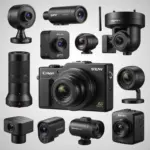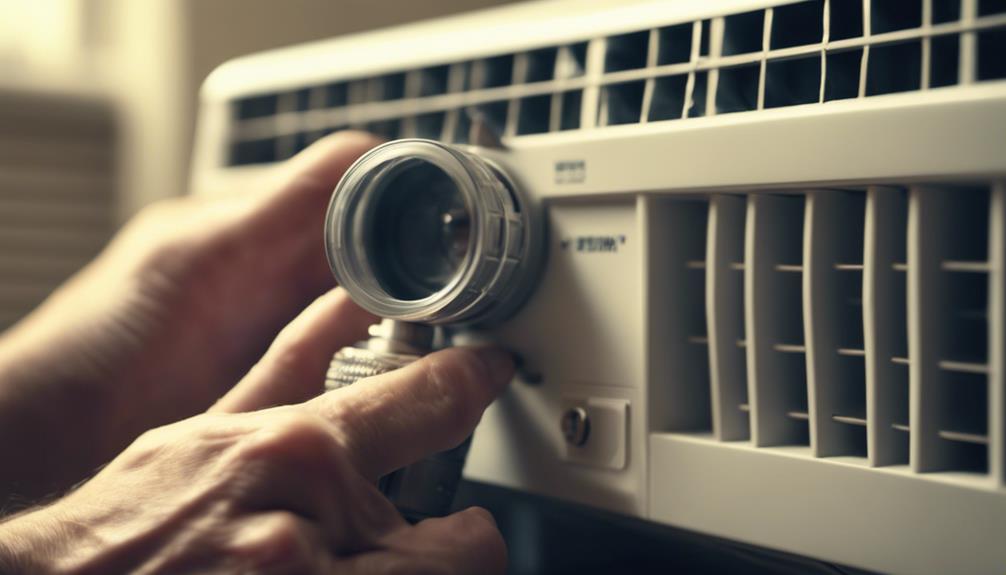

An air conditioner can provide a discreet position for a concealed camera because it is often mounted high on a wall and contains vents, grilles, and access panels. Finding an unfamiliar object does not automatically prove that surveillance equipment is present, but careful inspection can help you identify unexplained modifications and decide whether professional help is needed.
Start with a visual inspection
Switch off the air conditioner before examining it closely. Use a flashlight and inspect the front, underside, side panels, vents, louvers, and areas around the controls. Look for features that do not appear to be part of the unit’s normal design, including:
- A tiny glass-like lens or reflective dot
- A small opening that does not match the surrounding vents
- Unexplained holes, protrusions, seams, or recently altered panels
- A component made from a different material or with an unusual finish
- A device positioned to face into the room rather than serving the air conditioner’s function
Compare both sides of the unit and, if available, consult its original manual or product photographs. Differences from the expected layout may deserve attention, particularly if they look like later additions rather than factory-installed parts.
Pay attention to wiring and attachments
Look for cables, connectors, or power adapters that cannot be identified. A wire running toward an unexplained device, an extra cable emerging from a vent, or a new-looking attachment near the air conditioner may indicate that the unit has been modified.
Do not pull on wires, remove electrical covers, or reach inside the unit. Air conditioners can contain electrical connections and other components that may be hazardous even when the system is not actively cooling. If you see unfamiliar wiring, photograph it without disturbing it and ask a qualified technician or electrician to examine the installation.
Do not rely on unusual operation alone
Strange sounds, unexpected heat, or the unit turning on at an unusual time can justify a maintenance check, but these symptoms are not reliable proof of a hidden camera. They may result from an ordinary mechanical, electrical, or control problem. Treat unusual operation as a reason to investigate the air conditioner—not as evidence of surveillance by itself.
Use a camera detector carefully
A hidden-camera detector can provide another way to inspect the area. Follow the manufacturer’s instructions and scan slowly around the air conditioner, nearby outlets, vents, and surrounding surfaces. Depending on the device, a detector may look for radio-frequency transmissions or help identify reflective camera lenses.
Interpret alerts cautiously. Electronic equipment, Wi-Fi devices, and other nearby signals can produce responses on some detectors, while a camera that is not transmitting may not trigger a radio-frequency scan. A detector result should therefore be treated as a clue that requires confirmation, not as a definitive finding.
Clean and inspect the unit during maintenance
Routine filter cleaning helps you see the unit’s normal internal layout and prevents dust or debris from obscuring vents and access points. While cleaning, note the position and condition of existing parts so that later changes are easier to recognize. Only remove components that the manufacturer identifies as user-serviceable, and disconnect power according to the unit’s instructions.
A professional maintenance inspection can be especially useful if the air conditioner has recently been repaired, installed, or altered. Ask the technician to check for unauthorized modifications, unexplained wiring, or parts that do not belong to the model. Keep the inspection focused on identifying the source and purpose of anything unusual.
What to do if you find a suspected camera
If you locate an object that appears to be a camera, avoid dismantling or destroying it. Record clear photographs of its position and surrounding wiring, leave the area undisturbed, and seek advice from a trusted professional or the appropriate local authority. If you are in a rented property, notify the landlord or property manager in writing while preserving your documentation.
A careful visual check, cautious use of detection equipment, and professional inspection offer a more dependable approach than relying on a single suspicious feature. Most importantly, protect your safety while examining the air conditioner and avoid making changes that could damage the unit or erase useful evidence.