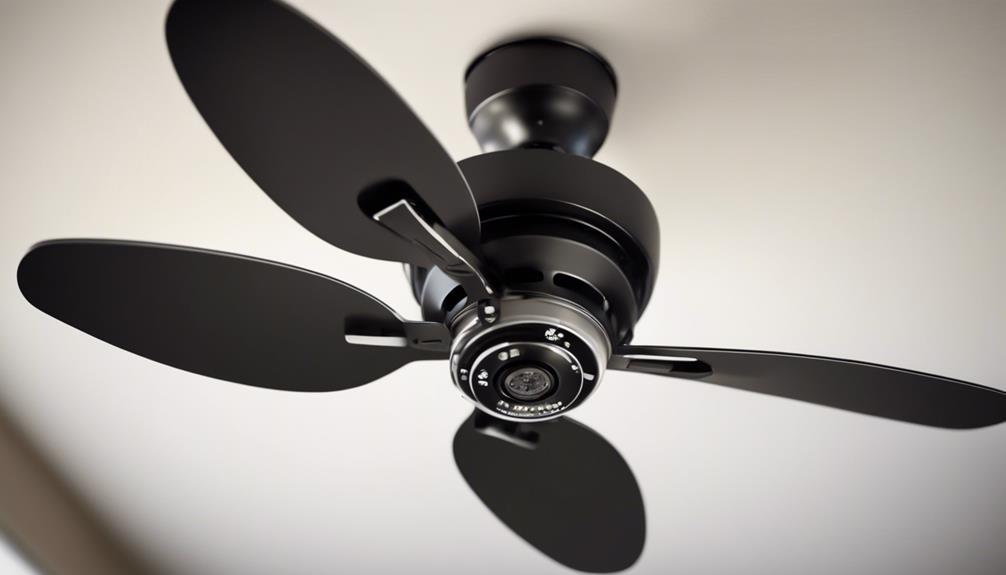

Installing a hidden camera inside a ceiling fan is not a safe do-it-yourself project. A ceiling fan contains moving parts and mains-voltage wiring, and modifying its canopy or motor housing can create risks of electric shock, fire, mechanical failure, or a falling fixture. Covert recording may also violate privacy laws or workplace and tenancy rules.
If your goal is to monitor a room, use a visible security camera mounted near the ceiling fan rather than placing a concealed device inside it. This approach can provide a broad view without interfering with the fan’s electrical connections or balance.
Choose a Safer Camera Location
Mount the camera on a wall or ceiling surface close to, but separate from, the fan. Select a position that gives the camera a clear view of the room while keeping it outside the fan’s rotation and airflow path. Avoid locations where the camera, cable, or mounting hardware could contact the blades.
Before drilling, check the camera’s live view or use a temporary stand to test its coverage. Look for:
- A wide, unobstructed view of the intended area
- A stable surface that can support the camera and mount
- A nearby power source that does not require altering the fan wiring
- A location that avoids glare from windows or light fixtures
- A position visible to people who enter the monitored space
Respect Privacy and Obtain Permission
Tell household members, employees, visitors, tenants, or guests when video monitoring is in use. Do not place a camera in bedrooms, bathrooms, changing areas, or other spaces where people reasonably expect privacy. If the camera records audio, additional restrictions may apply.
For a workplace, rental property, shared building, or customer-facing location, obtain the appropriate owner or management approval before installation. When the legal requirements are uncertain, consult a qualified local professional rather than relying on a concealed installation.
Prepare for Installation
Read the camera and mounting instructions before beginning. Gather the supplied bracket, suitable fasteners, a screwdriver or drill, a pencil, and a stable step ladder. Keep the work area clear and have someone steady the ladder when possible.
If the installation point is near the ceiling fan, turn the fan off while working. If you must work near any electrical box, fixed wiring, or the fan’s mounting hardware, switch off the relevant circuit at the breaker and verify that the area is de-energized. Do not disconnect, splice, or reroute the fan’s wiring to power a camera.
Mount the Camera Without Modifying the Fan
- Hold the mounting bracket in the selected location and mark the screw positions.
- Use fasteners appropriate for the wall or ceiling material. Do not rely on adhesive alone if the camera could fall.
- Attach the bracket firmly, keeping screws and hardware clear of the fan housing and electrical box.
- Connect the camera using its approved power adapter or an outlet installed for that purpose.
- Route the cable neatly along the wall or ceiling with suitable clips, away from the fan blades and any hot or moving components.
- Attach the camera, adjust its angle, and confirm that the mounting point remains stable.
Test the View and the Fan
Check the live image from the camera and adjust the angle to remove blind spots. Confirm that the image does not point into a private area or capture more of a neighboring property than necessary. Test the camera’s connection and recording settings according to the manufacturer’s instructions.
After installation, operate the ceiling fan at each normal speed while watching for vibration, cable movement, unusual noise, or interference with the camera. Stop immediately if anything appears loose or unstable. Never operate a fan that has damaged blades, exposed wiring, or a compromised mounting assembly.
When to Call a Professional
Contact a licensed electrician or qualified installer if the camera needs a new outlet, concealed power wiring, work inside an electrical box, or installation on a difficult ceiling. A professional can install the equipment without compromising the fan’s support, wiring, or safety controls.
The safest alternative to a spy camera in a ceiling fan is a visible camera mounted nearby, powered independently, and used with notice and consent. It provides room monitoring while avoiding unnecessary changes to a critical electrical and mechanical appliance.