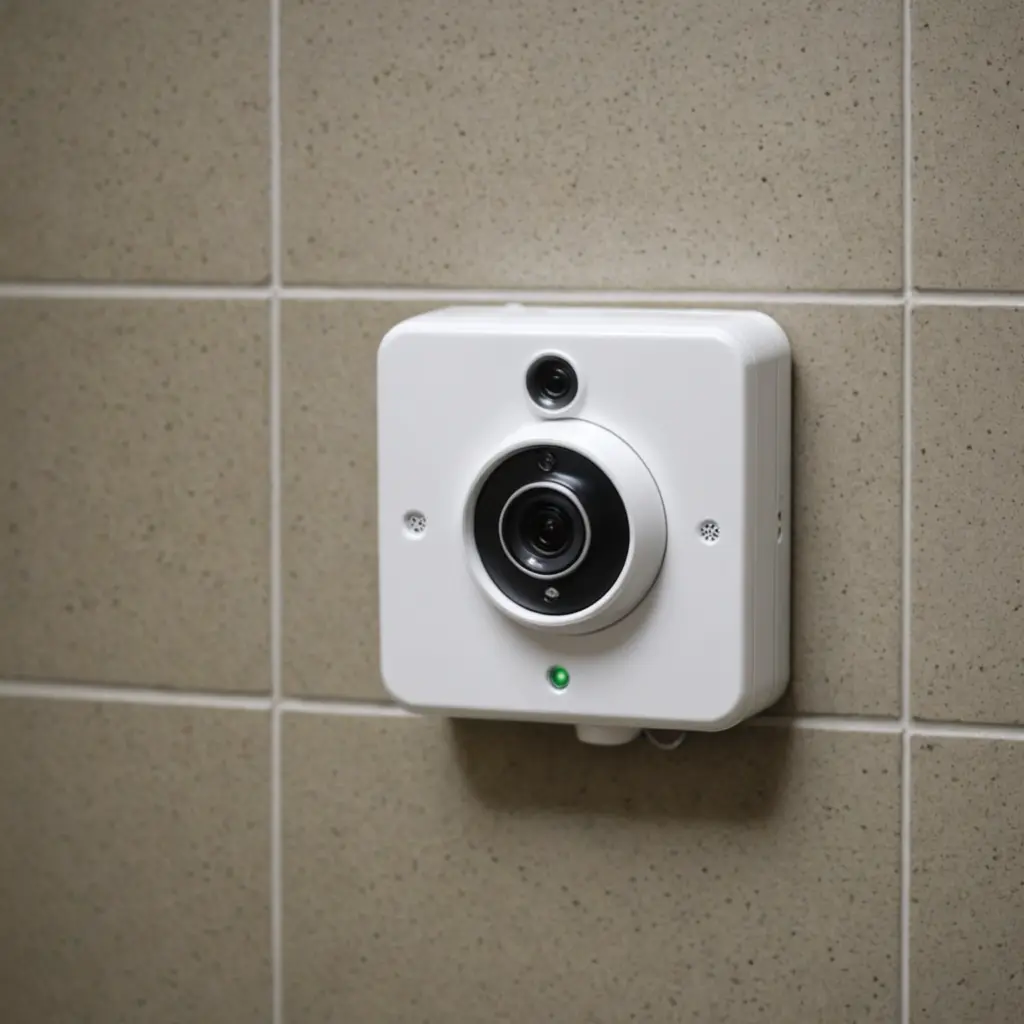

Finding a concealed camera in a women’s restroom is a serious privacy and safety concern. Restrooms are places where people have a strong expectation of privacy, and recording anyone there without their knowledge or consent may violate criminal, civil, or data-protection laws, depending on the jurisdiction.
Hidden devices can be disguised as ordinary fixtures or personal items. The following examples describe locations that should be checked when there is a credible concern about covert surveillance. They are warning signs, not proof that a camera is present.
Seven places where a concealed camera might be hidden
1. Air fresheners
An air freshener has a convenient position and may blend into the surroundings. Look for an unexplained pinhole, a small dark lens, loose wiring, or a device that appears different from matching fixtures elsewhere in the building.
2. Pen-style devices
A spy pen or similar miniature camera could be left on a shelf, mounted near a sink, or placed where it has a view of individual stalls. An object that seems out of place, faces an unusual direction, or remains in the restroom without an obvious purpose deserves attention.
3. Toilet stalls
A small camera concealed in a stall is an especially severe intrusion because it targets an area where privacy expectations are at their highest. Check unfamiliar objects, gaps in partitions, vents, hooks, and fixtures—but do not dismantle permanent equipment or place yourself at risk while investigating.
4. Tissue boxes and dispensers
Tissue boxes can conceal a lens behind a small opening, while dispensers may provide a fixed position with a broad view. Examine unexpected holes, altered covers, or equipment that differs from the standard design used in the facility.
5. Feminine hygiene bins
A camera hidden in or near a feminine hygiene bin would be particularly invasive. Do not handle potentially contaminated waste or reach inside a bin. Instead, move away from the area and notify the facility manager, security staff, or police.
6. Mirrors
A mirror may attract suspicion if it has an unexplained dark spot, an opening behind the reflective surface, or unusual wiring. However, visual impressions alone are not reliable evidence. Avoid damaging the mirror or accusing a person without confirmation.
7. Paper towel dispensers
Paper towel dispensers are another ordinary fixture that could theoretically conceal a small lens. Look for modifications, exposed cables, a new device that does not match nearby dispensers, or a position that appears designed to record users.
What to do if you suspect a camera
Your immediate priority should be personal safety and preserving evidence. If you notice a suspicious object, leave the area if possible and avoid touching, covering, moving, or destroying it. Take photographs from a safe position, recording the object and its surroundings. Note the location, date, time, and anything unusual about the device.
- Report the concern promptly to the property manager, venue operator, school, employer, or security team.
- Contact local law enforcement if a camera appears to be recording restroom users or staff do not respond appropriately.
- Ask whether the device has been secured and whether an investigation is taking place.
- Keep copies of photographs, messages, incident numbers, and other relevant records.
- Do not post identifiable footage or images of restroom users online.
How facility operators can reduce the risk
Operators should establish a clear reporting procedure and treat every credible complaint seriously. Routine inspections can include checking fixtures for unexplained modifications, comparing equipment with approved designs, and restricting access to maintenance areas. Staff should know how to preserve a suspected device as evidence rather than removing or resetting it.
Visible security measures outside restroom entrances may help protect the wider facility, but cameras should not be placed inside restrooms or positioned to look into private areas. Any monitoring system must follow applicable privacy and surveillance requirements.
Privacy is not optional
A concealed camera in a restroom is not a harmless prank or ordinary security measure. It can expose people to humiliation, harassment, extortion, or further distribution of recordings. Because laws differ by location, anyone affected should seek advice from law enforcement, a privacy regulator, or a qualified legal professional. Prompt reporting and careful evidence preservation are the most responsible steps when covert surveillance is suspected.