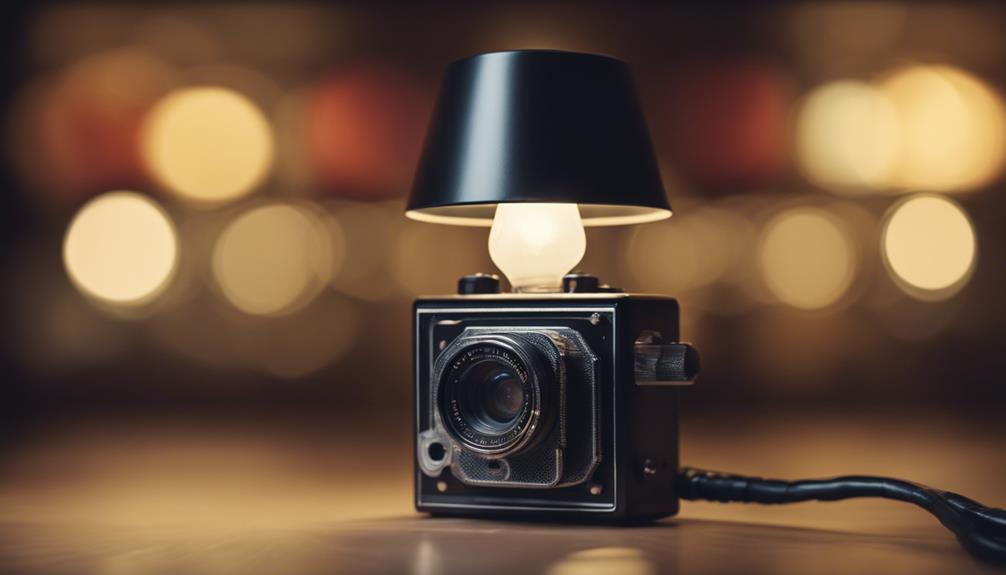

A camera built into a lamp can combine everyday lighting with home or office monitoring. Because these devices are designed to blend into their surroundings, they should be used carefully: follow local privacy laws, notify people when recording is required, and never place a camera in a bedroom, bathroom, changing area, or another space where people reasonably expect privacy.
The lamp styles below represent five common design approaches. Each offers a different balance of appearance, placement flexibility, lighting, and monitoring functionality.
1. Sleek Desk Lamp Camera
A desk lamp with an integrated camera is suited to workstations, reception areas, and other spaces where a compact light naturally belongs. Its main advantage is the combination of practical illumination and a small footprint, allowing it to sit among ordinary office equipment without taking up much room.
When evaluating this style, look for a stable base, an adjustable head, and controls that make it clear when recording is active. Depending on the model, the camera may support video recording and audio capture. Audio deserves particular attention because recording conversations can be subject to stricter legal requirements than recording images.
2. Modern Table Lamp Camera
A table lamp camera is a natural fit for living rooms, studies, and entry areas. Its larger decorative form can make room placement more practical than a small desk lamp, while wireless connectivity may allow an authorised user to view a live feed or review recordings remotely.
Before choosing a wireless design, check how it stores footage and how the device protects access to the camera. Change default passwords, use a strong home network password, install available security updates, and avoid sharing access credentials. A remote viewing feature is useful only when the account and network are properly secured.
3. Vintage Floor Lamp Camera
A floor lamp can provide a wider view because it is positioned higher than a desk or table lamp. A vintage-style fixture may suit traditional interiors and can be placed in a corner, beside furniture, or near an entryway where a floor lamp would not seem out of place.
Its height and viewing angle are the key considerations. Position the lamp so it covers an agreed monitoring area without pointing toward private rooms or neighbouring property. Make sure the fixture cannot be easily knocked over, and check whether the camera remains usable when the shade or lamp head is adjusted.
4. Adjustable LED Light Camera
An adjustable LED lamp with an integrated camera offers flexibility for directing light and framing the monitored area. This can be useful when the room layout changes or when one device needs to cover a doorway, workspace, or storage area.
Adjustability can also create privacy risks if the camera is moved without other occupants knowing. Use visible indicators, a physical lens cover, or a documented household or workplace policy where available. Test the intended viewing angle during installation, and avoid assuming that a bright lamp automatically provides clear footage in every lighting condition.
5. Portable Night-Light Camera
A compact night-light camera is designed for locations where a full-size lamp would be inconvenient. Its small form can make it suitable for temporary, authorised monitoring in a home office, hallway, or other permitted area. Wireless operation may also make it easier to relocate when needed.
Portability means the device should be handled with extra care. Keep track of where it is placed, who can access its recordings, and how long footage is retained. If the camera uses a mobile application, review notification settings and remove access for anyone who no longer needs it.
What to Check Before Buying or Installing One
- Privacy and consent: Confirm that recording is lawful and that everyone who needs to know has been informed.
- Recording indicators: Prefer designs with a visible status light, physical shutter, or another clear way to disable the camera.
- Storage: Find out whether footage is saved locally, to removable media, or through an online service.
- Access controls: Use unique passwords and limit viewing permissions to trusted, authorised users.
- Placement: Aim only at areas relevant to the stated security purpose, such as an entrance or shared workspace.
- Lighting performance: Check whether the lamp provides useful illumination without creating glare or silhouetting the subject.
Final Considerations
A camera integrated into a lamp can be less obtrusive than a conventional security camera while still providing useful monitoring in an appropriate setting. Desk lamps prioritise compact placement, table lamps suit common living areas, floor lamps offer height, adjustable LED designs provide positioning flexibility, and portable night lights are convenient for limited spaces.
The best choice is not simply the one that is hardest to notice. It is the one that serves a clearly defined security purpose, protects recorded information, and respects the privacy of everyone in the space.