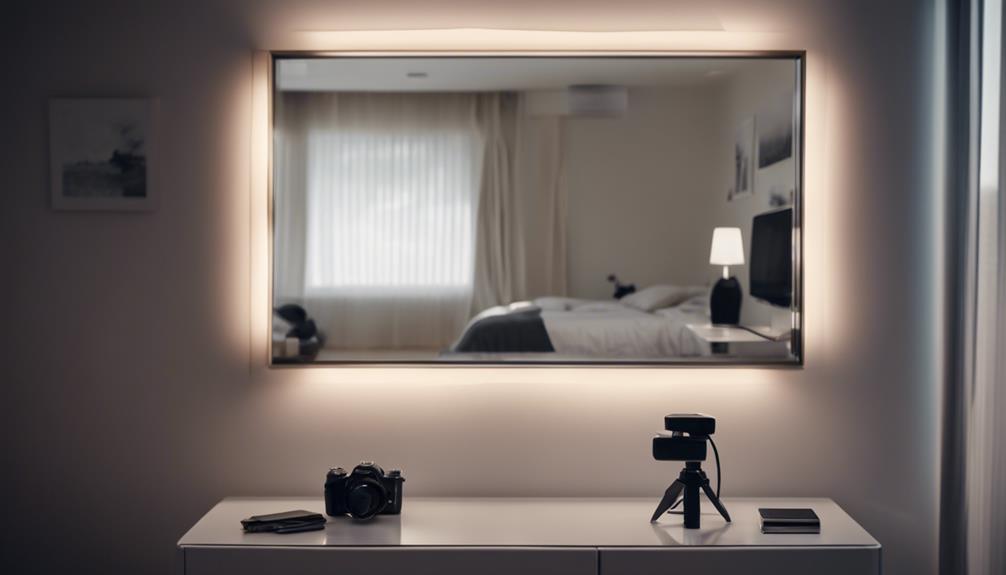

Mirror spy cameras combine a reflective surface with a small camera, allowing the device to blend into its surroundings. Their discreet appearance has made them appealing for security monitoring in homes and workplaces, while improvements in digital imaging, motion detection, night vision, and wireless connectivity have made them more practical than earlier, bulkier surveillance equipment.
What Is a Mirror Spy Camera?
A mirror spy camera is designed to look like an ordinary mirror while recording video through a concealed lens. Depending on the model, it may store footage locally or send it over a network for remote viewing. The mirror-style housing can make the camera less visually intrusive, but it does not remove the legal or ethical responsibilities that come with recording people.
These cameras are generally considered for monitoring entrances, rooms, valuable property, or other areas where a conventional camera would be distracting. Their usefulness depends on more than appearance: image quality, placement, lighting, storage, and reliable access to recordings all affect the result.
How Mirror Spy Cameras Have Changed
Earlier surveillance cameras were often noticeable because of their size, wiring, and separate recording equipment. Digital technology has enabled smaller camera components and more flexible installation options. Modern mirror-style systems may include features such as:
- Higher-resolution video for clearer images and easier identification
- Motion detection to limit recording or provide activity alerts
- Night vision or low-light recording for darker environments
- Wi-Fi connectivity for remote access, where supported
- Compact housings that are easier to integrate into a room
These features can improve convenience, but they do not guarantee useful footage in every situation. A camera facing glare, positioned too far away, or operating in poor lighting may produce disappointing results regardless of its specifications.
Potential Uses
Home security
A mirror camera may be used to observe an entryway, hallway, or another important area of a home. It can provide a view of activity when the occupants are away and may preserve footage that helps clarify what happened after an incident. Placement should be limited to appropriate areas and should never intrude on spaces where people reasonably expect privacy.
Business and workplace monitoring
Businesses may consider cameras for protecting property, monitoring access points, or supporting a safe working environment. However, discreet recording of employees can create serious privacy, trust, and compliance issues. Security goals should be clearly defined, and any monitoring should be proportionate, transparent where required, and consistent with workplace policies and applicable law.
Operational observation
In some settings, recorded activity can help identify workflow problems, unauthorized access, or recurring safety concerns. This is different from using a hidden camera to watch people indiscriminately. A defined purpose, limited coverage, and controlled access to footage are important safeguards.
Choosing a Mirror Spy Camera
Start by deciding what the camera must capture and under which conditions. The following factors are particularly important:
- Resolution: Higher resolution can provide more detail, provided the lens and lighting are suitable.
- Field of view: A wider view covers more space, while a narrower view may offer greater detail in a specific area.
- Lighting performance: Night vision or low-light capability may be necessary for areas that are not consistently illuminated.
- Motion detection: Activity-based recording can reduce unnecessary footage and make important events easier to find.
- Connectivity and storage: Check whether the camera uses local storage, Wi-Fi access, or both, and understand how recordings are retrieved.
- Installation: The mirror should fit securely and provide a clear view without excessive reflections or obstructions.
It is also worth considering power requirements, recording duration, access controls, and how easily the system can be maintained. A discreet design should not come at the expense of reliability or responsible use.
Privacy, Consent, and Legal Compliance
Before installing any mirror spy camera, check the surveillance and privacy rules that apply in your jurisdiction. Requirements can vary depending on the location, the people being recorded, whether audio is captured, and how the footage is stored or shared. Recording in private spaces without permission can be especially intrusive and may be unlawful.
Good practice includes informing people about surveillance when required, using visible notices where appropriate, avoiding bedrooms, bathrooms, and other private areas, and recording only what is necessary for a legitimate purpose. Audio recording may be subject to separate restrictions, so it should not be assumed that video and audio are treated identically.
Protect recordings with strong passwords, restricted user access, and secure storage. Establish a sensible retention period rather than keeping footage indefinitely, and delete recordings when they are no longer needed. These steps help reduce the risk of unauthorized viewing or disclosure.
Making a Responsible Choice
Mirror spy cameras can offer a compact way to monitor selected areas, particularly when image quality, motion detection, low-light performance, and remote access are important. Their concealed appearance, however, makes careful planning even more important. Define the security objective, choose coverage that is proportionate to that objective, inform affected people when appropriate, and handle footage securely. Used within legal and ethical boundaries, a mirror-style camera can support security without turning ordinary spaces into unrestricted zones of surveillance.