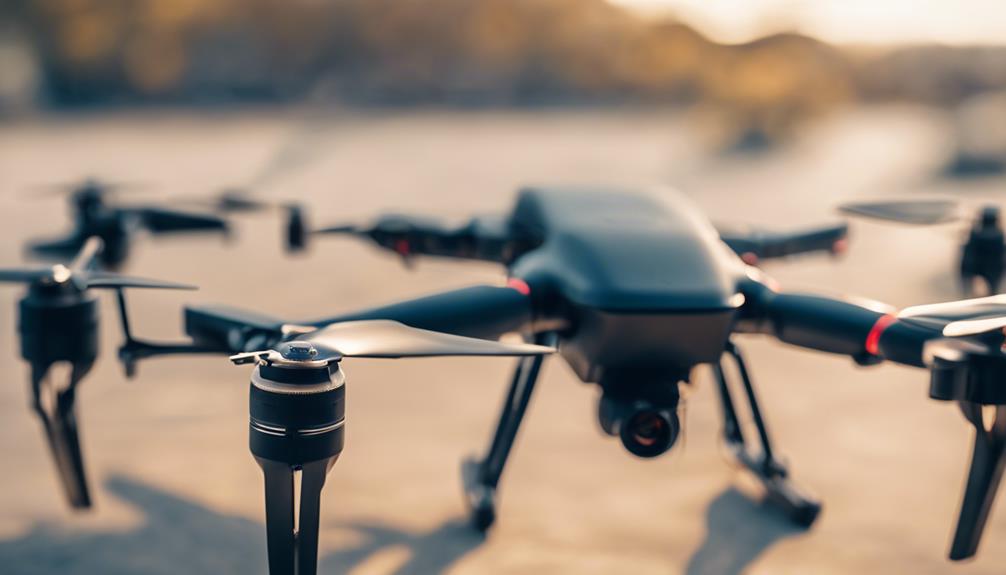

Camera-equipped drones can provide a useful aerial view for observation, mapping, inspection, search and rescue, and other legitimate tasks. The right design depends on the environment, the distance involved, lighting conditions, weather, and the type of footage required. The following list covers ten drone categories associated with discreet or specialized surveillance, rather than specific products or guaranteed capabilities.
1. Miniature Spy Drone
Miniature camera drones are built around a compact design that helps them move through confined spaces and areas where a larger aircraft would be impractical. Their small size can support indoor inspections and short-range observation, although payload capacity, flight time, stability, and image quality may be limited compared with larger drones.
2. Night Vision Surveillance UAV
A night-oriented surveillance UAV uses low-light or infrared imaging to collect visual information when ordinary cameras cannot provide a clear view. These drones are suited to nighttime observation and poorly lit environments. Buyers should distinguish between true thermal imaging and cameras that simply enhance available light, since they produce different types of information.
3. Long-Range Reconnaissance Quadcopter
Long-range quadcopters are intended to extend the distance and duration of an observation mission. A stable aircraft, dependable communications link, accurate positioning, and efficient power system can help with wide-area monitoring and aerial mapping. Real-world range is affected by terrain, weather, obstacles, battery condition, and local operating rules.
4. Stealth Surveillance Hexacopter
A hexacopter uses six rotors and is generally associated with added lifting capacity and stable flight. In surveillance work, this format may be considered when a camera system or other equipment requires more support than a small quadcopter can provide. It is still important to account for acoustic noise, visibility, maintenance, and the increased size of the aircraft.
5. Indoor Spy Drone With Camera
Indoor camera drones are designed for environments such as buildings, warehouses, and other enclosed spaces. A compact frame, obstacle awareness, precise controls, and a reliable live view can make indoor operation easier. Operators must take extra care around people, furniture, glass, electrical equipment, and narrow passages.
6. Thermal Imaging Aerial Vehicle
Thermal cameras display differences in infrared radiation rather than ordinary visible-light images. From the air, this can help reveal heat sources, warm machinery, or people who are difficult to see with a standard camera. Thermal footage should be interpreted carefully: it shows temperature patterns, not automatically a clear identification of an object or person.
7. Waterproof Tactical Drone
Weather-resistant drones are intended for use where rain, spray, or damp conditions may threaten ordinary electronics. This category can be useful for coastal observation, emergency response, inspection, and search-and-rescue work. “Waterproof” should not be treated as a universal promise; the aircraft’s published protection rating, operating limits, and maintenance requirements matter.
8. 360-Degree Panoramic Spy UAV
A panoramic UAV uses a camera system capable of recording a broad view around the aircraft. Wide coverage can reduce blind spots when monitoring a site, event area, or industrial location. Panoramic footage may require more storage and processing, and the final image can vary depending on camera placement, stitching, altitude, and movement.
9. High-Altitude Observation Drone
High-altitude observation platforms are designed to view larger areas from above. They may support border-area monitoring, environmental observation, mapping, or broad situational awareness. Greater altitude can expand the field of view, but it also introduces challenges involving communications, weather, image detail, airspace restrictions, and safe recovery.
10. Autonomous Tracking Surveillance Quadrotor
An autonomous tracking quadrotor uses onboard software and sensors to follow a selected subject or route. This can reduce the workload for an operator during a planned inspection or observation task. Tracking performance depends on lighting, obstructions, subject movement, navigation signals, and the quality of the drone’s sensors. Autonomous functions should be supervised rather than treated as infallible.
What to Consider Before Choosing a Camera Drone
- Camera type: Decide whether you need visible-light, low-light, infrared, thermal, or panoramic imagery.
- Operating environment: Indoor, outdoor, maritime, nighttime, and confined-space missions place different demands on the aircraft.
- Flight endurance and range: Check realistic battery life, transmission distance, and recovery options instead of relying only on headline specifications.
- Image handling: Consider live streaming, recording quality, storage, encryption, and how footage will be reviewed.
- Safety and privacy: Follow applicable aviation rules, obtain permission where required, avoid recording private areas without consent, and protect collected footage.
The best camera drone is the one that matches the mission without creating unnecessary safety, privacy, or legal risks. For many users, a reliable standard camera drone is more practical than a specialized platform, while thermal, panoramic, weather-resistant, or autonomous features are valuable only when the operating conditions genuinely require them.