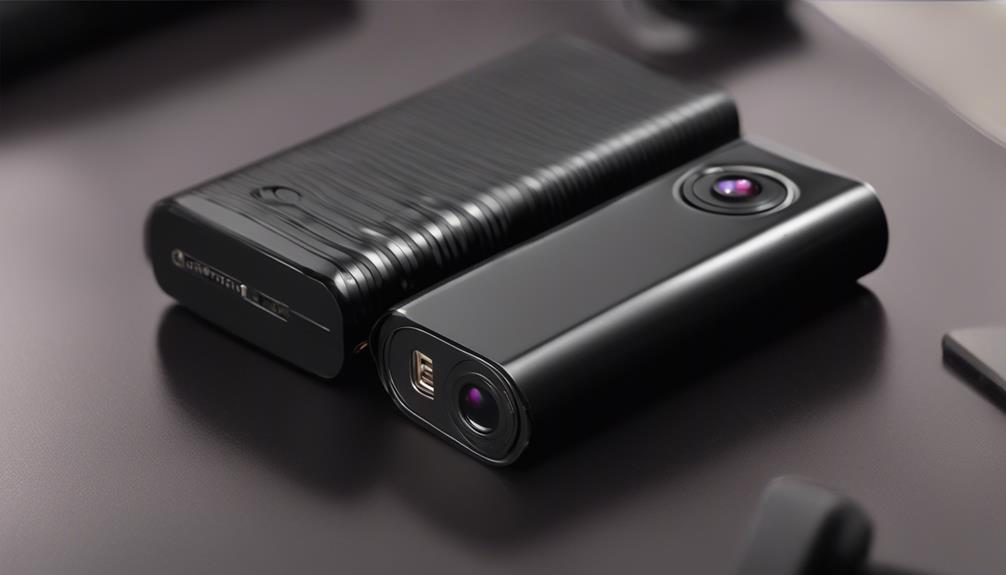

Power banks with built-in cameras combine portable charging with video recording in a familiar everyday form. They may appeal to people looking for a compact monitoring device, but the right choice depends on more than appearance. Video quality, battery performance, storage, connectivity, and the intended use all deserve careful consideration.
Before purchasing or operating any hidden-camera product, check the laws that apply where you live. Recording people without their knowledge may be illegal, particularly in private spaces. Use these devices only for lawful purposes, respect privacy, and obtain consent whenever required.
Key Features to Compare
1. Camera quality and viewing angle
A camera’s resolution affects how clearly faces, objects, and movement appear in recorded footage. A wide-angle lens can cover more of a room than a narrow lens, which is useful when the device is placed in an open, authorized monitoring area. However, wider views can also introduce edge distortion, so a larger field of view is not automatically better.
Look for sample footage or clearly stated specifications rather than relying on phrases such as “high definition.” Image quality can vary substantially in low light, during movement, or when the camera is positioned far from the subject.
2. Night vision and low-light performance
Night-vision capability can help a camera record when lighting is limited. Results depend on the sensor, infrared illumination, distance, and surrounding conditions. Some products produce usable monochrome footage in darkness, while others may show significant noise or blur. If nighttime recording matters, confirm how the feature works and whether indicator lights can be disabled legally and safely.
3. Battery capacity and recording time
The power bank’s charging capacity is separate from the camera’s operating time. Continuous recording, wireless communication, motion detection, and night vision can all increase energy consumption. A larger battery may support longer operation, but it can also make the device heavier and less convenient to carry.
Check whether the camera can record while connected to a charger, how long a full charge takes, and whether recording stops when the battery reaches a low level. Treat advertised runtimes as estimates, since actual performance depends on settings and use.
4. Storage and recording modes
Motion-activated recording can reduce unnecessary footage and make reviews easier than continuous recording. It may also miss brief activity if detection sensitivity or positioning is poor. Confirm whether the device uses removable storage, internal memory, or a companion application, and check how files are exported and protected.
Loop recording can automatically overwrite older files when storage is full. That may be convenient for routine monitoring, but important footage should be copied promptly to secure storage. Password protection and encryption are valuable considerations when recordings are accessible through a phone or computer.
5. Setup and remote access
Many camera power banks require charging, a mobile application, and a wireless network connection. A straightforward setup process should explain pairing, account security, recording controls, notifications, and firmware updates. Remote viewing can be useful for authorized monitoring, but it introduces additional privacy and cybersecurity risks.
Use a strong, unique password and review the application’s permissions. Avoid connecting a camera to an untrusted network, and disable remote access if it is not needed. A device that records locally may be preferable when internet access is unnecessary.
Practical Advantages
- Portable format: The combination of a charger and camera can be convenient for legitimate security or documentation needs.
- Motion detection: Activity-based recording can reduce storage use and simplify playback.
- Wide viewing area: A broad lens may cover more of an authorized space from one position.
- Low-light support: Night-vision features may extend recording into darker conditions.
- Flexible monitoring: Depending on the model, users may choose local recording, live viewing, or both.
Important Limitations
These devices are not automatically reliable just because they resemble ordinary power banks. A camera may have a limited battery life, modest audio or video quality, weak wireless performance, or an angle that does not match the advertised coverage. Heat, full storage, poor lighting, and unstable network connections can also affect results.
Audio recording deserves special caution because consent requirements may differ from those for video. If audio is not necessary, turning it off can reduce privacy risk. Always test the device in a lawful, controlled setting before depending on it for security documentation.
How to Choose Responsibly
Start with the monitoring purpose and select the least intrusive option that meets it. For many situations, a visible security camera, doorbell camera, or conventional camera may provide better transparency and reliability than a concealed device. If a power bank camera is appropriate, prioritize clear specifications, secure software, dependable storage, and a battery capacity that matches the expected recording period.
The best spy hidden camera power bank is not simply the smallest or most discreet model. It is the device that provides suitable footage, predictable operation, and appropriate privacy safeguards while being used legally and with respect for the people and spaces being recorded.