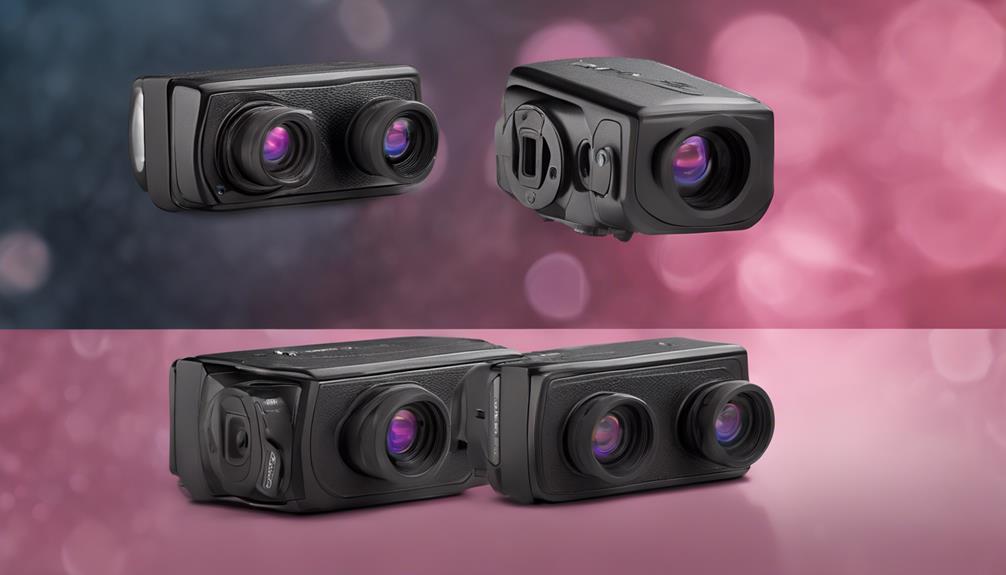

Night vision cameras can extend monitoring beyond daylight hours, but the best choice depends on where the camera will be used, how much detail is required, and whether remote access or motion alerts are important. The three camera types below represent practical options for low-light surveillance, from general-purpose night vision to compact devices designed to be less noticeable.
Use any surveillance camera responsibly. Recording people without their knowledge may be restricted by privacy, workplace, residential, or audio-recording laws. Obtain permission where required, avoid private spaces, and check local rules before installing or operating a camera.
1. Advanced Infrared Night Vision Camera
An advanced infrared night vision camera is a strong all-around choice for monitoring areas that become dim or completely dark. Instead of relying on visible light, it uses infrared illumination and a light-sensitive image sensor to produce usable footage when ordinary cameras would struggle.
This type of camera is well suited to entrances, hallways, storage areas, and outdoor locations that need coverage after sunset. Its main advantage is consistent low-light performance: details such as movement, clothing, or the direction a person is travelling may remain visible even when the surrounding area appears dark to the human eye.
Useful characteristics
- Infrared-assisted viewing for dark environments
- Clearer footage than a standard camera in poor lighting
- Suitable for indoor or outdoor monitoring, depending on its housing
- A practical option when reliable nighttime coverage matters more than concealment
Before choosing one, consider how far the camera must see at night and whether nearby reflective surfaces could cause glare from the infrared illumination. A model with a suitable viewing angle is also important: a wide angle covers more space, while a narrower angle may provide more detail at a distance.
2. Ultra-HD Camera with Remote Monitoring
An Ultra-HD surveillance camera is designed for situations where image detail and convenient access are priorities. Higher-resolution footage can make it easier to review activity, distinguish objects, or understand what happened during an event. Night performance still depends on the sensor, lens, and available illumination, so resolution alone does not guarantee useful footage in darkness.
Remote monitoring adds another layer of convenience. When supported by the camera and its software, a phone or computer can be used to check a live view or review recorded clips without being physically near the camera. Motion detection can also reduce unnecessary recording by responding when movement occurs within the camera’s detection area.
What to evaluate
- Whether remote viewing requires a particular app, network connection, or account
- How motion alerts are configured and how sensitive they are
- Where recordings are stored and how long they are retained
- Whether the camera supports night vision as well as high daytime resolution
This category is useful for homeowners, small offices, and other authorised monitoring locations where receiving alerts or checking footage remotely is more important than having the smallest possible device.
3. Compact, Discreet Night Vision Camera
A compact camera is intended for installations where a large visible unit would be impractical or distracting. Its smaller form can make placement easier in an approved monitoring area, although discreet placement should never be confused with permission to record people secretly.
These cameras may be useful for checking a doorway, supervising a permitted workspace, or monitoring a confined area where space is limited. Their compact size can involve trade-offs, including a smaller lens, shorter battery life, limited storage, or reduced nighttime range. For that reason, the camera should be selected according to the area being monitored rather than appearance alone.
Questions to ask before buying
- Will the camera operate long enough between charges or battery changes?
- Does it record continuously, only when motion is detected, or both?
- Can footage be exported easily if an incident needs to be reviewed?
- Does its placement respect household, workplace, and local privacy requirements?
How to choose between the three
Choose an advanced infrared model when dependable nighttime visibility is the main goal. Select an Ultra-HD camera with remote access when detailed footage, alerts, and off-site viewing are more valuable. A compact model makes sense when installation space is limited, provided its battery, storage, and low-light performance meet the requirements of the location.
Whichever type you choose, test the camera at night before relying on it. Check the viewing angle, image clarity, motion-detection behaviour, storage process, and network security. A well-positioned, properly configured camera is generally more useful than one with impressive specifications but poor placement or unclear operating limits.