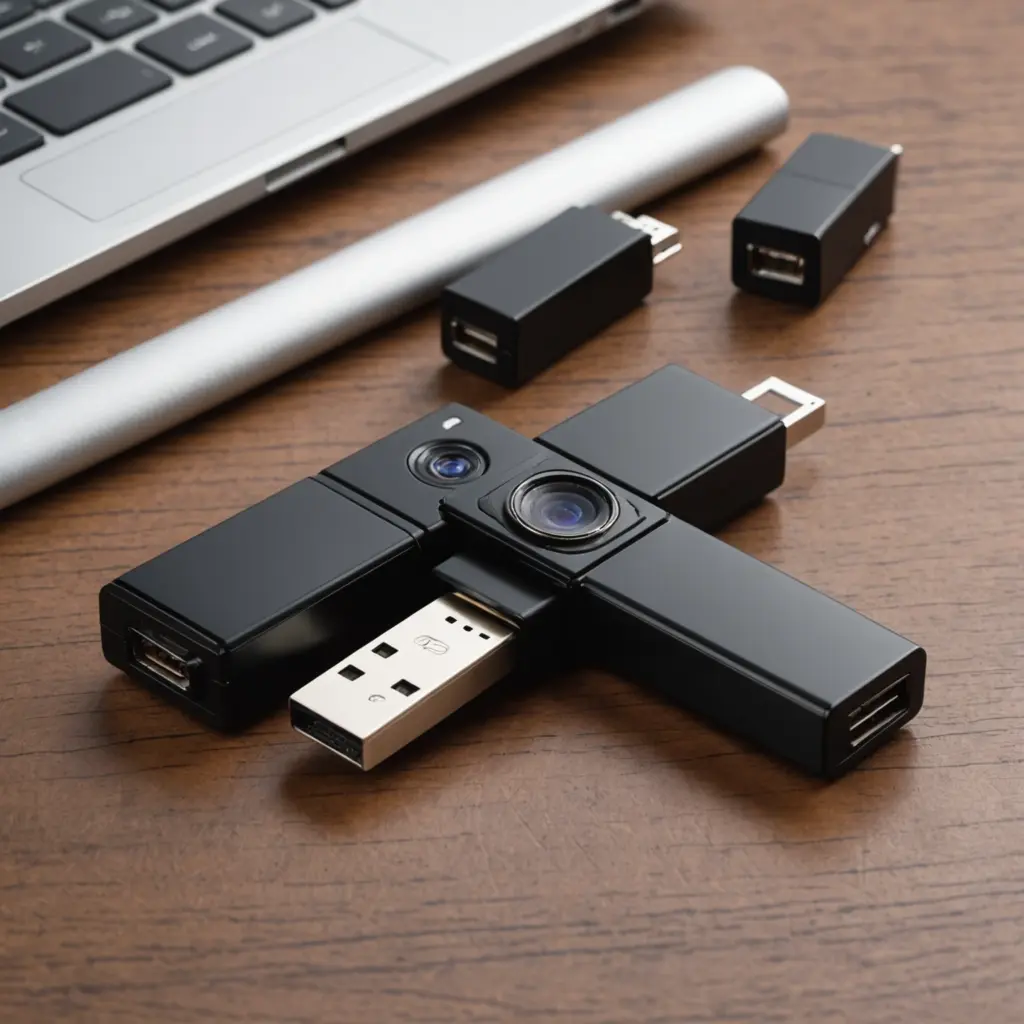

USB flash drive-style cameras are designed to resemble ordinary storage devices while recording video. Their compact form can make them useful for discreet security monitoring, but appearance alone does not determine whether a camera is practical, reliable, or lawful to use. Before choosing one, compare image quality, recording modes, low-light performance, battery capacity, storage, and connectivity.
1. High-Resolution Recording
Resolution is one of the first specifications to examine. A higher stated resolution can produce more detailed footage, but the result also depends on the lens, lighting, compression, and camera placement. Terms such as “Ultra HD” should be treated as specification claims to verify rather than a guarantee of clear evidence in every situation.
When comparing cameras, look for:
- Video resolution and frame rate
- Lens angle and focus range
- Performance in bright and uneven lighting
- Whether the camera records continuously or in short clips
- The video format used when files are saved
A wider lens may capture more of a room, while a narrower view can make details easier to see at a distance. The best choice depends on the area being monitored.
2. Motion Detection and Low-Light Recording
Motion detection can help conserve battery power and storage by starting a recording when movement is detected. It may also make long recordings easier to review. However, sensitivity settings matter: an overly sensitive camera can create many unnecessary clips, while a low setting may miss activity.
Some devices also advertise night vision or low-light recording. Check whether this means infrared recording, software enhancement, or simply a sensor designed to work in dim conditions. Night vision may produce monochrome footage, and its usable range can vary considerably. Test the camera in the actual environment whenever possible instead of assuming that a night-vision label guarantees clear images in complete darkness.
3. Discreet Design and Straightforward Operation
The flash-drive shape is intended to blend into ordinary surroundings, but discreet equipment should never be confused with permission to record people without their knowledge. Use the device only in situations where recording is lawful and appropriate.
From a practical perspective, simple controls are valuable. A camera should make it clear when it is recording, how files are retrieved, and how settings are changed. Useful conveniences may include:
- A simple start-and-stop control
- Plug-and-play file access through USB
- A clear method for charging the battery
- Timestamp settings that can be adjusted correctly
- Indicators or instructions that reduce setup errors
A discreet camera that is difficult to operate can result in missing footage, incorrect settings, or files that are hard to locate.
4. Battery Life and Storage Capacity
Battery life determines how long the camera can operate away from a power source. Continuous recording generally uses more power than motion-triggered recording, and features such as wireless connectivity can reduce operating time further. Treat battery estimates as approximate because recording resolution, temperature, storage activity, and settings all affect performance.
Storage capacity is equally important. Higher-resolution video consumes more space, so confirm whether the camera uses removable storage, built-in memory, or both. Check the supported card capacity and file size limits before purchasing. It is also sensible to transfer important recordings promptly and keep a separate backup rather than relying on a single device.
5. Connectivity, File Access, and Security
Some flash-drive cameras operate entirely offline, while others provide wireless access through a phone or an app. Remote access can make it easier to check a live view, change settings, or receive movement alerts, but it also introduces additional privacy and security considerations.
If a camera connects to a network, use a strong unique password, update the device or app when updates are available, and avoid exposing the camera to unnecessary remote access. Cloud storage may provide a backup, but review how footage is uploaded, stored, and protected before enabling it.
Legal and Ethical Considerations
Recording laws vary by location and may depend on where the camera is placed, whether audio is captured, and whether the people recorded have a reasonable expectation of privacy. Hidden recording in private spaces can create serious legal and ethical problems. Do not place a camera in bedrooms, bathrooms, changing areas, or other sensitive locations, and obtain consent when required.
Before using any USB flash drive camera, check applicable local rules and the policies of the property or workplace involved. A visible, clearly disclosed security camera may be a more appropriate option when transparency is required.
Final Buying Checklist
The strongest choice is not necessarily the camera with the most impressive specification. Prioritise dependable recording, suitable battery life, manageable storage, easy file retrieval, and security features that match your intended use. Most importantly, use discreet recording equipment responsibly, with respect for privacy and applicable law.